Glossary

We don’t carry every model on the market, just the staples of a timeless wardrobe. Here you’ll find how to recognize them, what they go with and what fabrics they’re made of. What goes with what is shown in the Guide.

Shoes

Penny loafer

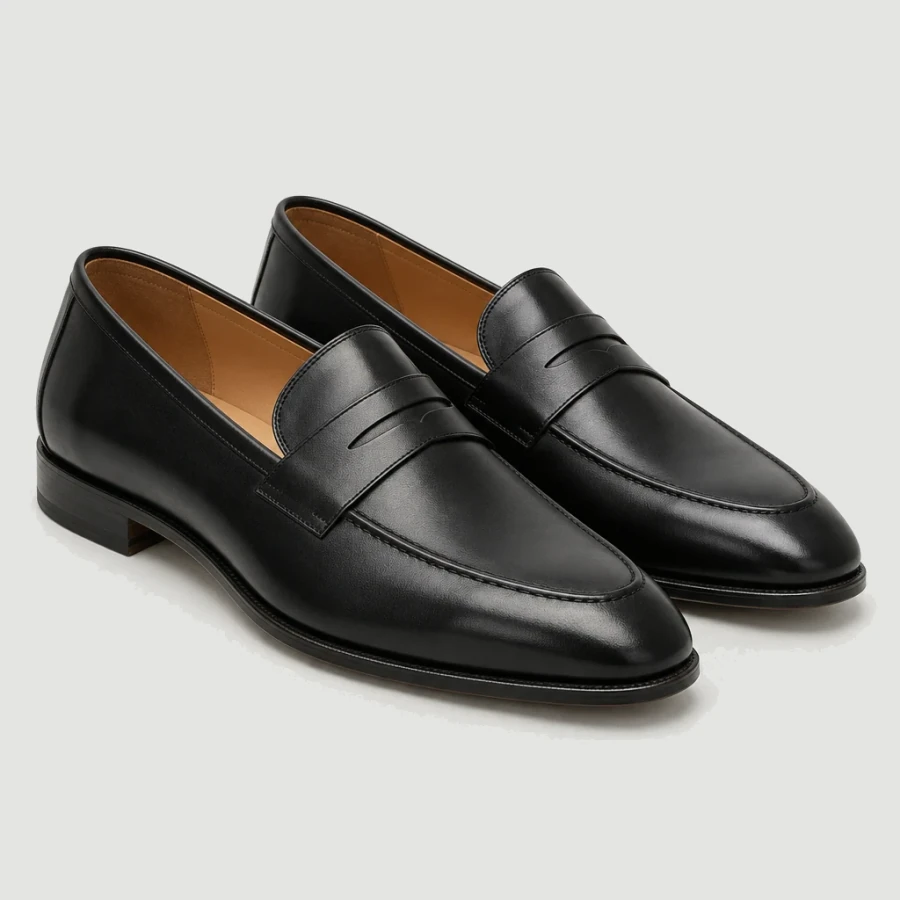
Slip-on shoe without laces, with a saddle strap across the vamp that has a small slit cut into it. Built like a moccasin: the front piece is set in with a visible seam around the toe. In dark brown suede it goes with chinos, gabardine and fresco; in black smooth leather it also goes with gray wool trousers and a sport coat. The name is usually traced back to the habit of tucking a coin into the slit.
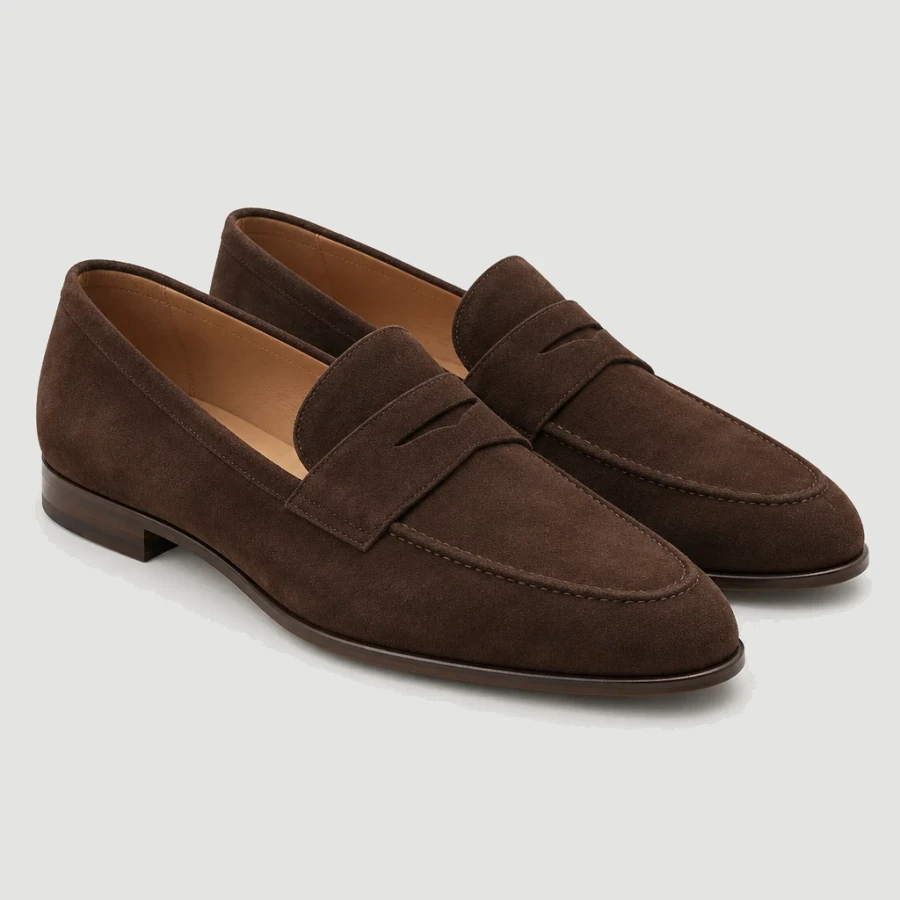
  • Dark brown suede penny loafer
  • Black smooth leather penny loafer

Tassel loafer

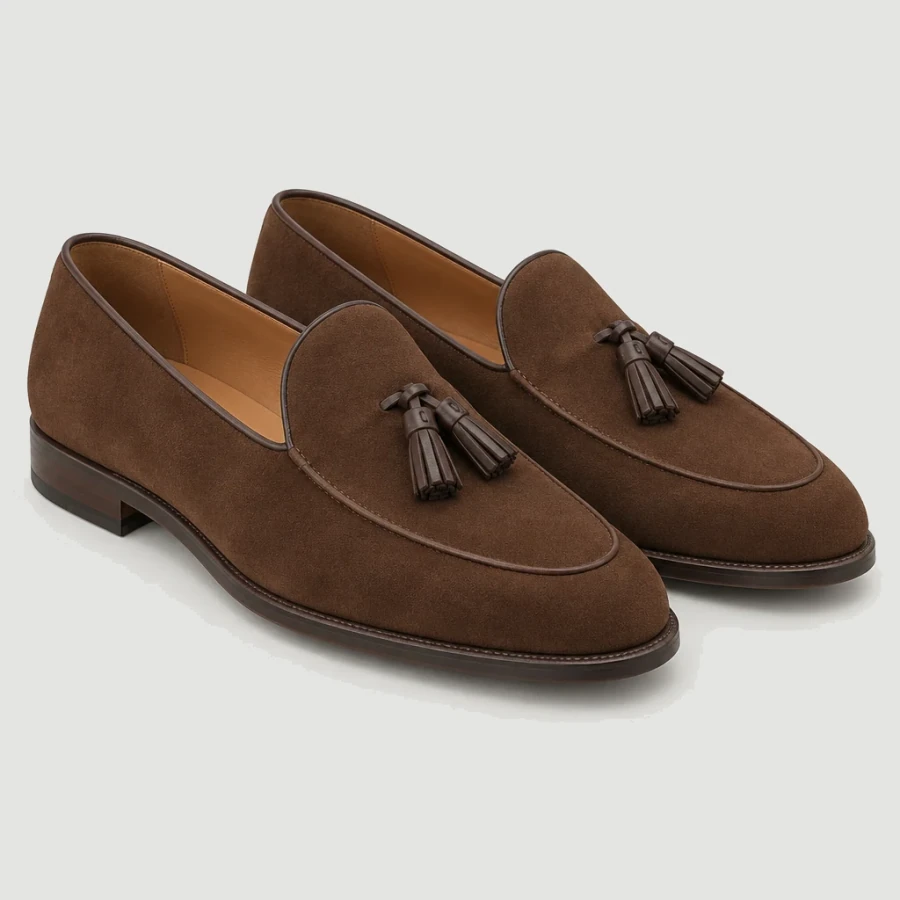
Loafer with two small leather tassels on a cord that runs around the upper and sits on the vamp. The tassels make it a little more playful than the penny loafer, but it remains a shoe for tailored trousers. Brown suede goes with flannel, fresco and a navy sport coat. It is common mainly in American menswear.

  • Brown suede tassel loafer

Horsebit loafer

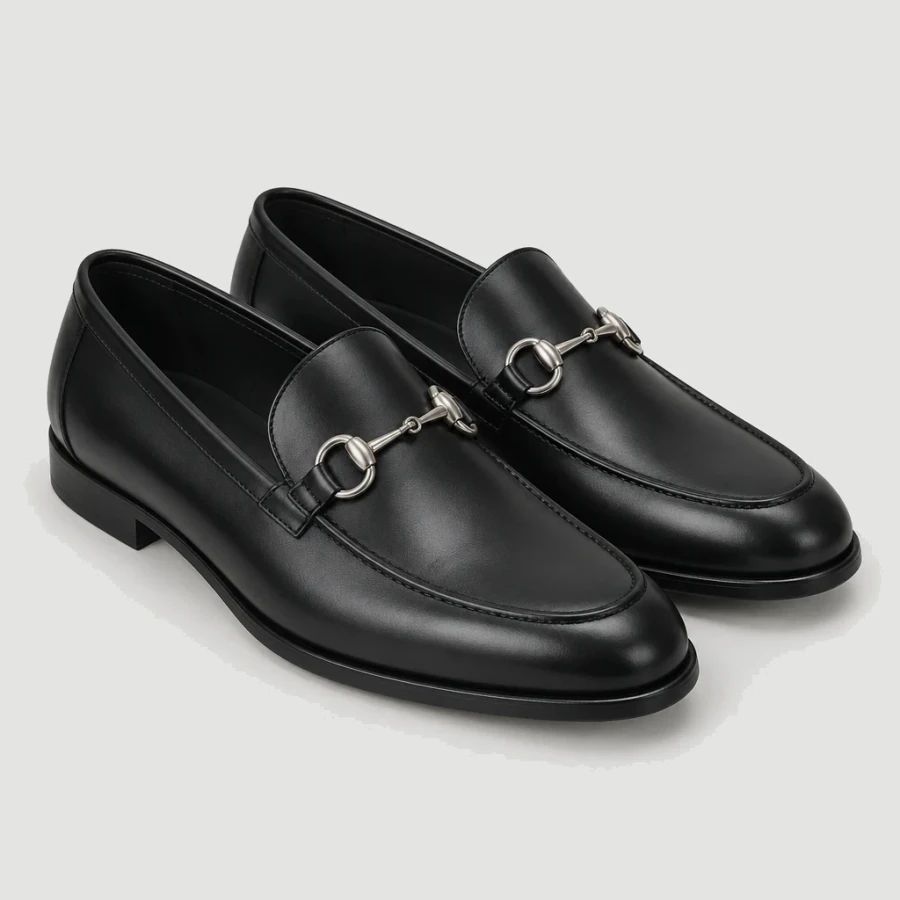
Loafer with a metal bar shaped like a horse bit across the vamp. The bar is a clear identifying feature; the design goes back to Gucci. In black smooth leather it goes with gray or charcoal wool trousers. With jeans it quickly looks too pronounced.

  • Black horsebit loafer

Belgian loafer

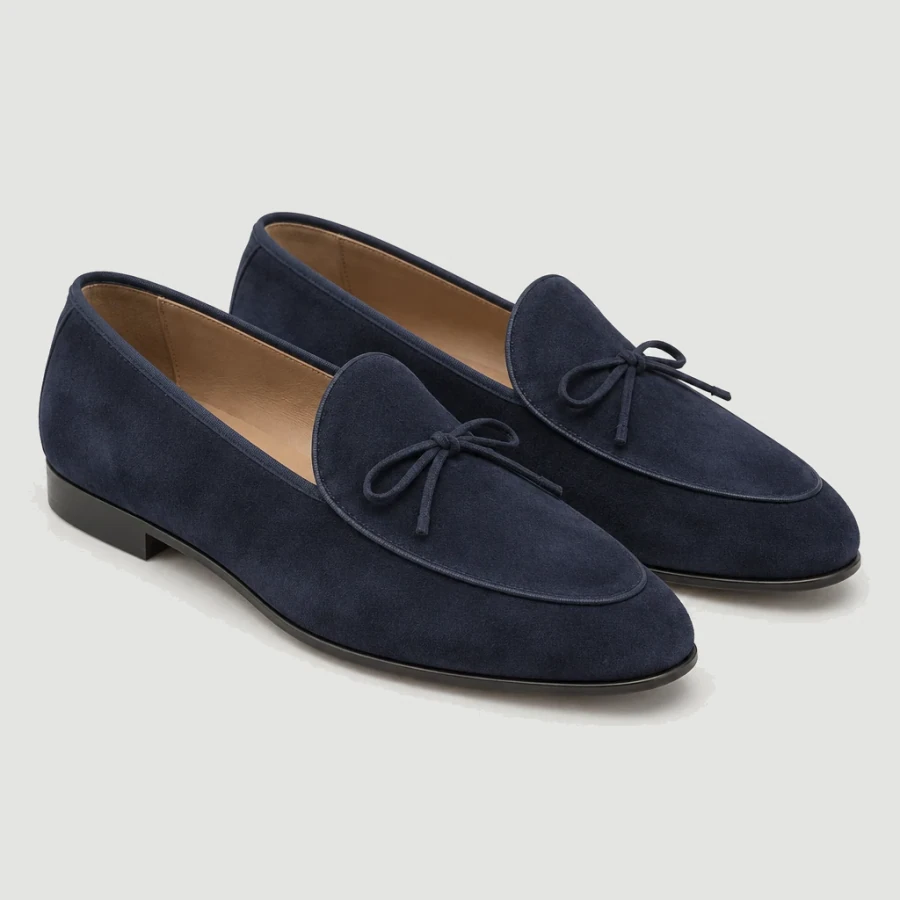
Very soft, light slip-on with a small bow on the vamp and a thin, flexible sole. It is less sturdy than an ordinary loafer and belongs to summer: with linen trousers, chinos and an open-collar shirt. It is named after the New York shop Belgian Shoes; it is traditionally made in Belgium.

  • Navy suede Belgian loafer

Venetian loafer

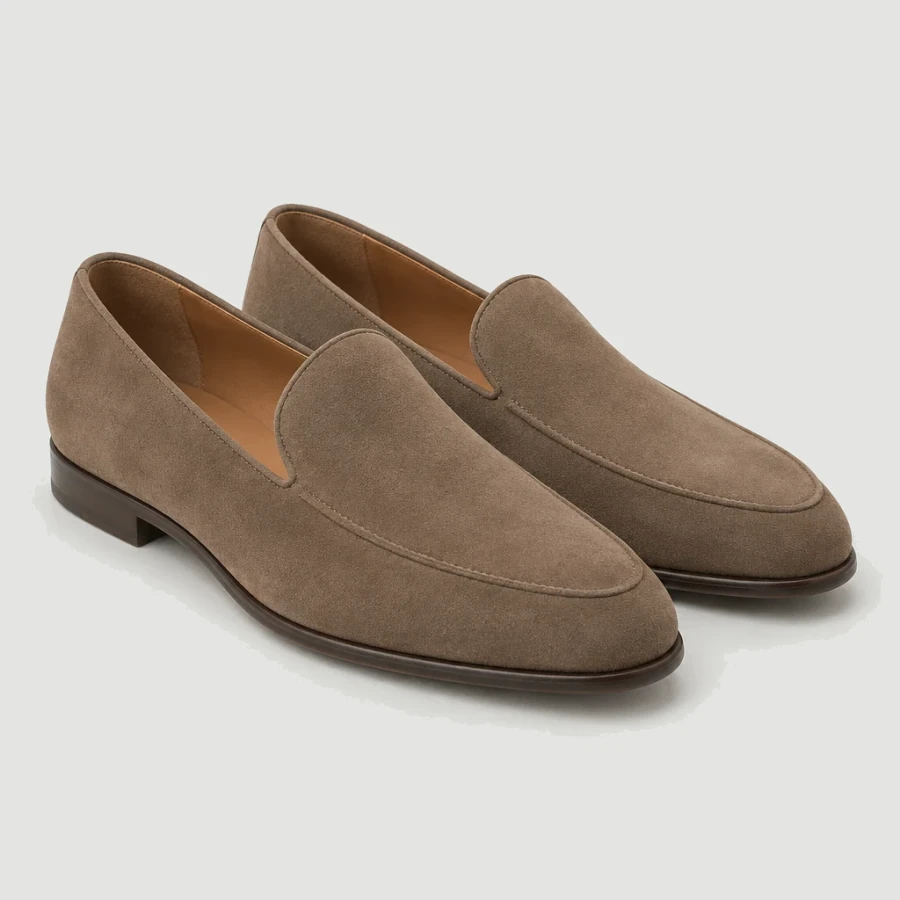
Loafer with no strap, tassel or bar at all, just vamp, seam and upper. That makes it very understated, and it can be worn with almost any trousers between linen and wool. In suede it looks summery and soft, in smooth leather more formal.

  • Taupe suede Venetian loafer

Driving moccasin

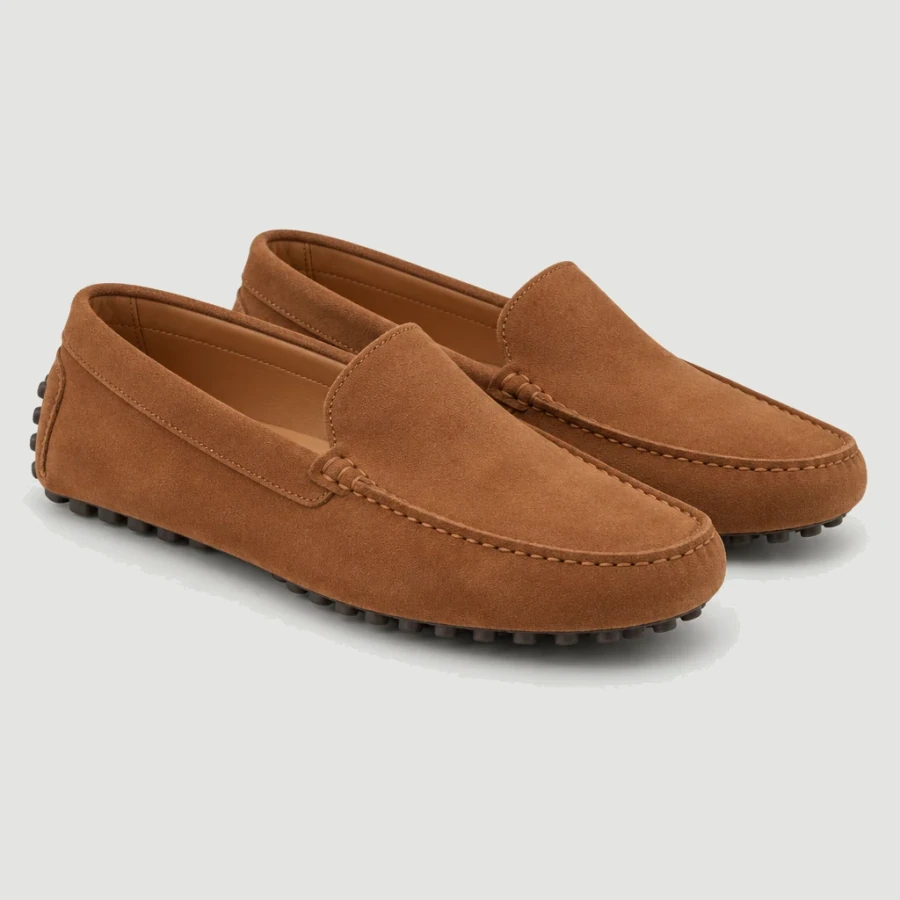
Soft moccasin with a sole made of rubber nubs, which often extend up over the heel. It was meant for driving; on long walks over pavement the nubs wear down quickly. It belongs with linen trousers, chinos and shorts in summer, worn without socks or with no-show socks. With wool trousers and a sport coat it is too casual.

  • Cognac driving moccasin

Chelsea boots

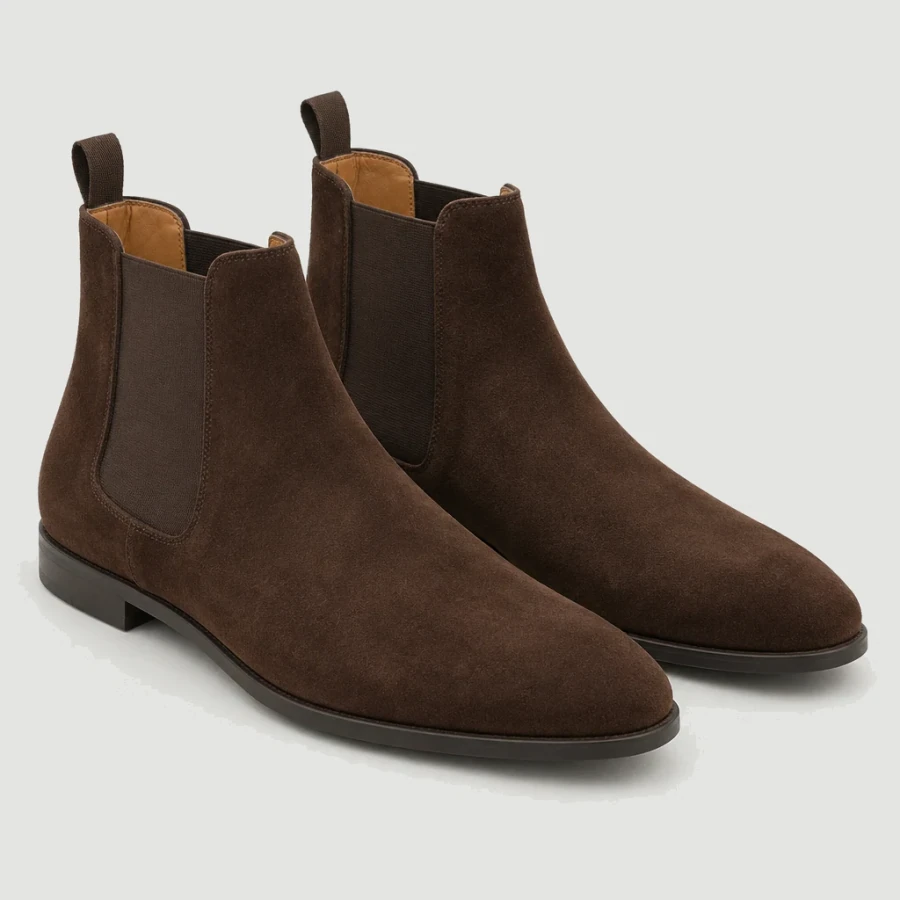
Ankle-high boot without laces, with elastic panels on both sides and usually a pull tab at the heel. The smooth, slim shape makes them one of the few boots that also go with wool trousers and a sport coat. Dark brown suede goes with flannel, jeans and corduroy. The trousers should be slim enough to rest on the shaft without a large break.

  • Dark brown suede Chelsea boots

Chukka boot

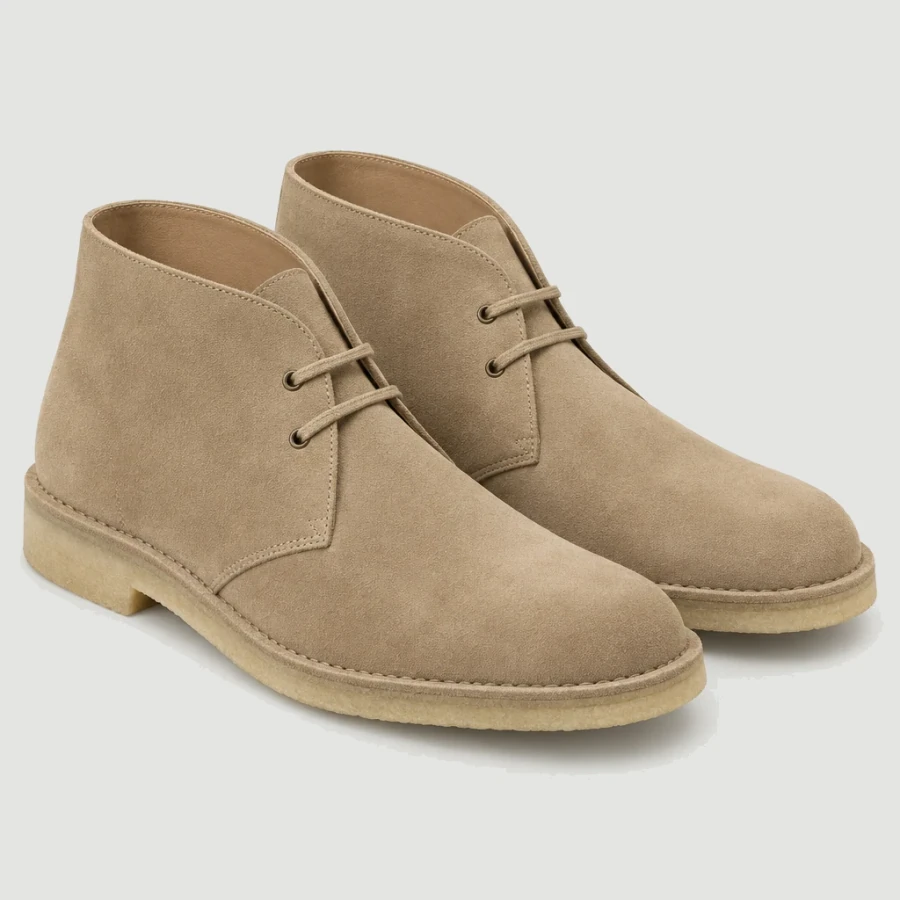
Ankle-high lace-up shoe with open lacing and only two or three pairs of eyelets, usually in suede. A variant with a crepe sole is known as a desert boot. It is casual and goes with jeans, chinos and corduroy, also with an overshirt or knitwear. With worsted and suits it is too relaxed.

  • Sand suede chukka boot

Derby

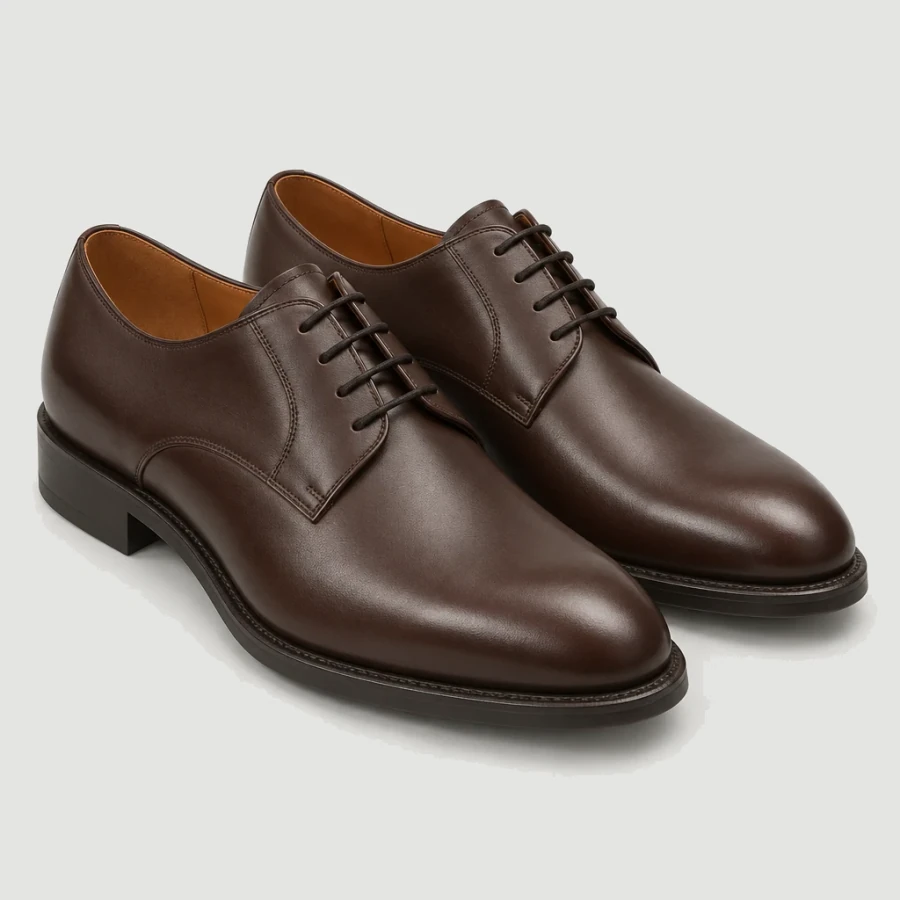
Lace-up shoe with open lacing: the side pieces with the eyelets are sewn on top of the vamp and stand slightly apart when laced. This lets it adapt well to different feet and makes it look a bit sturdier than the Oxford. It is versatile, from flannel and a sport coat to chinos and jeans. In dark brown smooth leather it suits many occasions.

  • Dark brown smooth leather derby

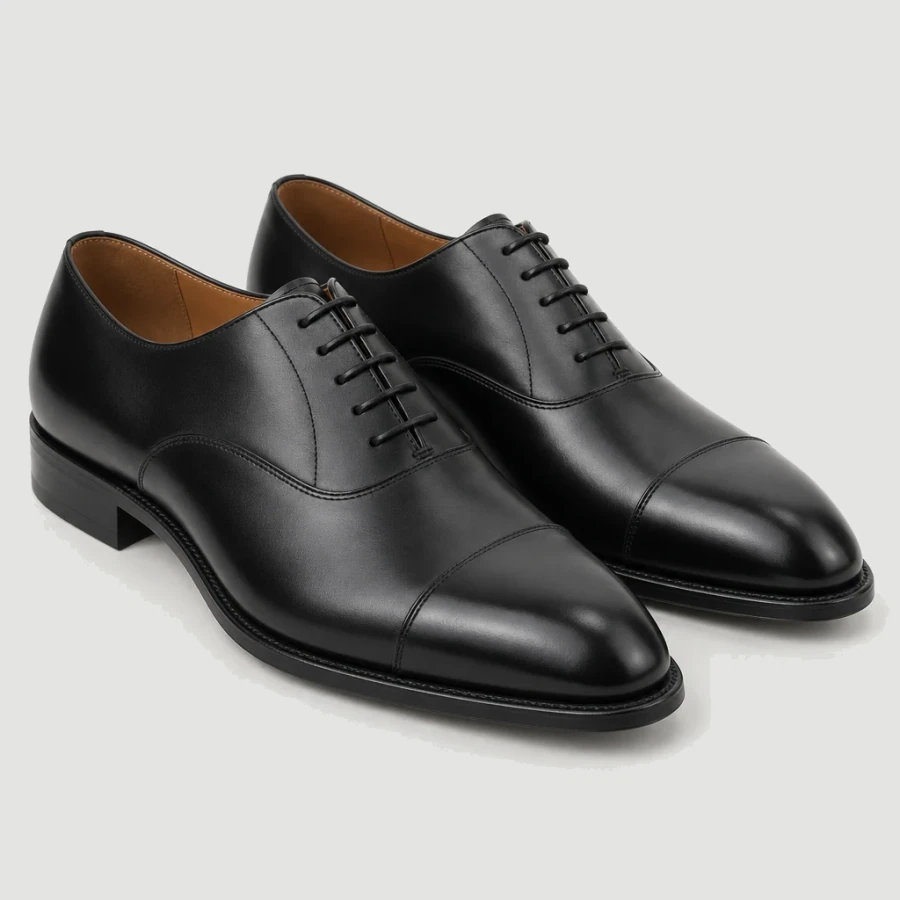
Oxford

Lace-up shoe with closed lacing: the side pieces with the eyelets are sewn underneath the vamp and close flush when laced. This gives a smooth, slim shape; it is more formal than the derby. In black it is the shoe for a dark suit; it does not go with jeans. Not to be confused with Oxford cloth for shirts.

  • Black Oxford lace-up shoe

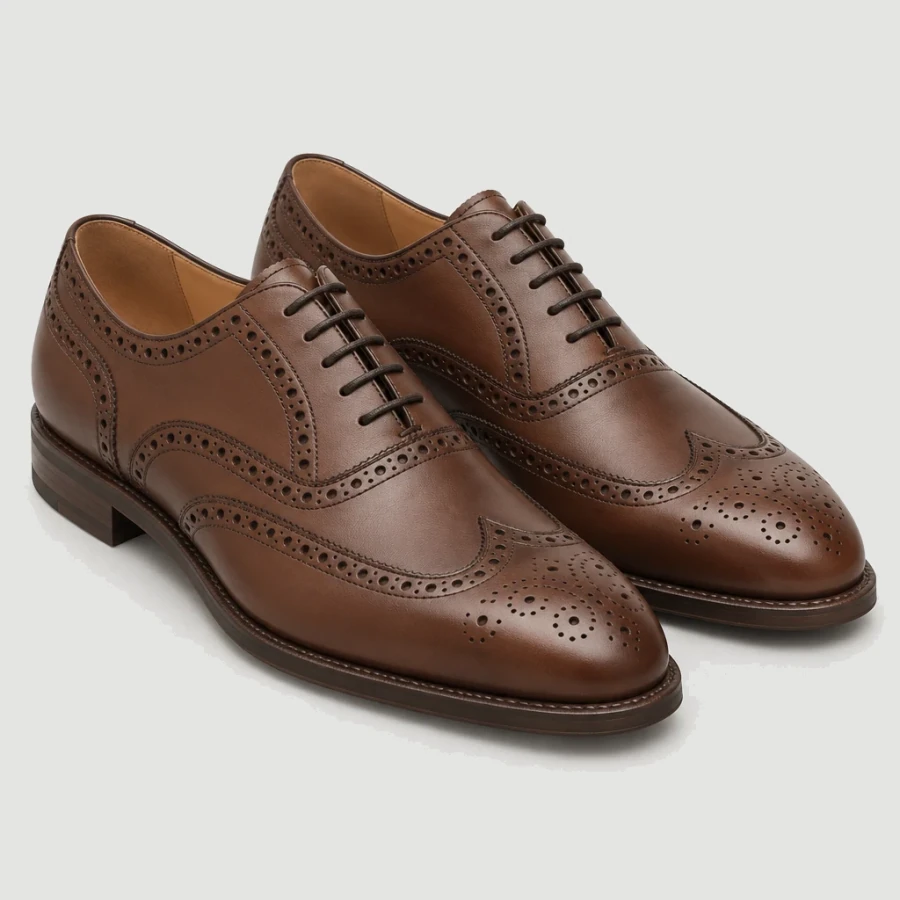
Budapester

Lace-up shoe with a wingtip cap and perforations across the whole upper (full brogue), usually with a sturdy sole and a slightly raised toe. Perforated patterns come from the robust country shoe; accordingly the Budapester belongs more with flannel, corduroy and tweed than with a dark suit. The name refers to the shoemaking tradition in Budapest.
  • Brown Budapester

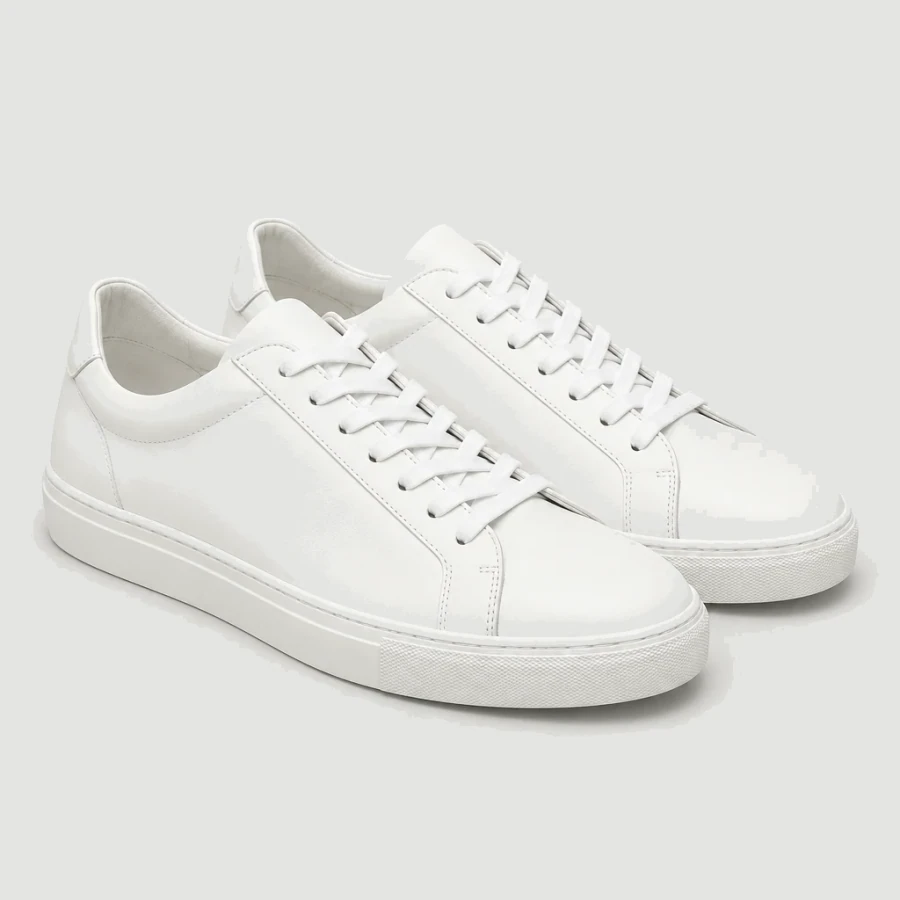
Leather sneaker

Flat sneaker made of smooth leather with a rubber cupsole, without logos or contrast details. In white it deliberately dresses down chinos, jeans and even wool trousers. It only works as long as it is clean; leather can be wiped off and cared for.
  • White sneaker

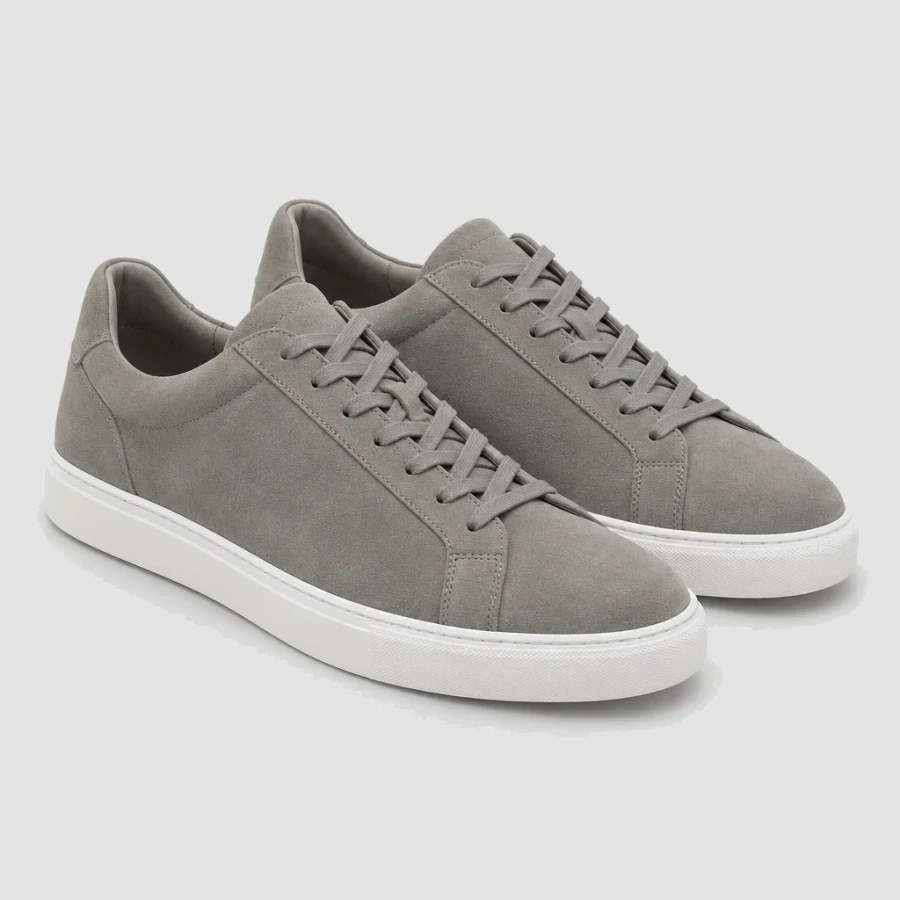
Suede sneaker

Plain sneaker made of suede: more matte and softer than the white leather sneaker and less conspicuous. In gray or brown it goes well with wool trousers, flannel and knitwear. Waterproof it before the first wear, and it will also tolerate light rain.

  • Gray suede sneaker

Boat shoe

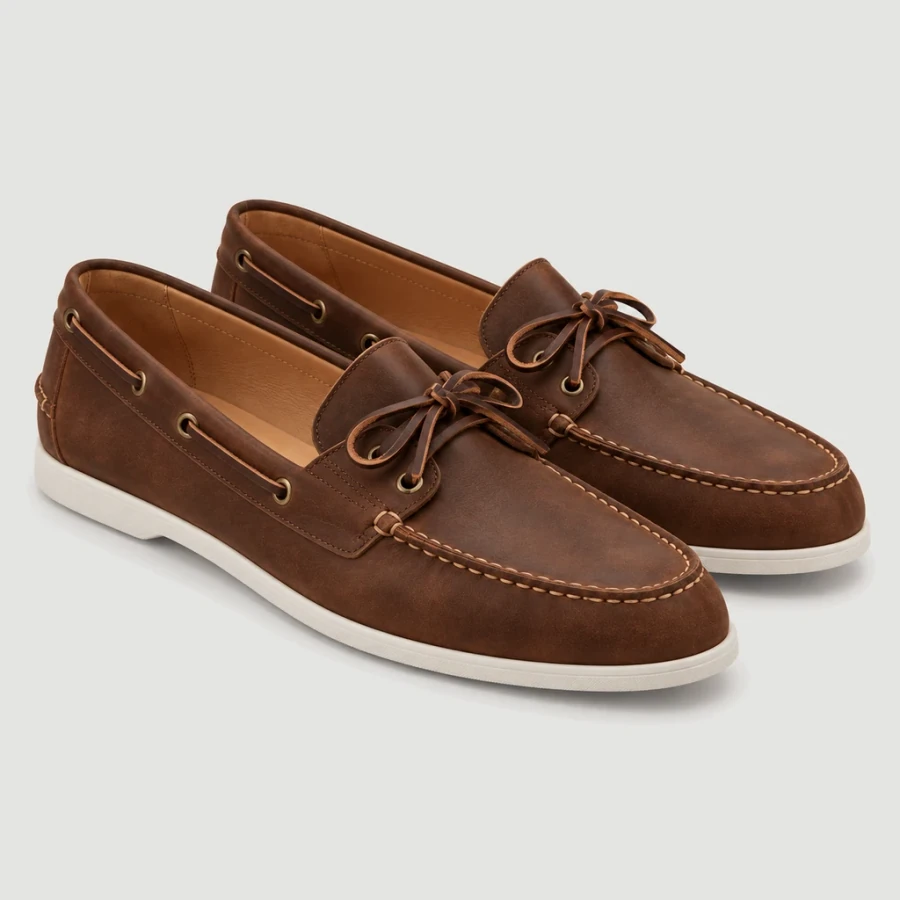
Moccasin construction with a leather cord running around the shoe as lacing, usually made of oiled smooth leather, with a light rubber sole with fine siping that grips on a wet deck. Originally made for the boat, it is now a summer shoe for chinos, linen trousers and shorts, worn without socks or with no-show socks. In brown or navy it looks calm; with wool trousers and a sport coat it is too casual.

  • Brown boat shoe

Lace-up boot

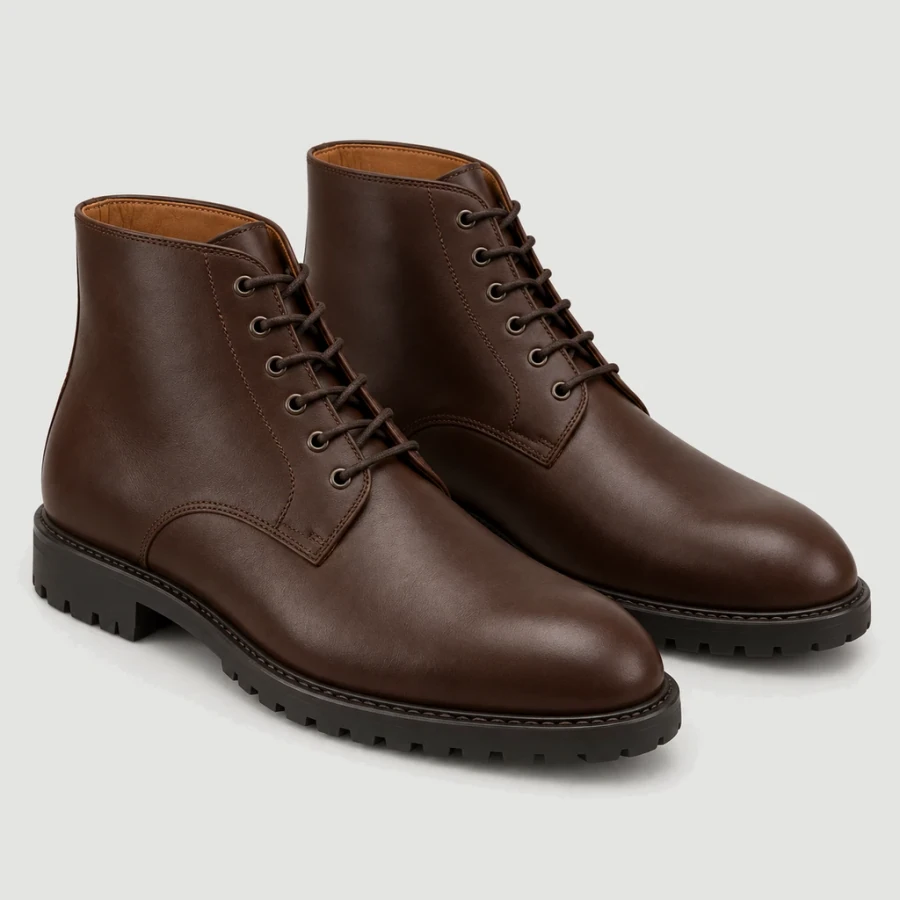
Ankle-high lace-up boot made of smooth leather with open derby lacing and a grippy rubber sole, made for rain and winter. In dark brown it goes with jeans, corduroy and flannel, also with an overshirt and overcoat. It is sturdier than the Chelsea boot and more casual than a derby. It does not go with a suit.

  • Dark brown lace-up boot

Hiking boot

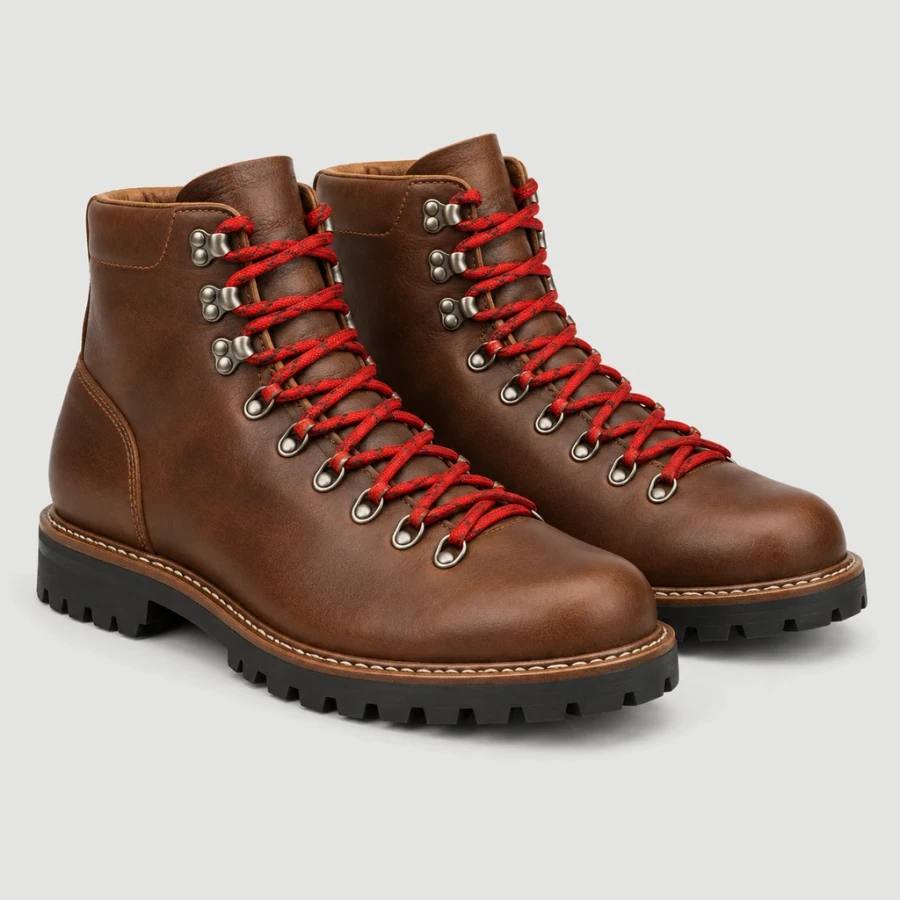
Ankle-high hiking boot made of smooth leather with a coarse lug sole and speed hooks at the top, often welted and resolable. The best-known model has red laces, which have become its trademark. It goes with jeans, corduroy and flannel, with knitwear and a down jacket, in the mountains as in the winter city. It does not go with a sport coat and pleated trousers or with a suit.

  • Brown hiking boot

Winter boot

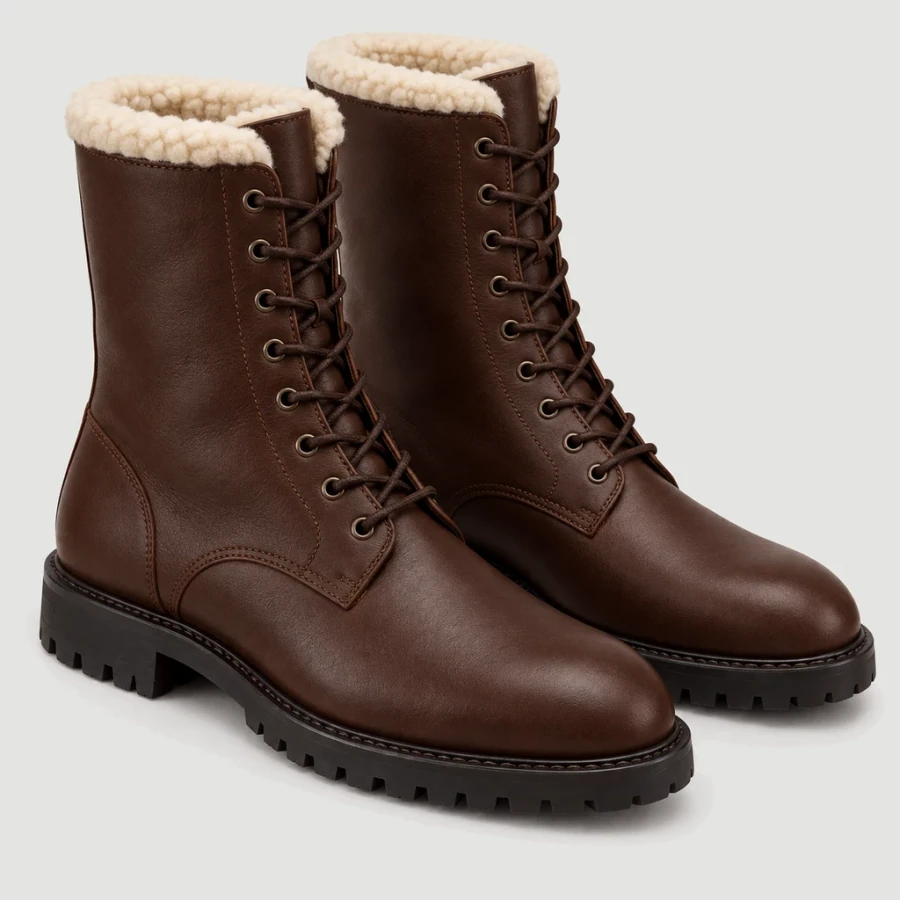
Tall, lined leather boot for snow, usually with shearling inside and a soft, grippy rubber sole. It keeps you warm where Chelsea boots and derbys reach their limit, and stays plain. With jeans and corduroy and a down jacket or overcoat, it is the calm counterpart to the moon boot and the snow boot. Outside of snow and cold it looks heavy.

  • Brown shearling winter boot

Tops

Oxford shirt

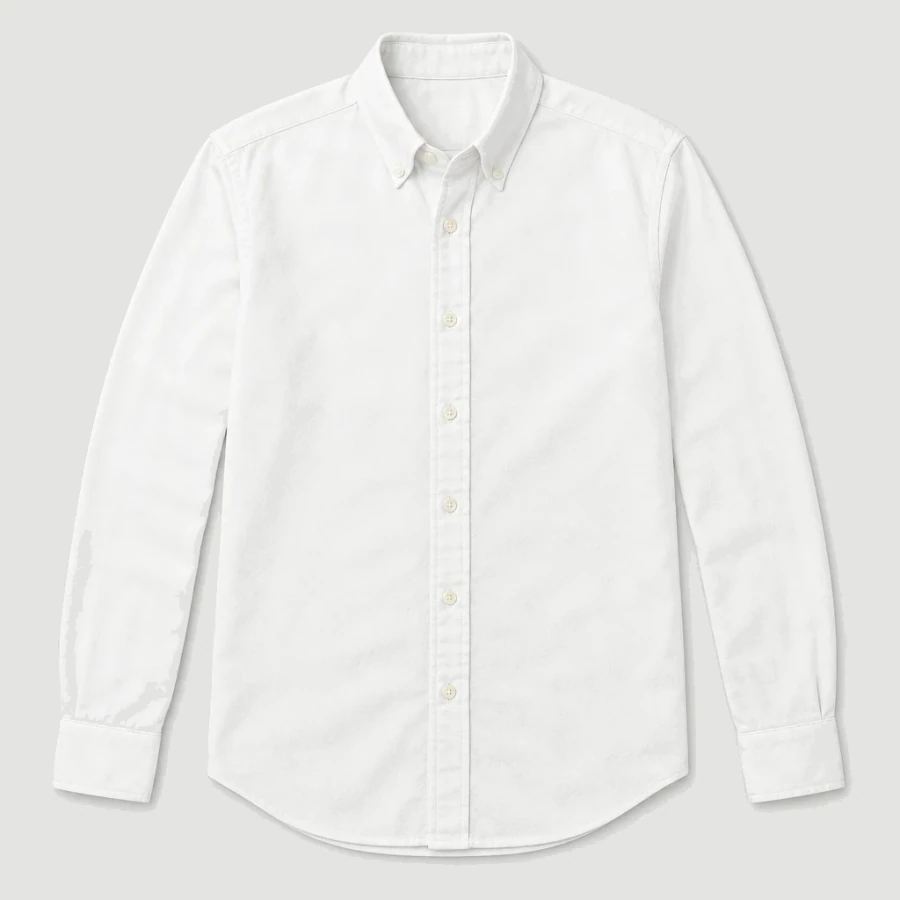
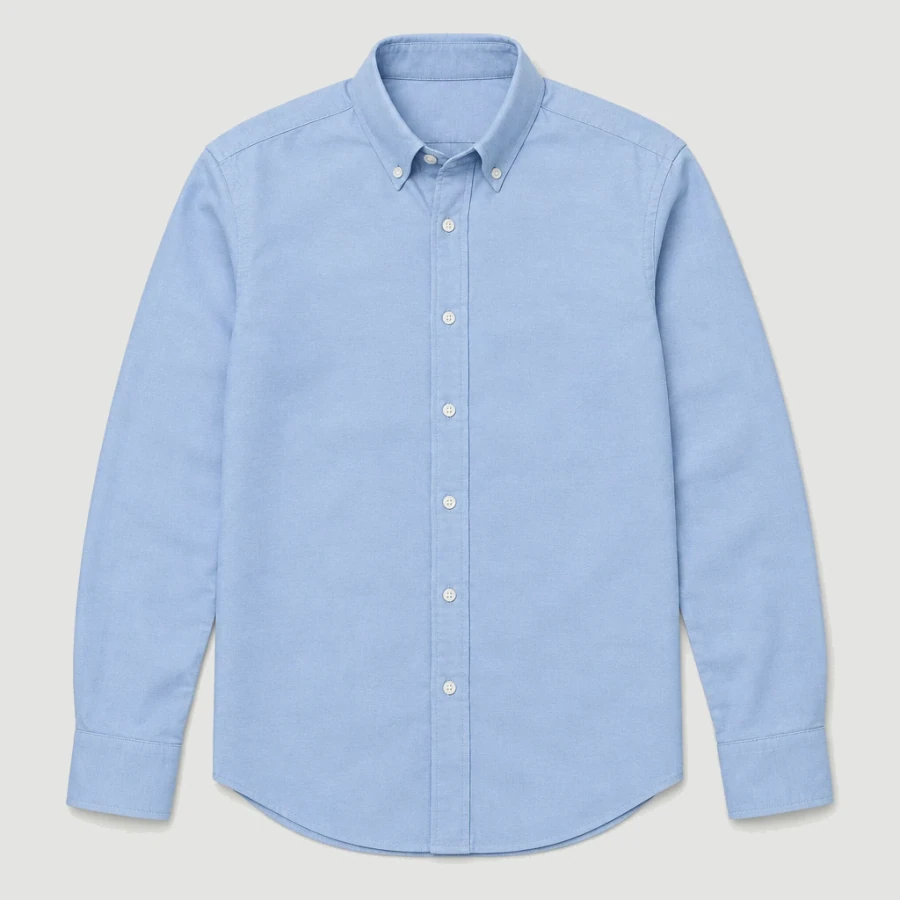
Shirt made of Oxford cloth, usually with a button-down collar whose points are buttoned to the shirt. The fabric is sturdier and slightly textured, and the shirt can be worn untucked with the sleeves rolled up. It goes with chinos, jeans and flannel, under a sport coat without a tie or with a knit tie. The button-down collar is traced back to polo, where the points were not supposed to flap.

  • White Oxford button-down
  • Light blue Oxford button-down

Poplin shirt

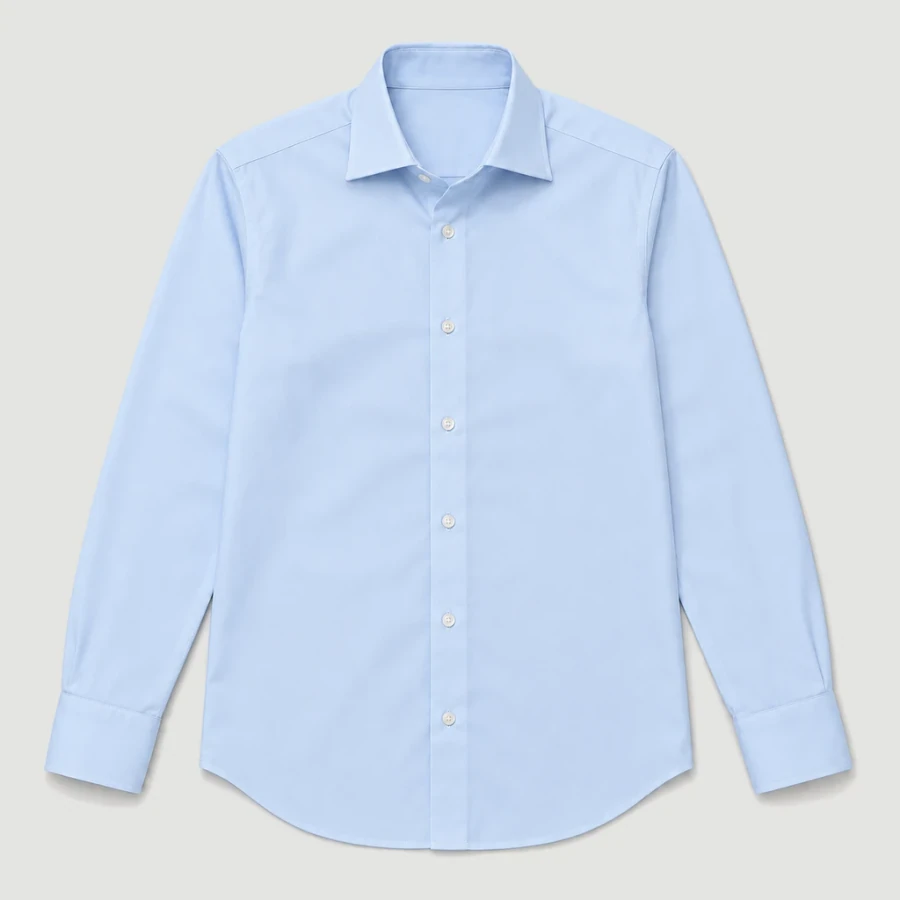
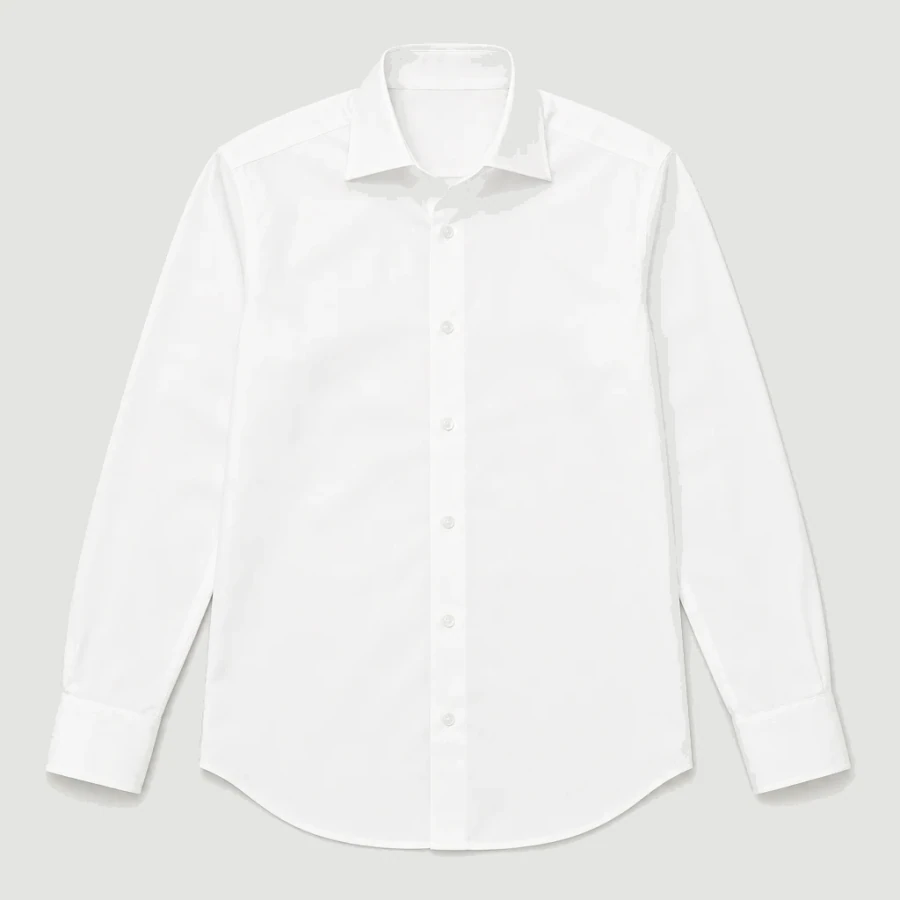
Shirt made of poplin: smooth, dense and fine, with a collar that carries a tie, such as the wide-spread cutaway collar. It is worn tucked in and is more formal than an Oxford or chambray shirt. In white or light blue it goes with a suit, a sport coat and wool trousers. With jeans and sneakers it quickly looks like an office shirt in the wrong place.

  • Light blue poplin shirt
  • White poplin shirt

Chambray shirt

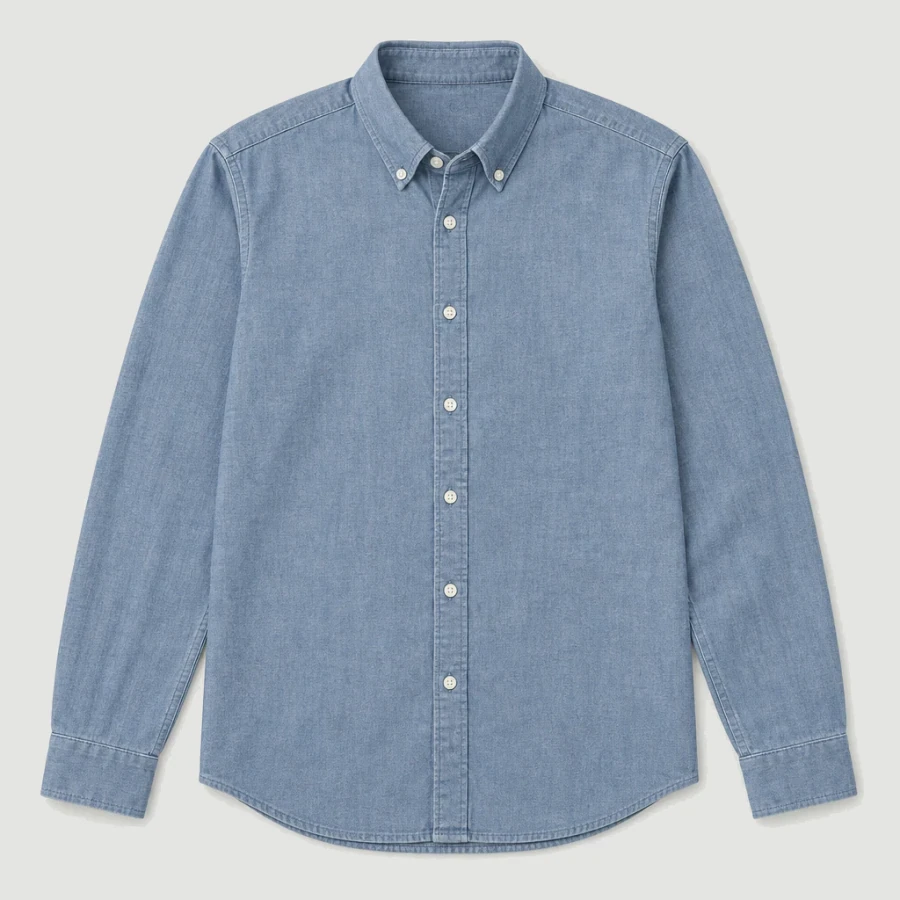
Shirt made of chambray, which from a distance looks like lightweight denim. It is casual, but softer and lighter than a denim shirt and wearable all year. In light blue it goes with chinos, gabardine and dark jeans; with jeans, better to have a clear difference in the shade of blue. Under a wool sport coat it pleasantly breaks the formality.

  • Light blue chambray shirt

Camp-collar shirt

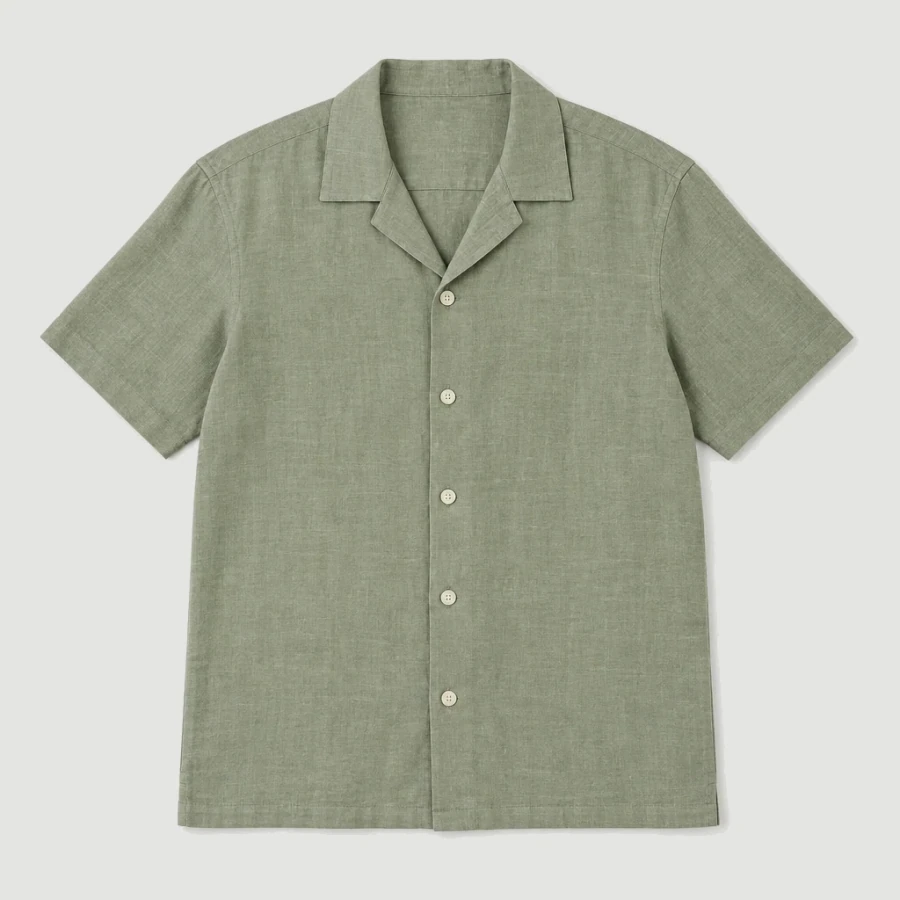
Shirt with a flat, open lapel collar without a collar stand and a straight hem, made to be worn untucked. Usually made of linen, cotton or viscose, short-sleeved and for warm days. It goes with linen trousers, chinos and loafers or driving moccasins. With a sport coat and wool trousers it is too summery and casual.

  • Sage linen camp-collar shirt

Band-collar shirt

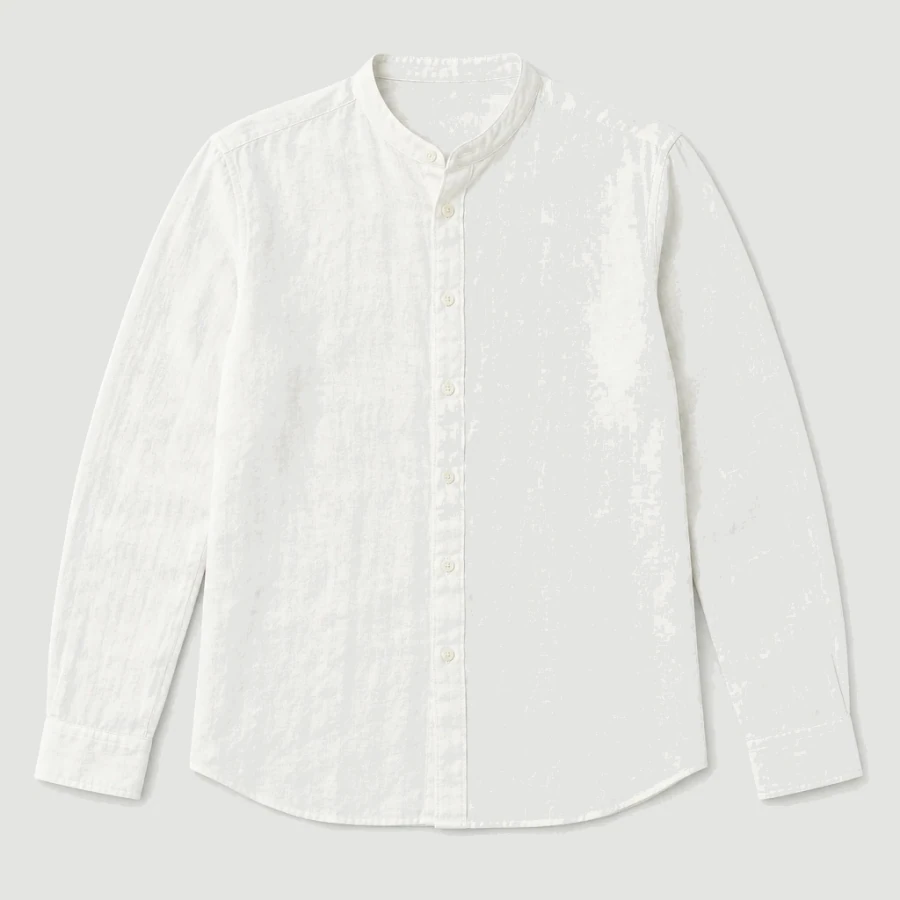
Shirt that has only the collar band and no collar points. Meant to be worn without a tie, it looks pared-down and calm. In linen it is a summer shirt for linen trousers and chinos, also under a light, unlined sport coat.

  • White linen band-collar shirt

Polo

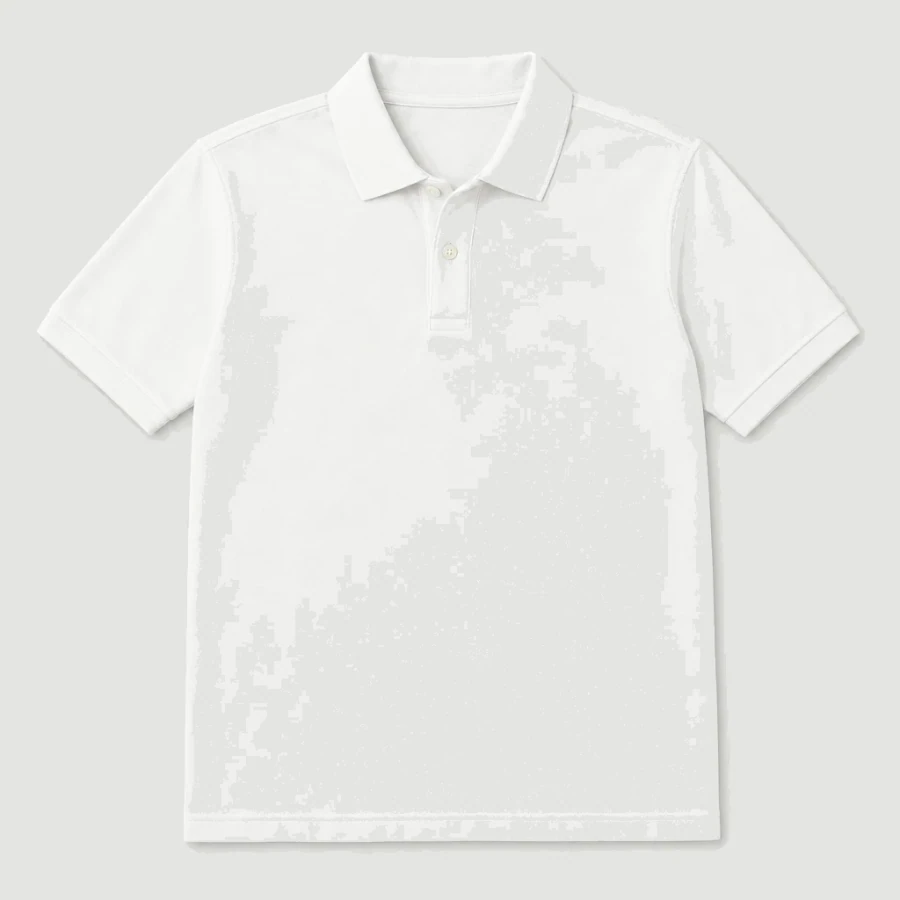
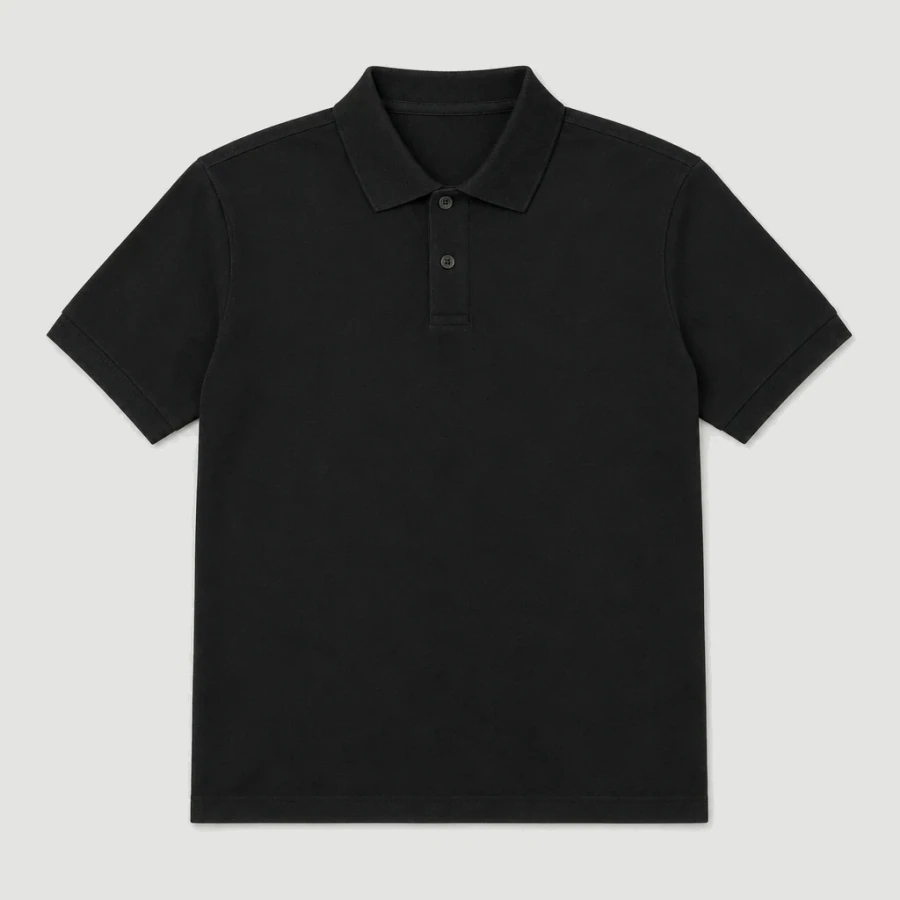
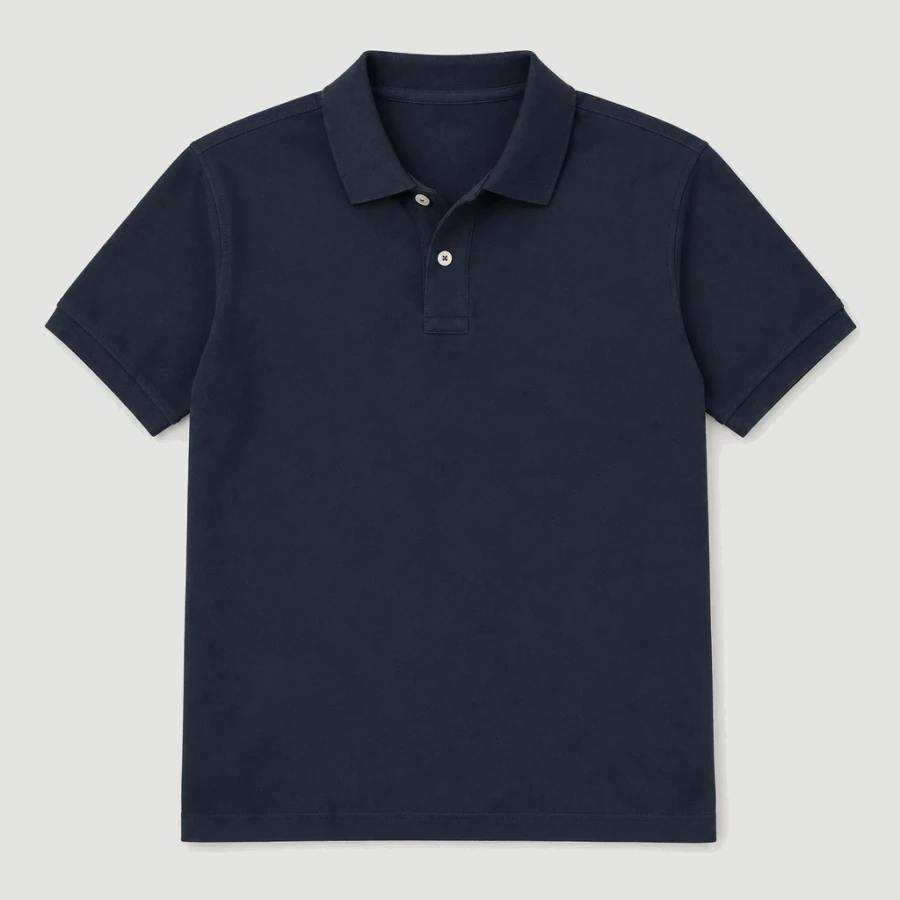
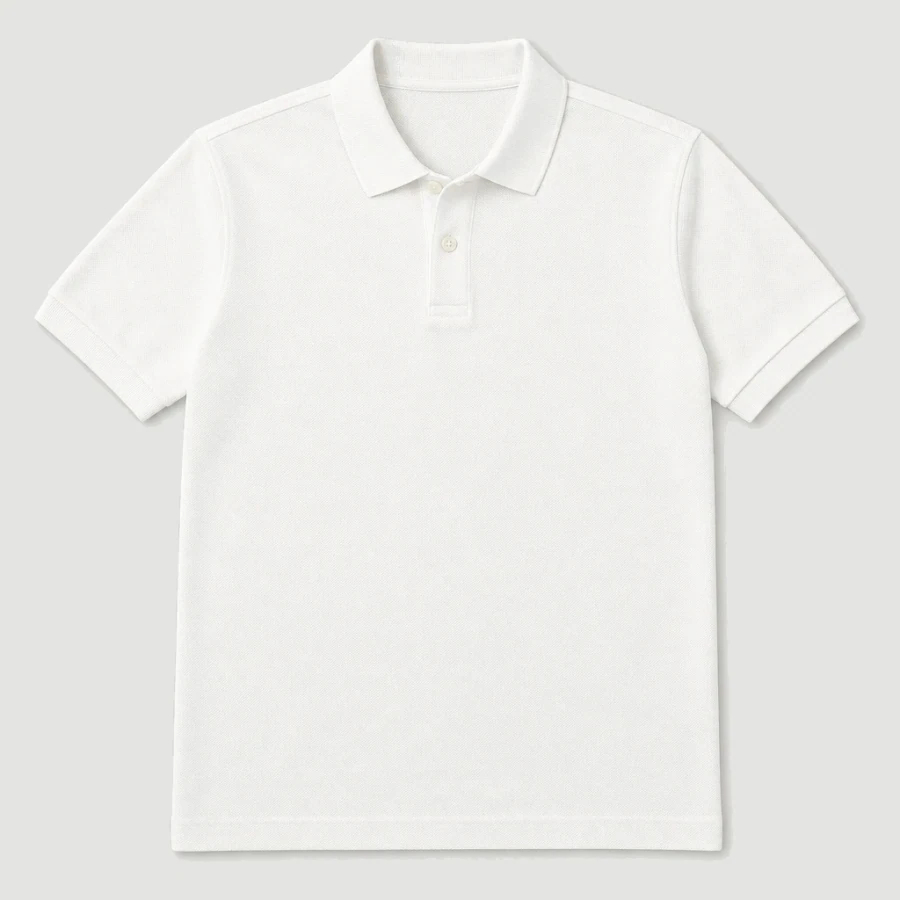
Short-sleeved top with a shirt collar and a short placket with two or three buttons. The classic version is made of piqué and comes from tennis; smoother jersey versions look a little calmer. It is the smarter step above the T-shirt and goes with chinos, linen and fresco, in summer also under an unlined sport coat. The collar should be firm enough not to fall flat.

  • White polo
  • Black polo
  • Navy polo
  • White piqué polo

Knit polo

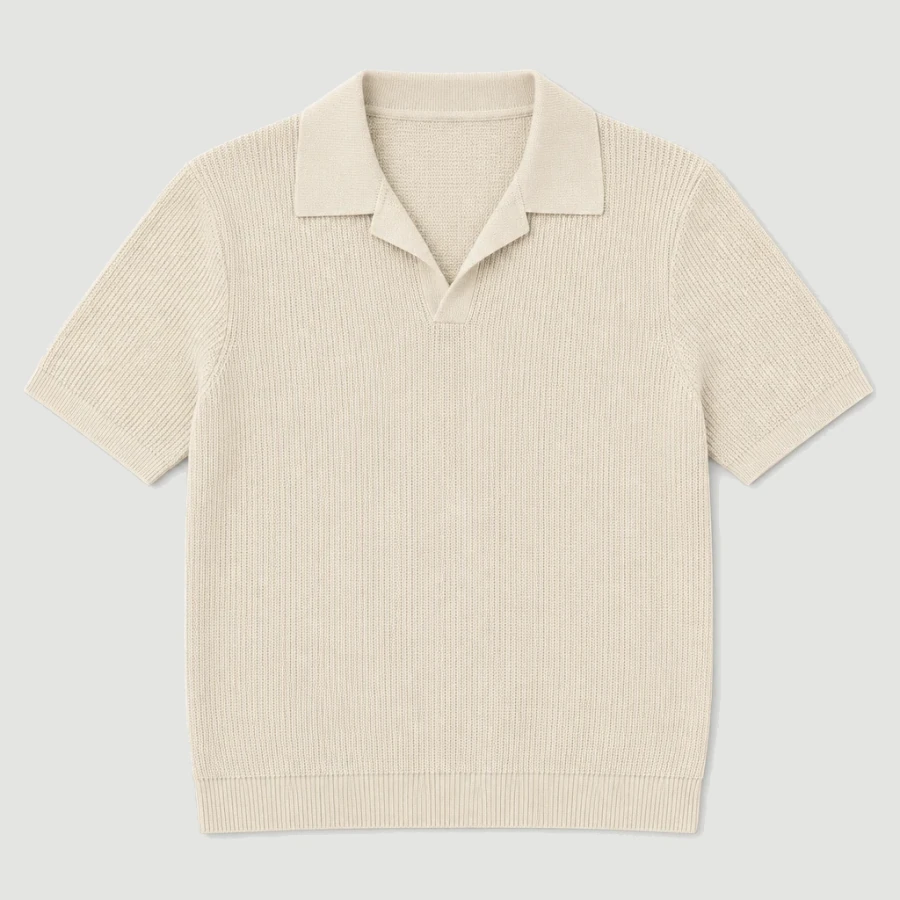
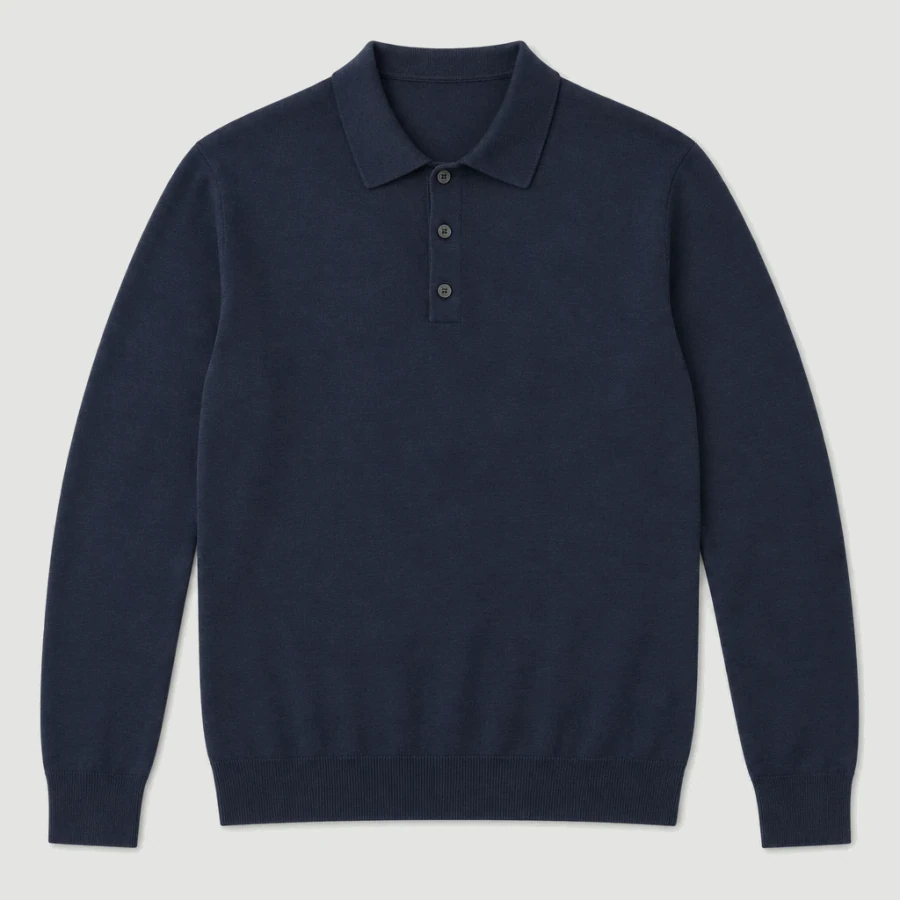
Polo made of knit instead of jersey, in cotton for summer or in merino for the cooler months. It comes with a button placket or with an open camp collar, short- or long-sleeved. Long-sleeved, it replaces the shirt in fall, also under the sport coat. It goes with wool trousers, chinos and loafers.

  • Ecru camp-collar knit polo
  • Navy long-sleeve knit polo

Henley

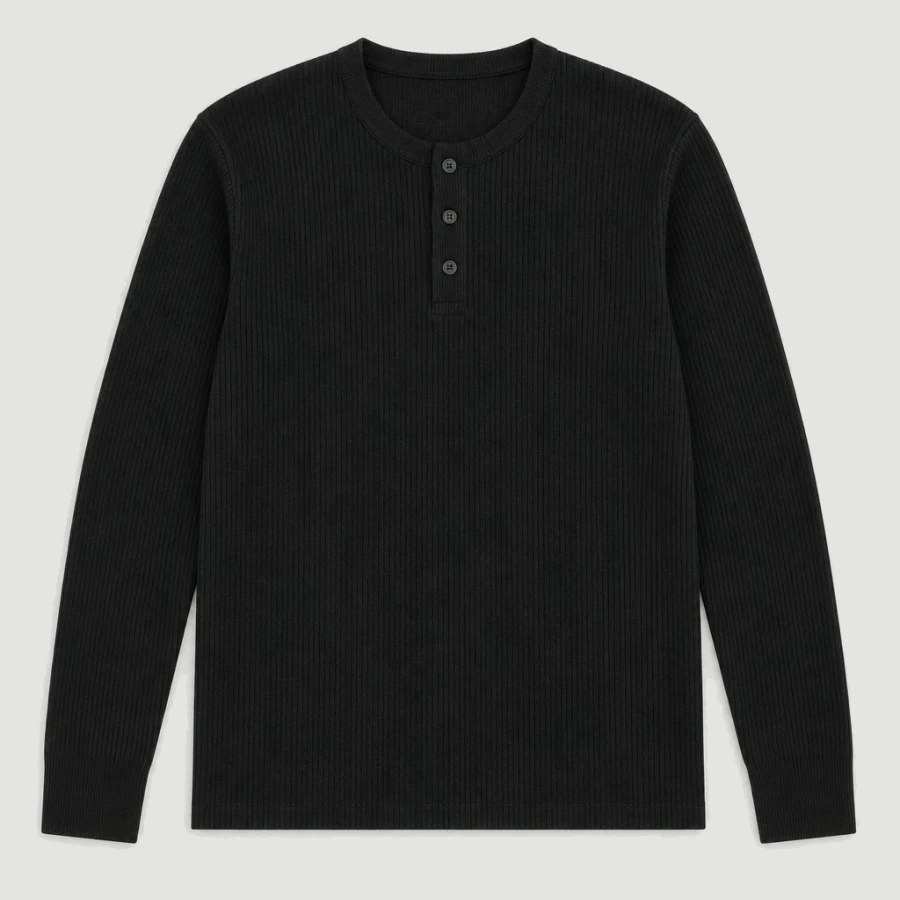
Crewneck top without a collar, with a short button placket. Made of jersey or fine ribbed knit, it sits between a T-shirt and a sweater: more casual than a sweater, dressier than a T-shirt. It goes with jeans, corduroy and chinos, and works well under an overshirt.

  • Black merino henley

Crewneck sweater

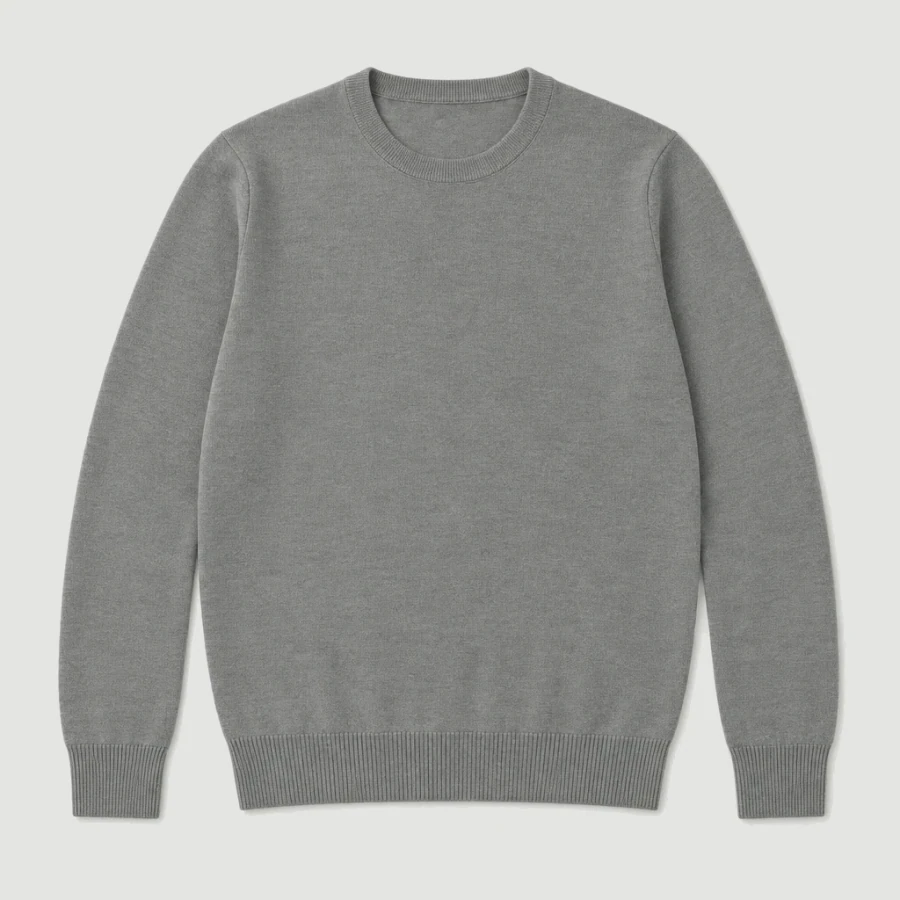
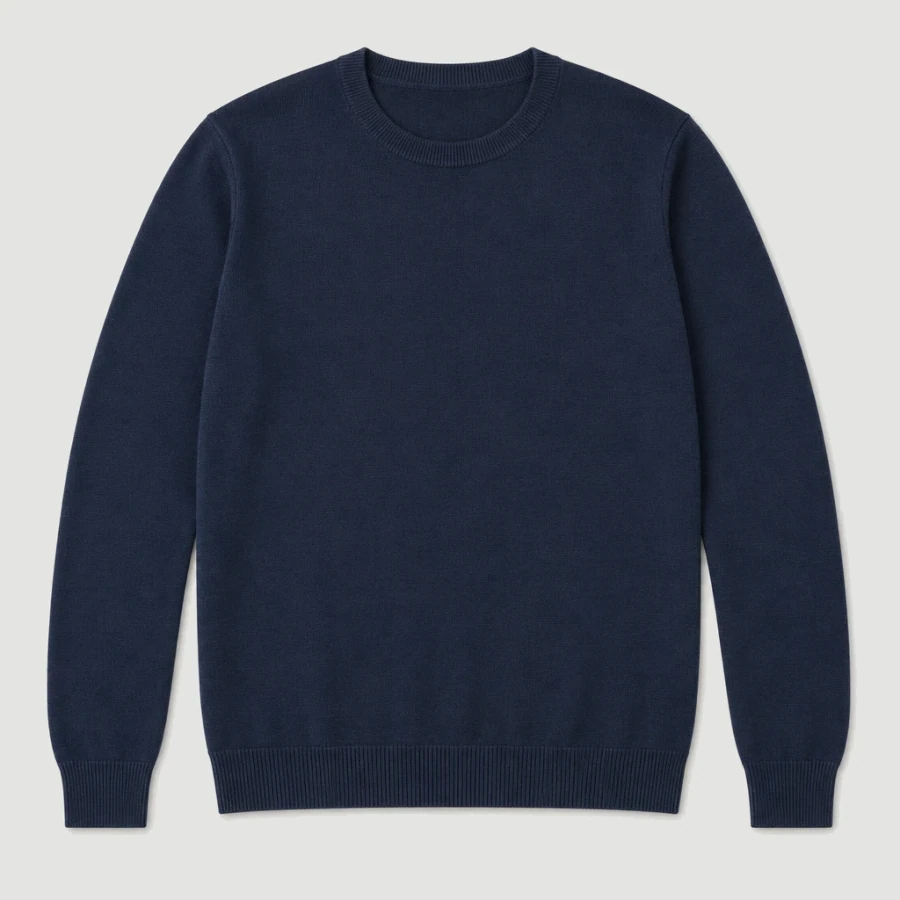
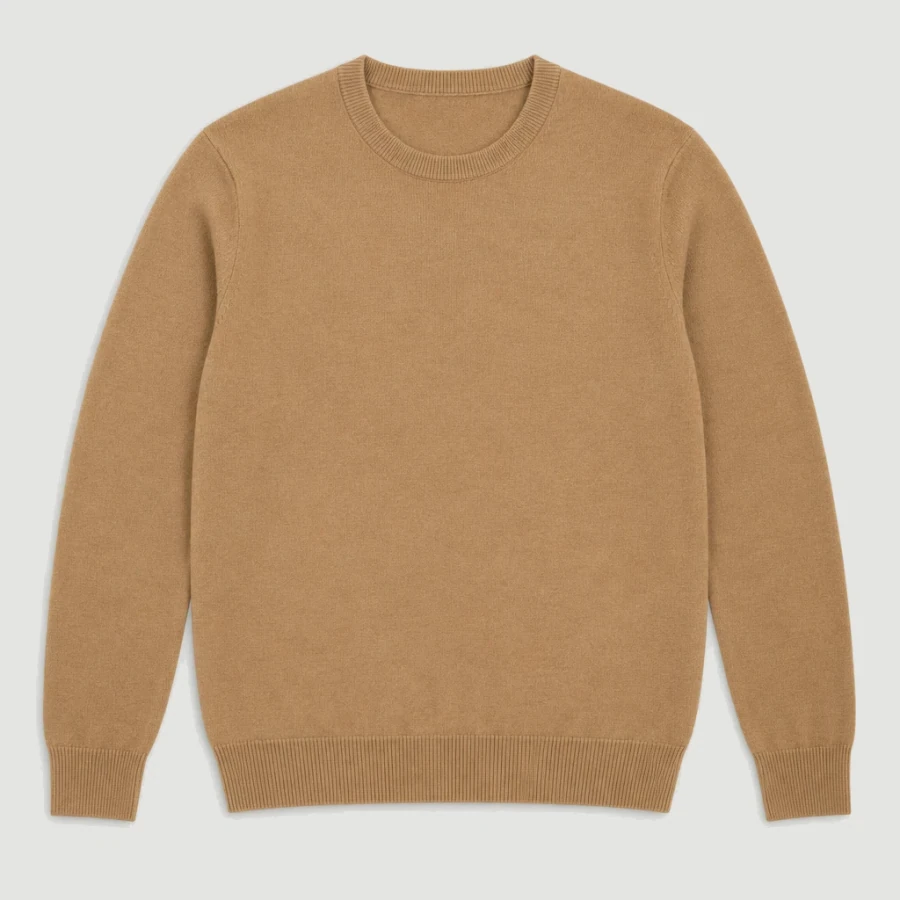
Fine-knit sweater with a round neckline, usually made of merino. It is worn over a T-shirt or shirt, with the shirt collar inside or outside. In gray, navy or camel it goes with nearly every trouser in the catalog, from jeans to flannel. It should fit closely at the shoulders and cuffs without pulling.

  • Gray merino crewneck
  • Navy merino crewneck
  • Camel merino crewneck

Turtleneck

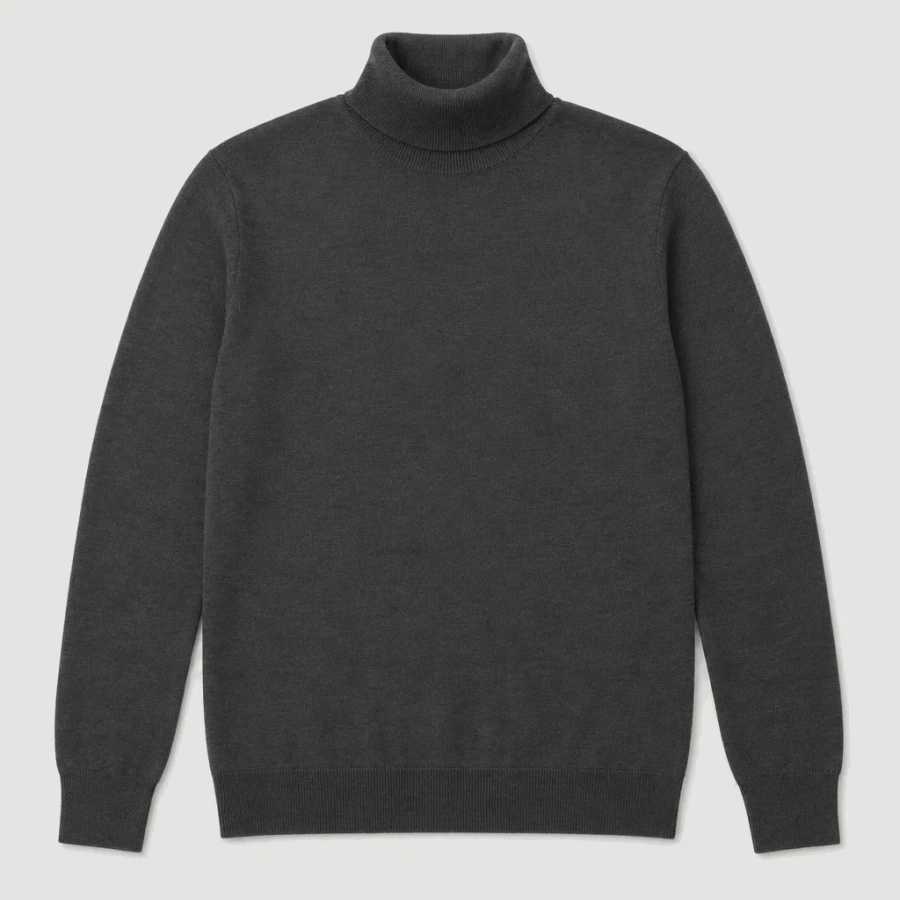
Sweater with a high collar that is folded over double and lies against the neck. In fine merino it lies flat under the sport coat and replaces shirt and tie there. It belongs to fall and winter, with flannel, wool trousers and an overcoat. Dark shades such as charcoal or navy are easy to combine.

  • Charcoal merino turtleneck

Funnel neck

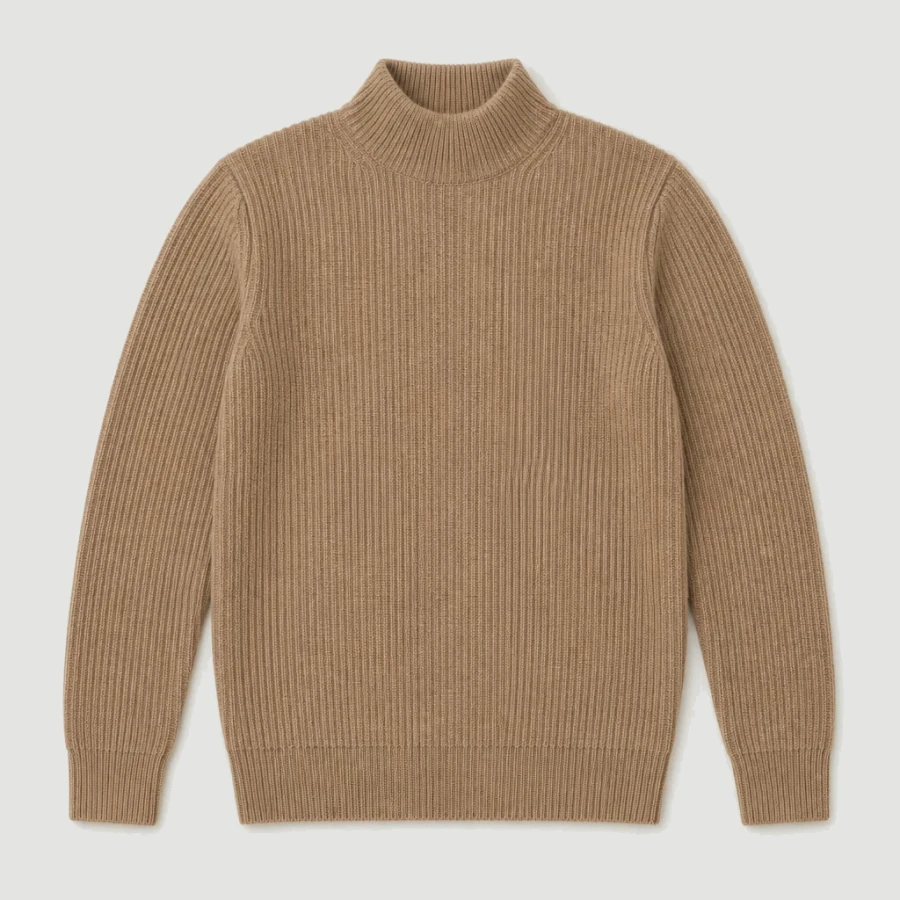
Sweater with a high collar that is not folded over but stands slightly away from the neck like a funnel. It sits less tight than the turtleneck and therefore looks a little more contemporary. Ribbed and made of wool or wool-cashmere, it goes with flannel, corduroy and jeans, under an overcoat or an overshirt.

  • Light brown funnel-neck sweater

Cardigan

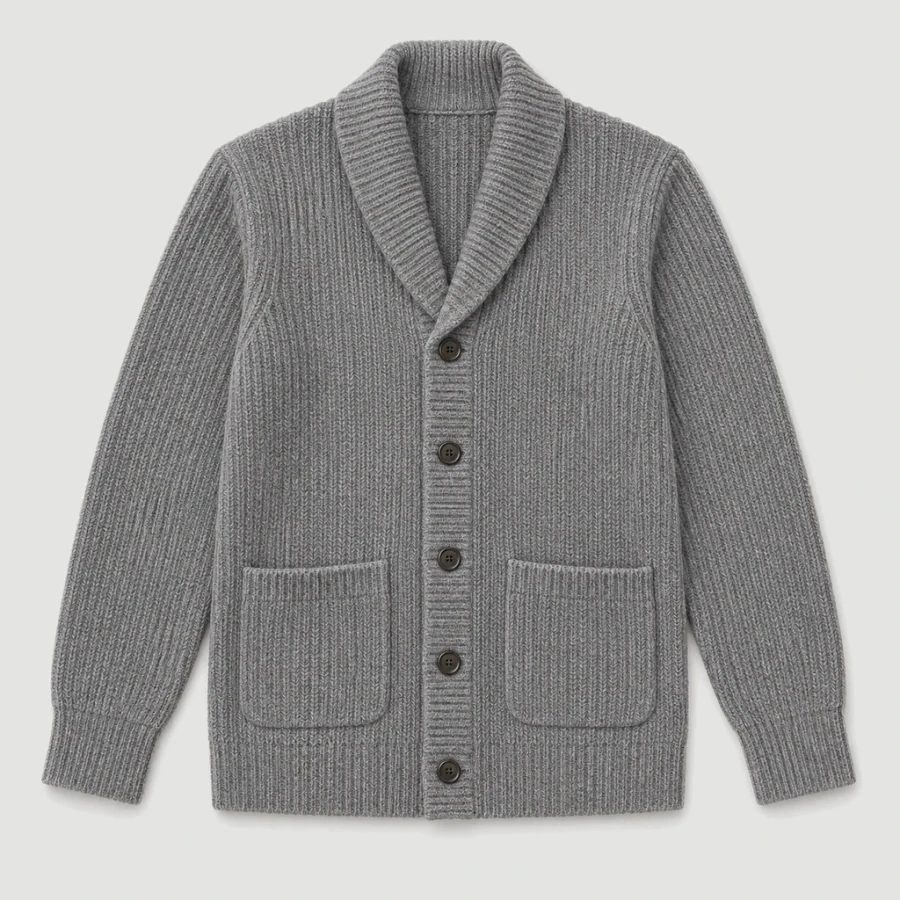
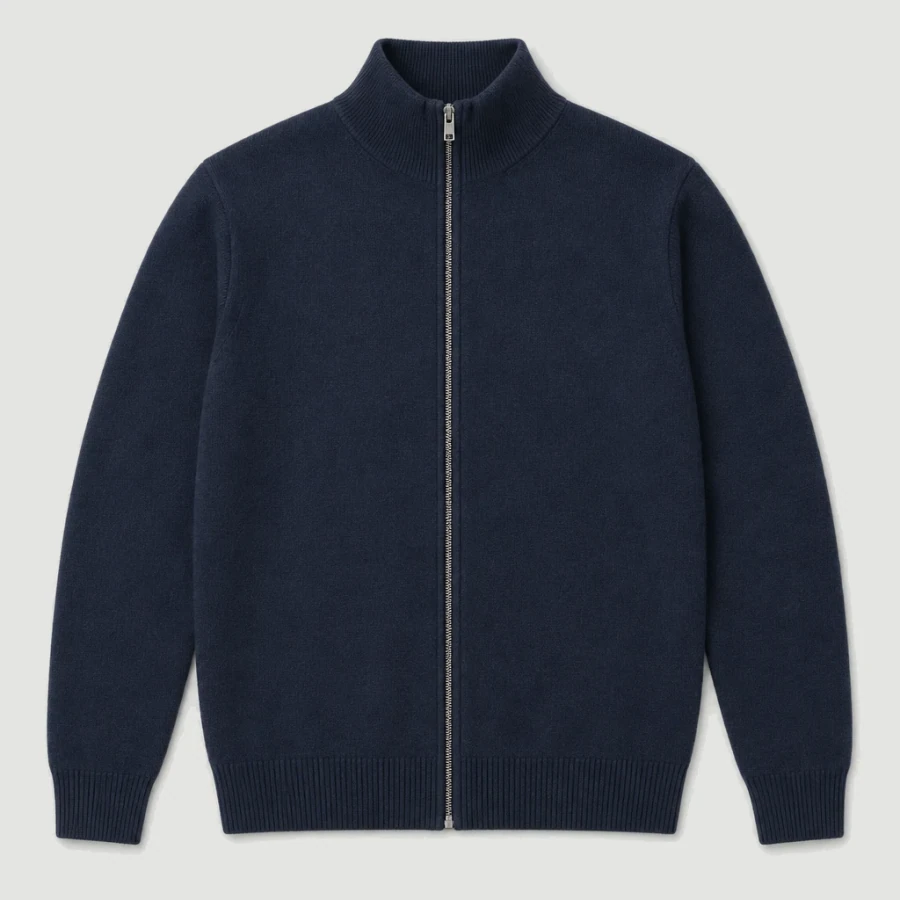
Knitted jacket that opens all the way down, with buttons or a zipper. It is a soft layer over a T-shirt, polo or shirt and can replace a sport coat in calm settings. Navy or gray goes with chinos, wool trousers and jeans. The name goes back to the British Earl of Cardigan.

  • Gray shawl-collar cardigan
  • Navy zip cardigan

T-shirt

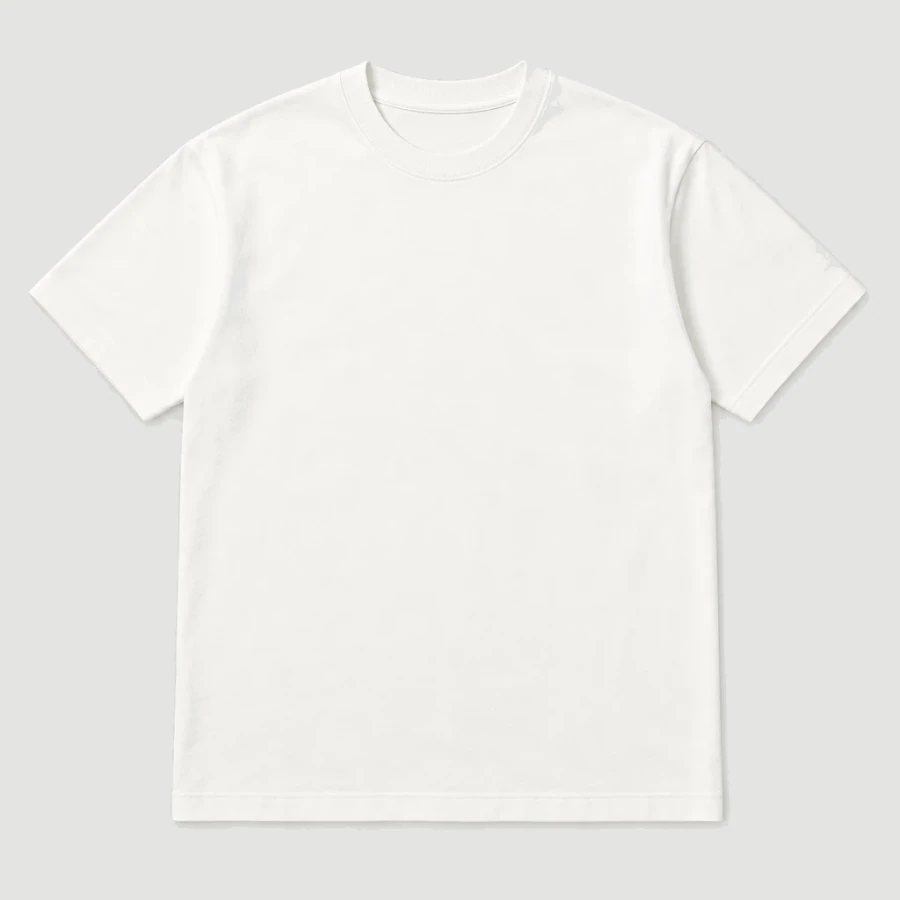
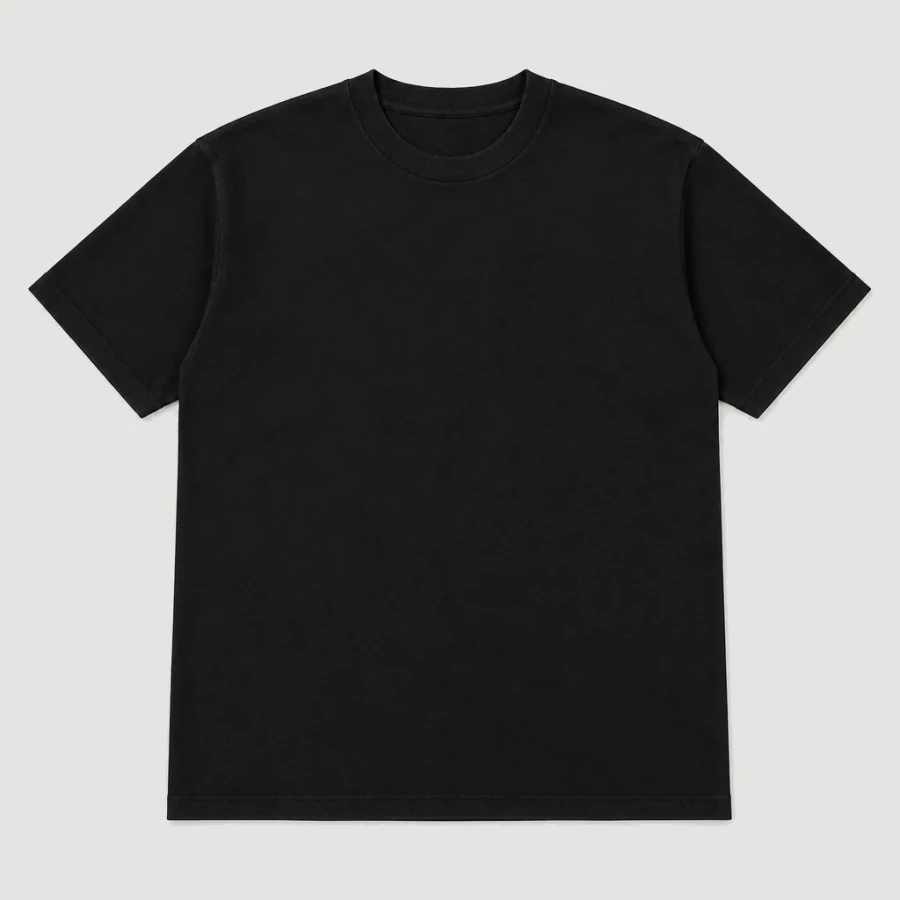
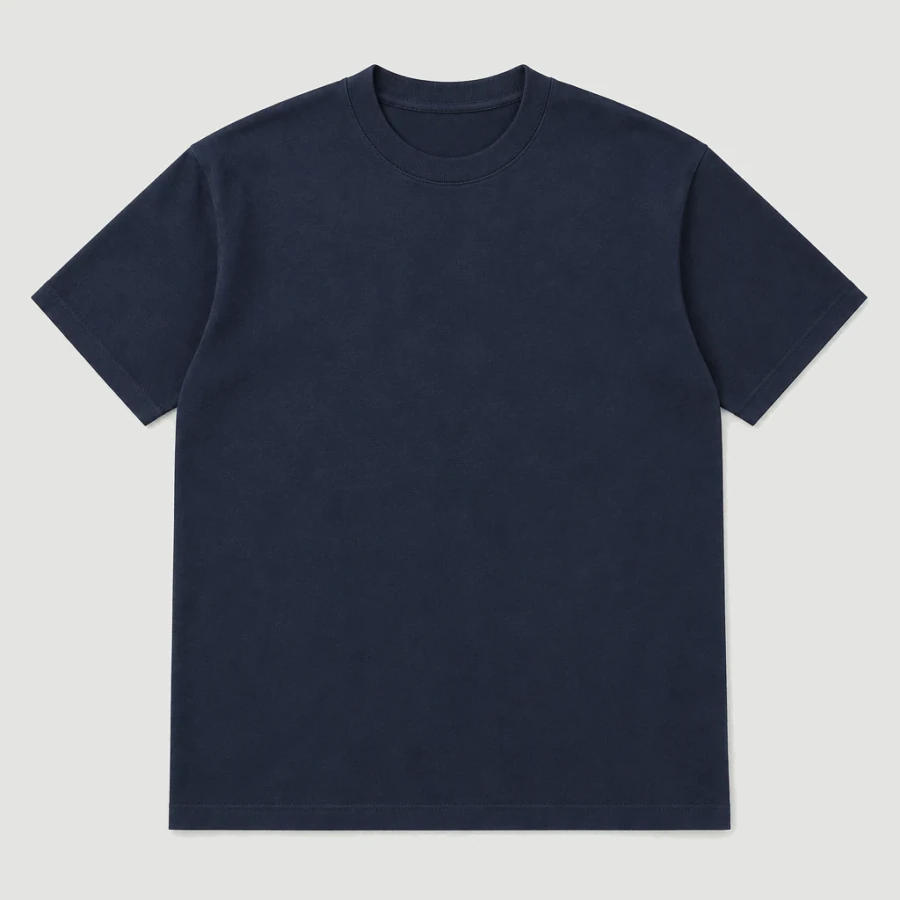
Crewneck top made of cotton jersey. A heavy, dense fabric drapes more cleanly and shows less than a thin shirt. The shoulder seam sits on the edge of the shoulder, and the sleeves fit closely on the upper arm. White, black and navy work on their own, under a sport coat, overshirt or cardigan.

  • White T-shirt
  • Black T-shirt
  • Navy T-shirt

Sweatshirt

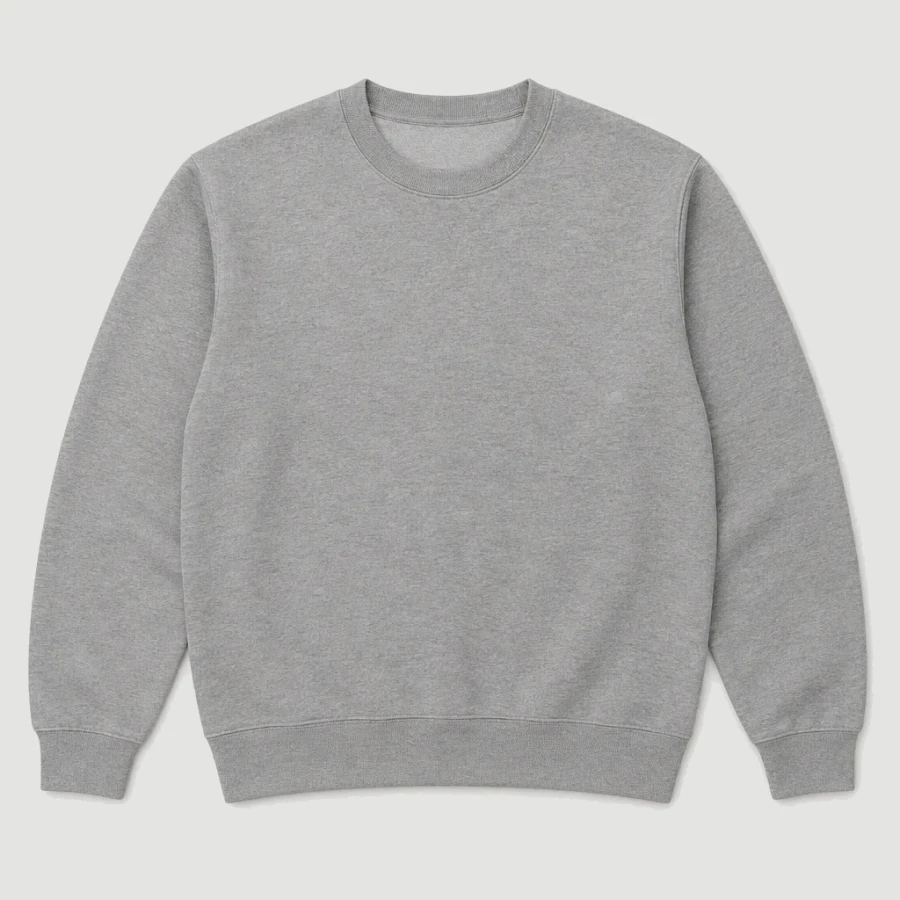
Crewneck pullover made of cotton sweat fabric, usually loopback with loops on the inside, with ribbed cuffs at neck, sleeves and hem. It is the weekend counterpart to the merino sweater. In heather gray it goes with jeans, chinos and corduroy, with a chore jacket or a mac coat on top.

  • Heather gray sweatshirt

Striped shirt

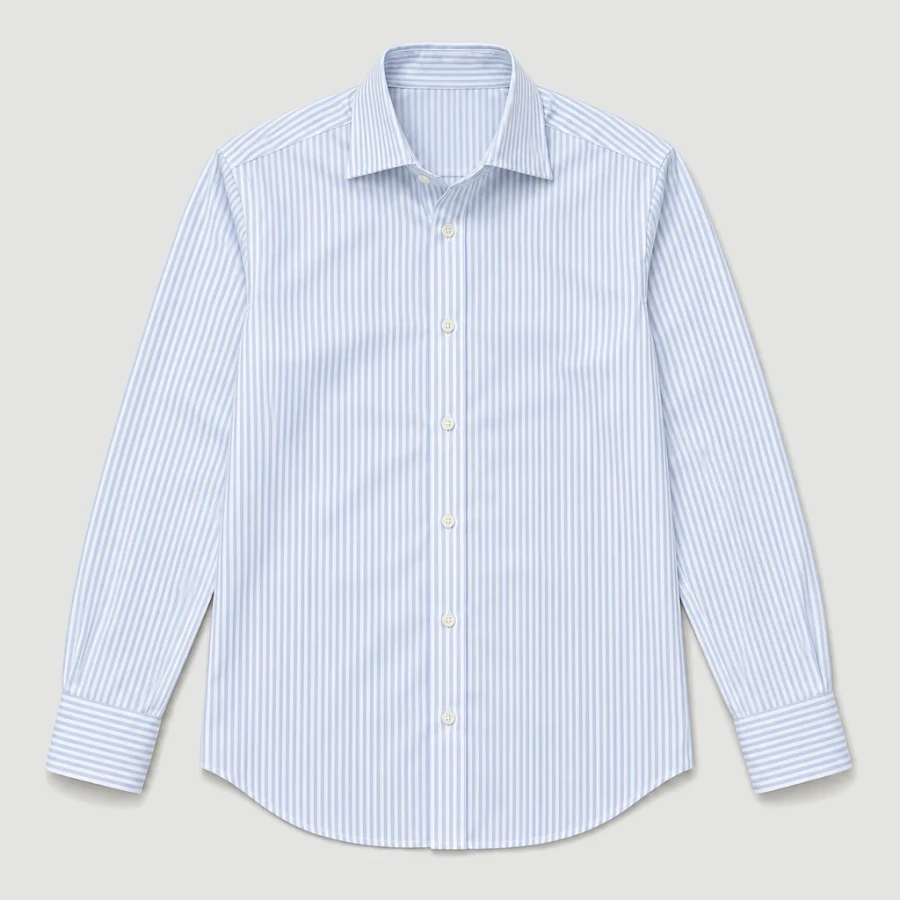
Shirt with lengthwise stripes, in the office usually fine Bengal stripes in light blue and white made of poplin. It looks livelier than a solid shirt and still stays calm as long as sport coat and tie are plain. With a suit, sport coat and wool trousers it goes like a light blue shirt. Two patterns side by side, such as stripes and check, take practice.

  • Light blue striped shirt

Linen shirt

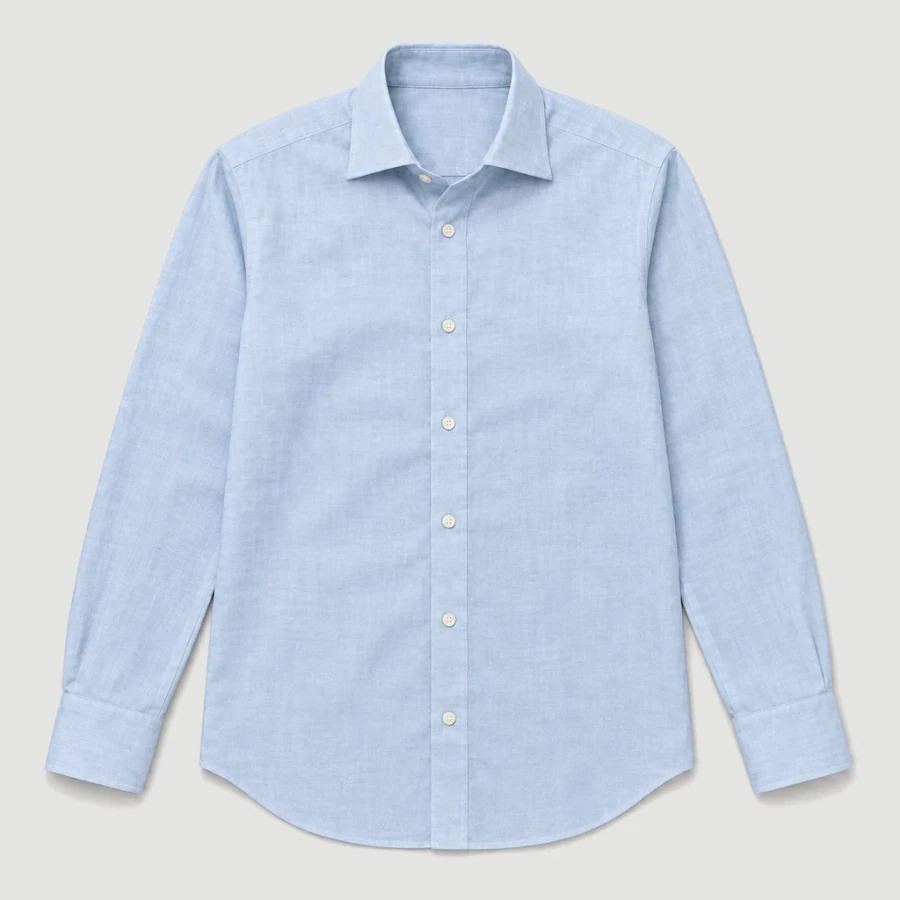
Long-sleeved shirt made of linen with a soft collar that stays cool in summer and is allowed to wrinkle. Light blue, white and navy go with chinos, linen trousers and an unlined sport coat. The sleeves can be rolled up; worn untucked, it looks casual. With wool trousers or under a winter sport coat it does not fit.

  • Light blue linen shirt

Pants

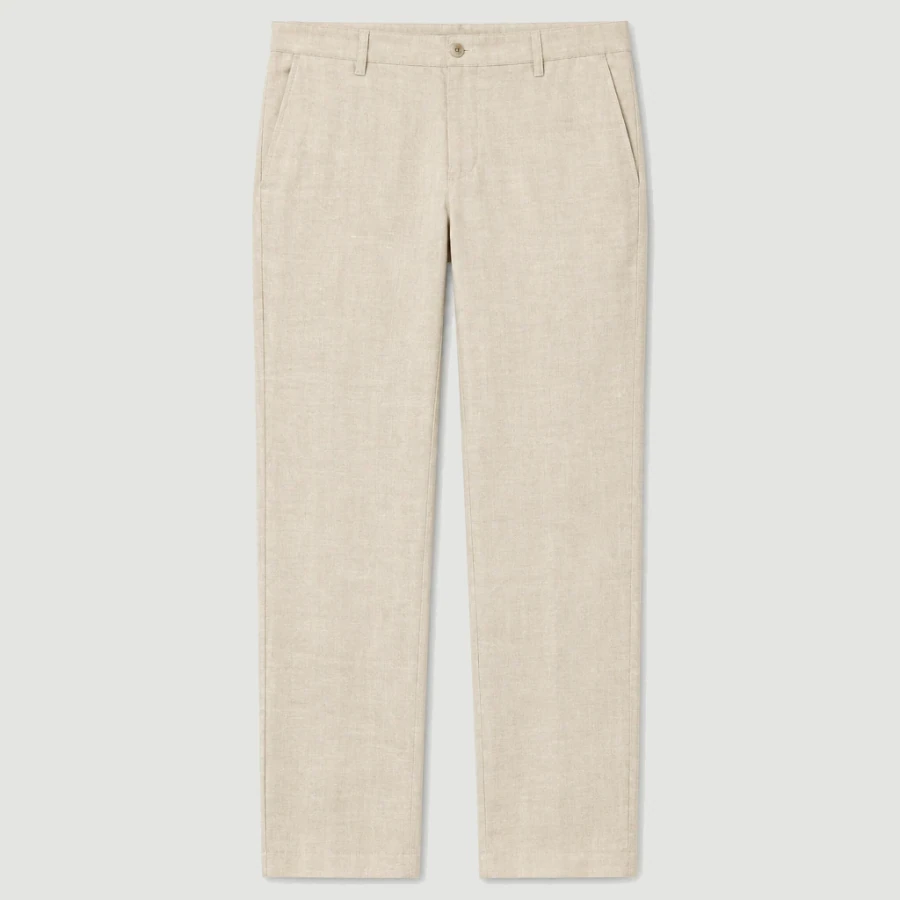
Chinos

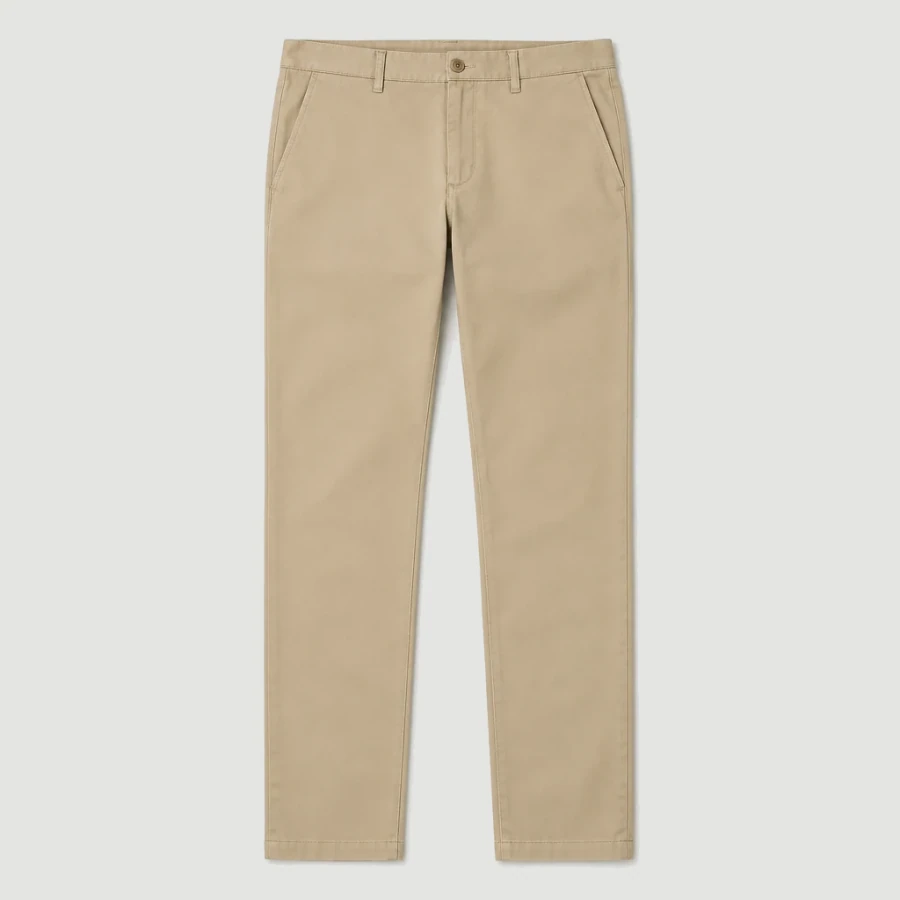
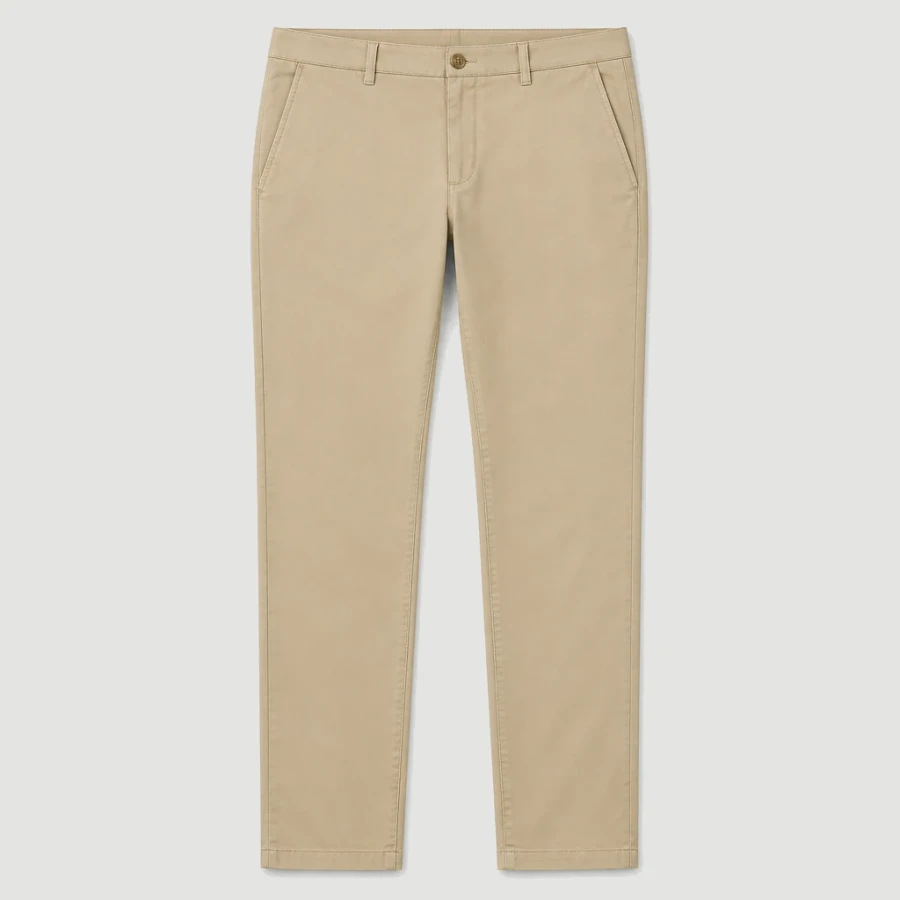
Cotton trousers made of lightweight twill, usually with a straight or slightly tapered leg and slanted side pockets. Originally military trousers, they are now the casual basis between jeans and wool trousers. Beige, sand or navy go with polo, Oxford shirt, knitwear and loafers. They should sit without wrinkles at the hip and rest only lightly on the shoe.

  • Beige chinos
  • Sand chinos

Gabardine trousers

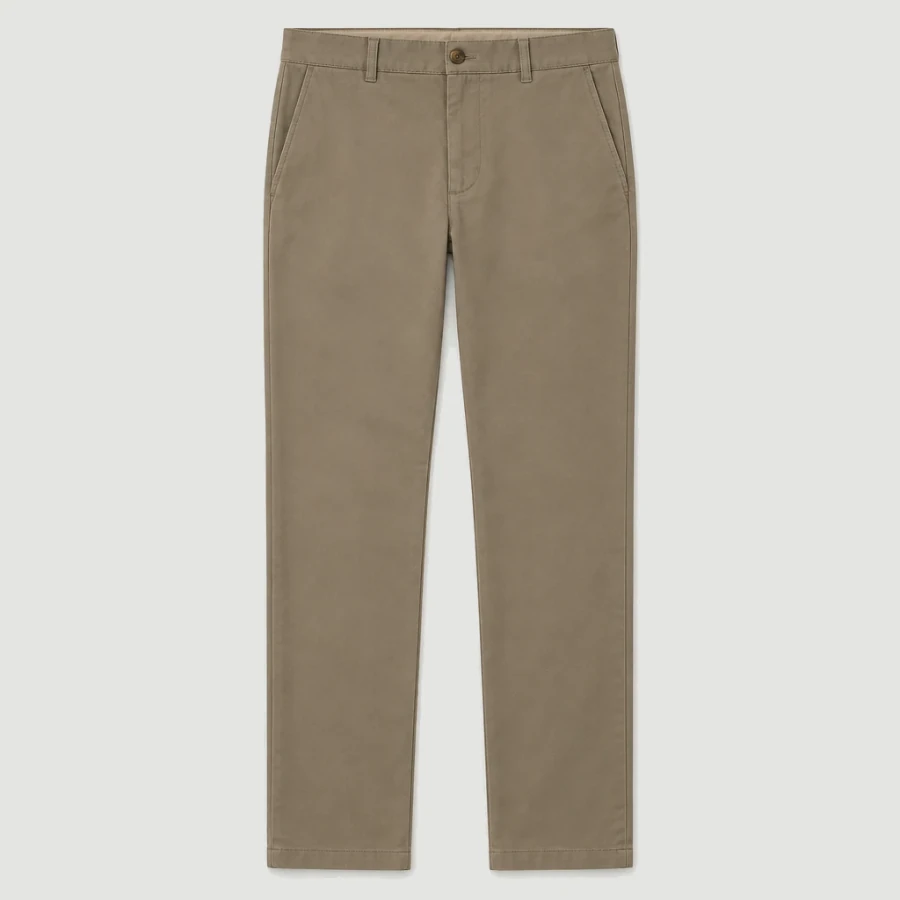
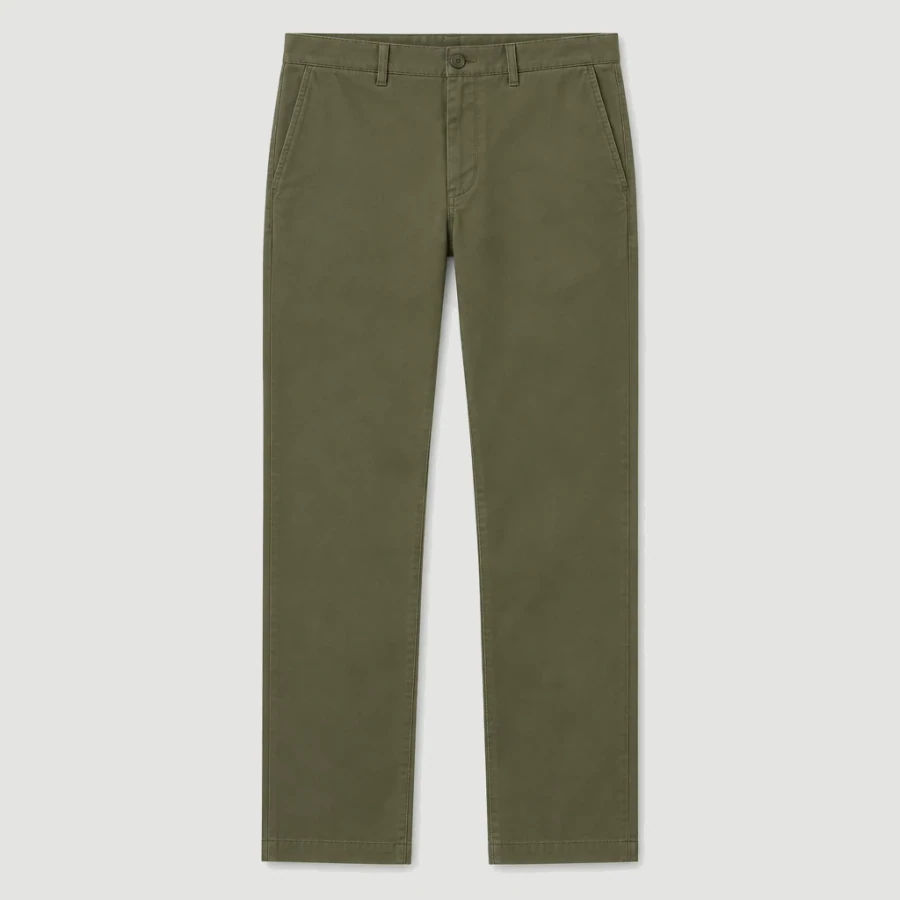
Cotton trousers made of gabardine: denser, smoother and a little heavier than chinos, with a fine, steep diagonal rib. They look a step dressier and hold a crease better. Taupe or olive goes with a white shirt, navy knitwear and loafers, also with a sport coat.

  • Taupe gabardine trousers
  • Olive gabardine trousers

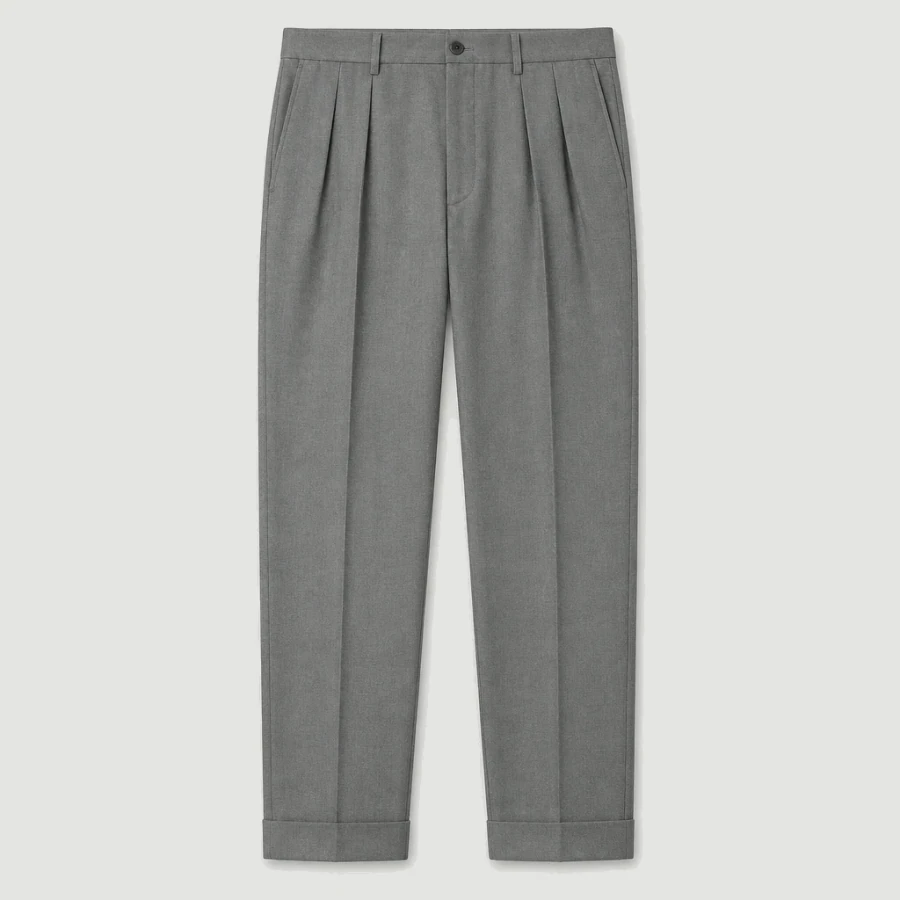
Pleated trousers

Trousers with one or two pleats at the waistband that give more room at the hip and thigh. They usually have a higher rise and are worn at the waist; the leg then falls straight down. They belong with knitwear, shirt and sport coat and need a calm top that is worn tucked in or short.

  • Gray pleated trousers

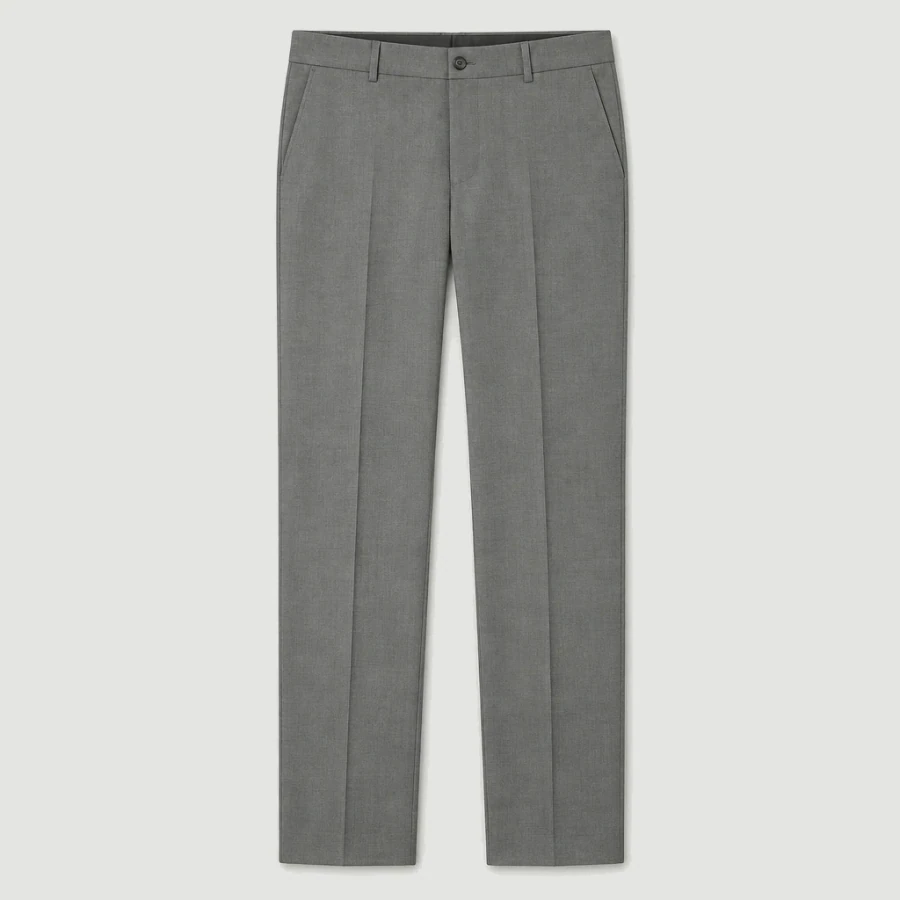
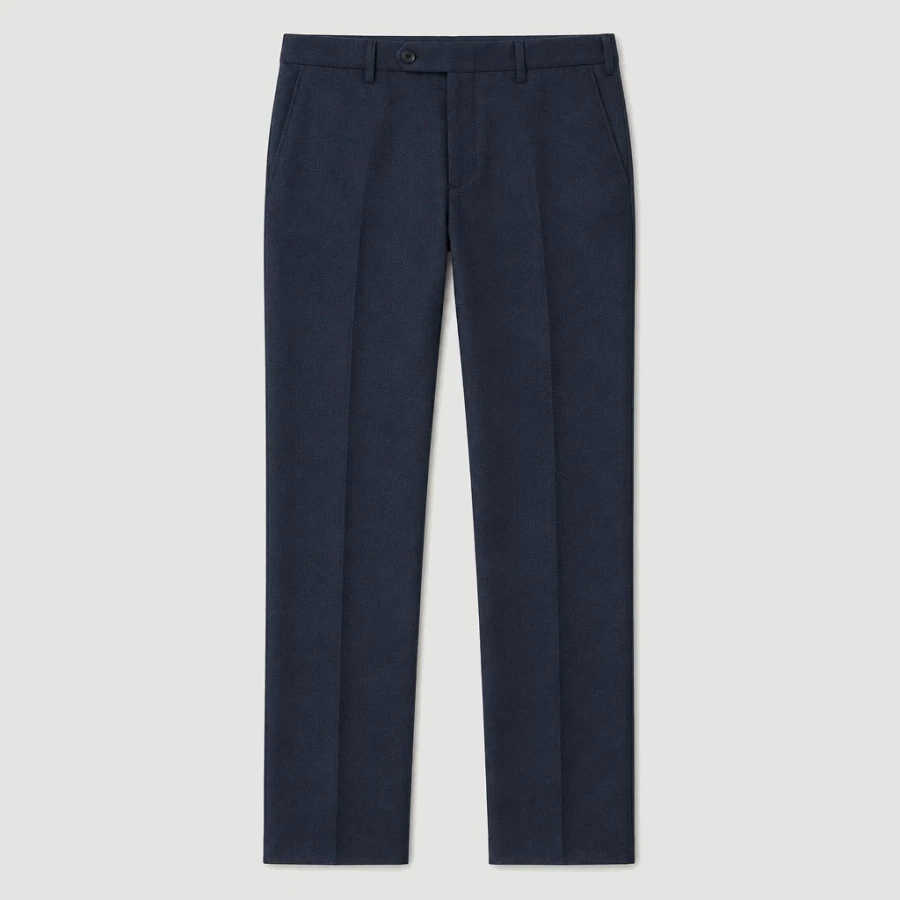
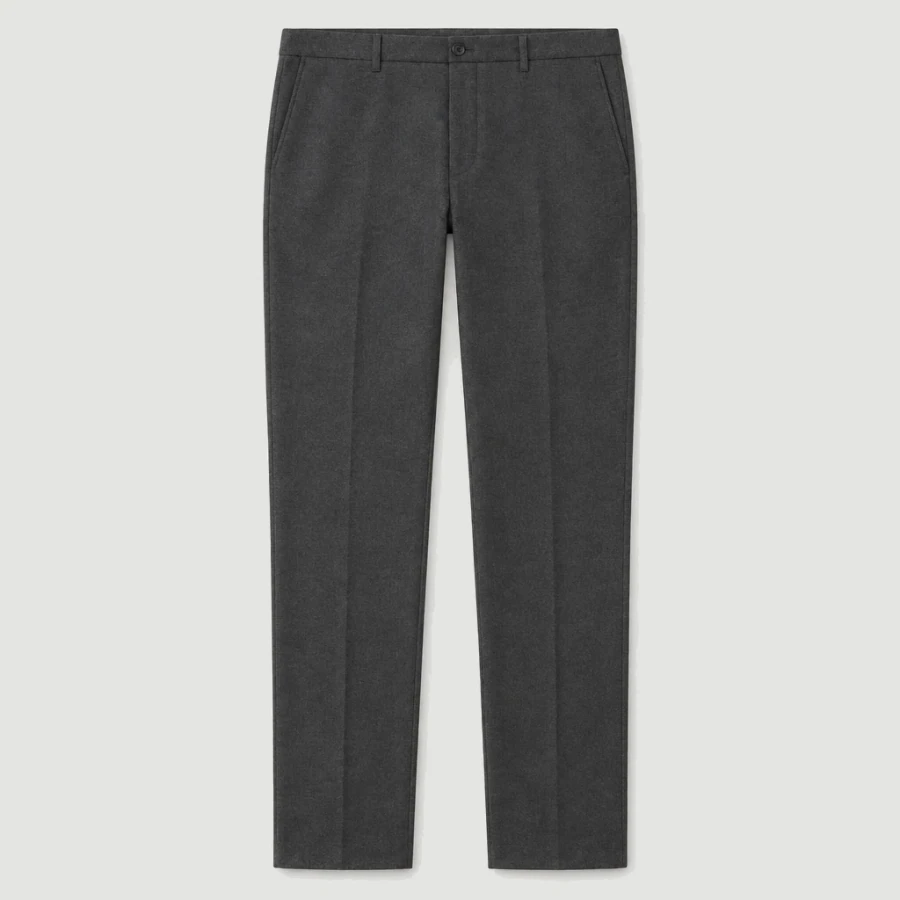
Wool trousers

Tailored trousers made of wool, usually with a crease. Depending on yarn and weave, they are light and airy like fresco and hopsack or warm and soft like flannel. Gray wool trousers are the foundation for almost everything between knitwear and sport coat. They go with loafers, derbys, Chelsea boots and also plain sneakers.

  • Medium gray fresco trousers
  • Navy hopsack trousers
  • Charcoal flannel trousers
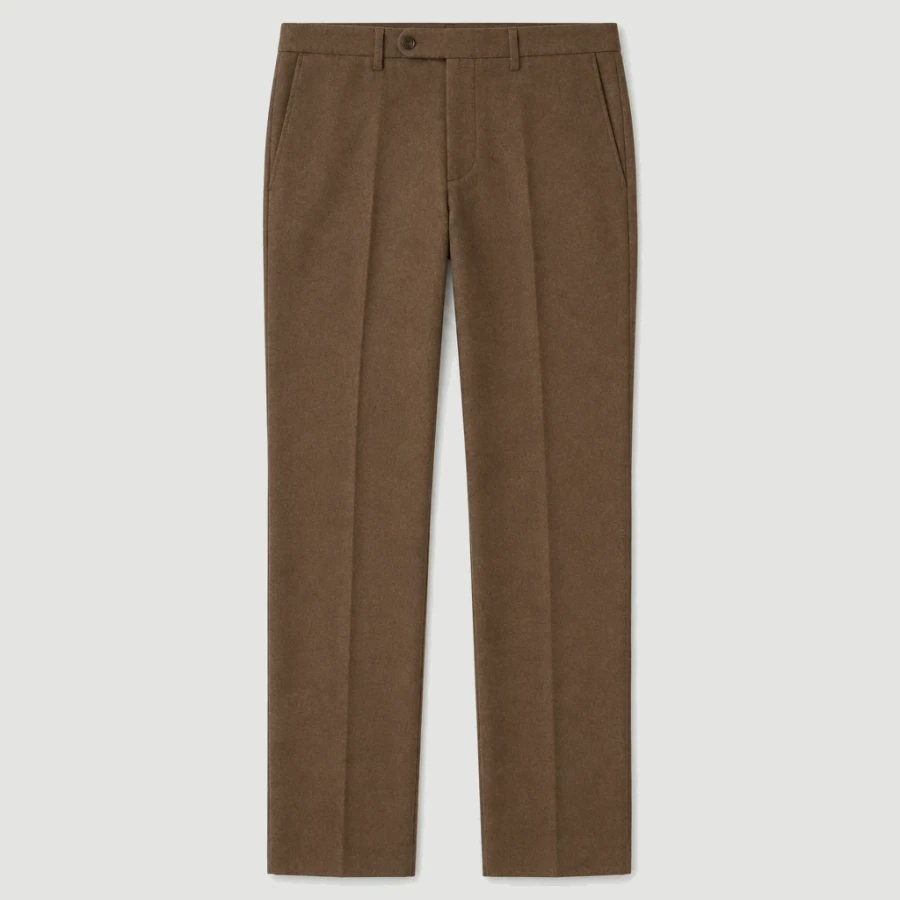
  • Brown flannel trousers
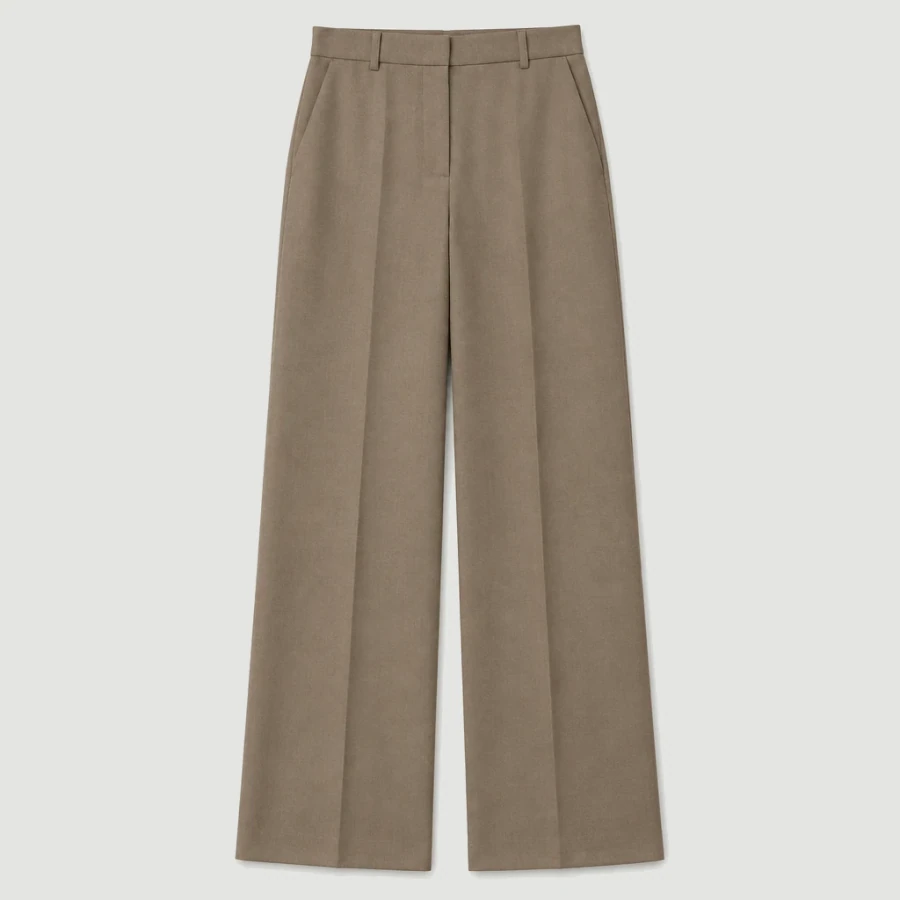
  • Taupe wide-leg wool trousers

Jeans

Trousers made of denim, a cotton twill with an indigo-blue warp and a light weft. They originated as work trousers in the USA. Dark, without wash and with a straight leg, they go with an Oxford shirt, knitwear, Chelsea boots or sneakers, also under a sport coat. See also selvedge denim.

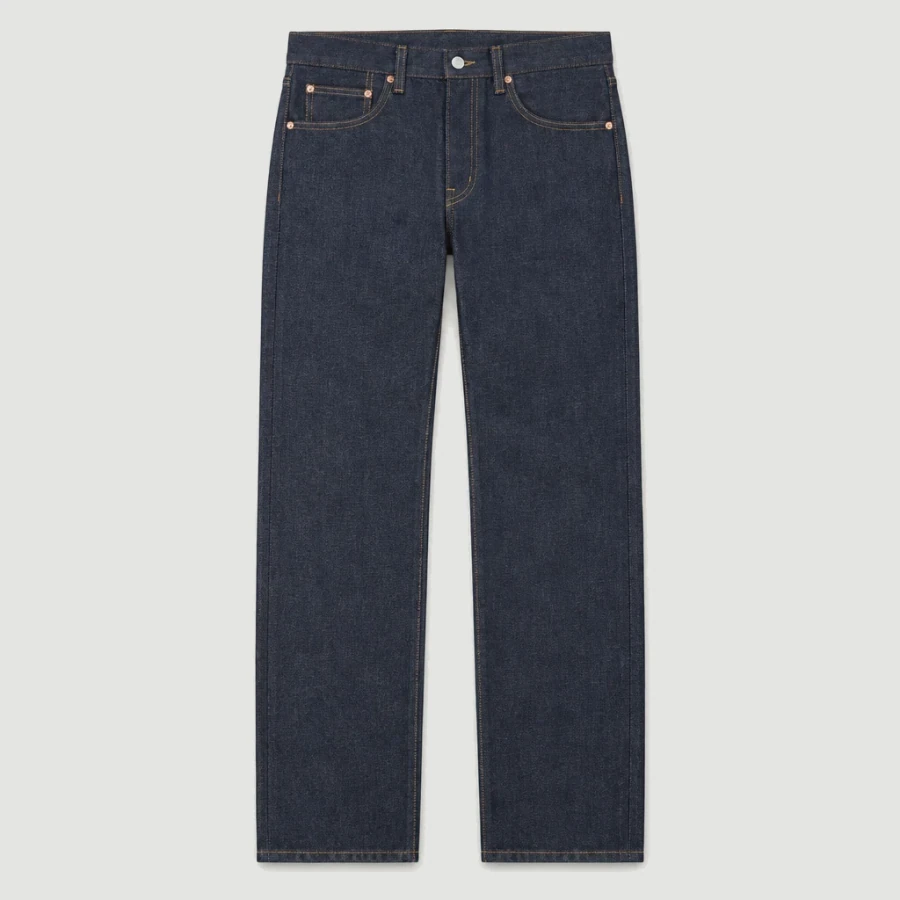
  • Indigo selvedge jeans

Corduroy trousers

Cotton trousers with lengthwise ribs of pile; the narrower the ribs, the finer and calmer they look (fine-wale corduroy). They are soft and warm and belong to fall and winter. Brown or olive goes with knitwear, Oxford shirt, chukka boots and Budapesters.

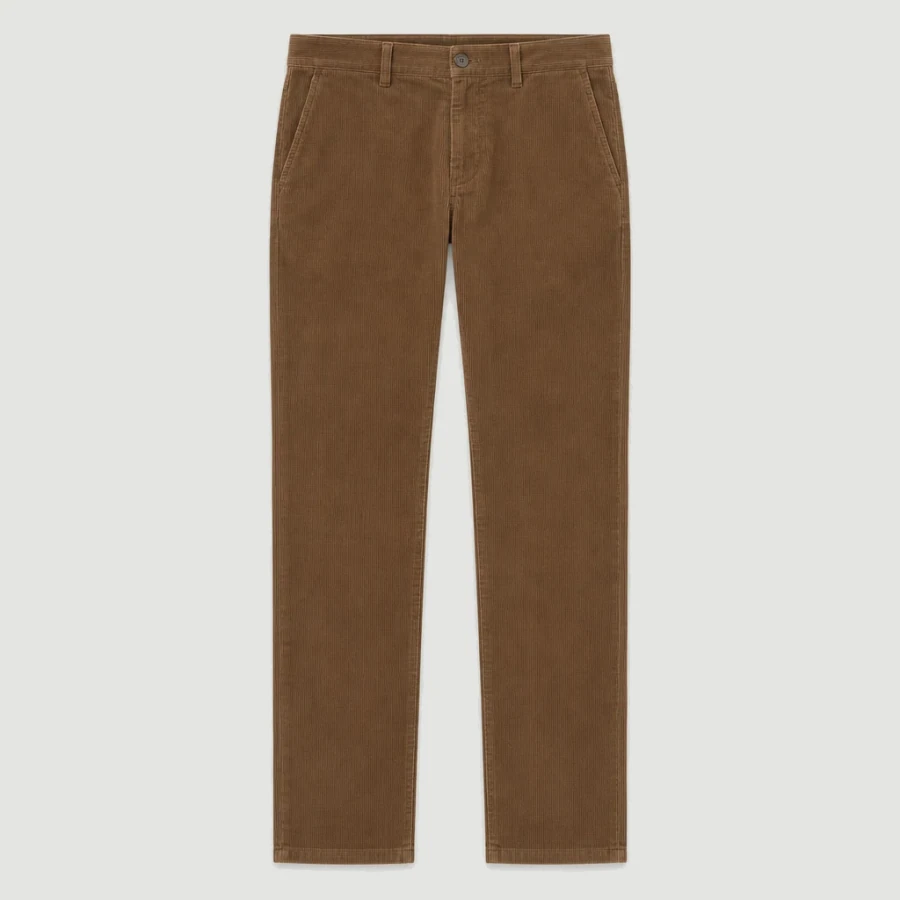
  • Brown fine-wale corduroy trousers

Linen trousers

Summer trousers made of linen or a linen-cotton blend. Pure linen is especially airy and wrinkles visibly; the blend wrinkles less. Light, muted shades such as ecru or sand go with polo, camp-collar shirt and loafers.

  • Ecru linen-cotton trousers

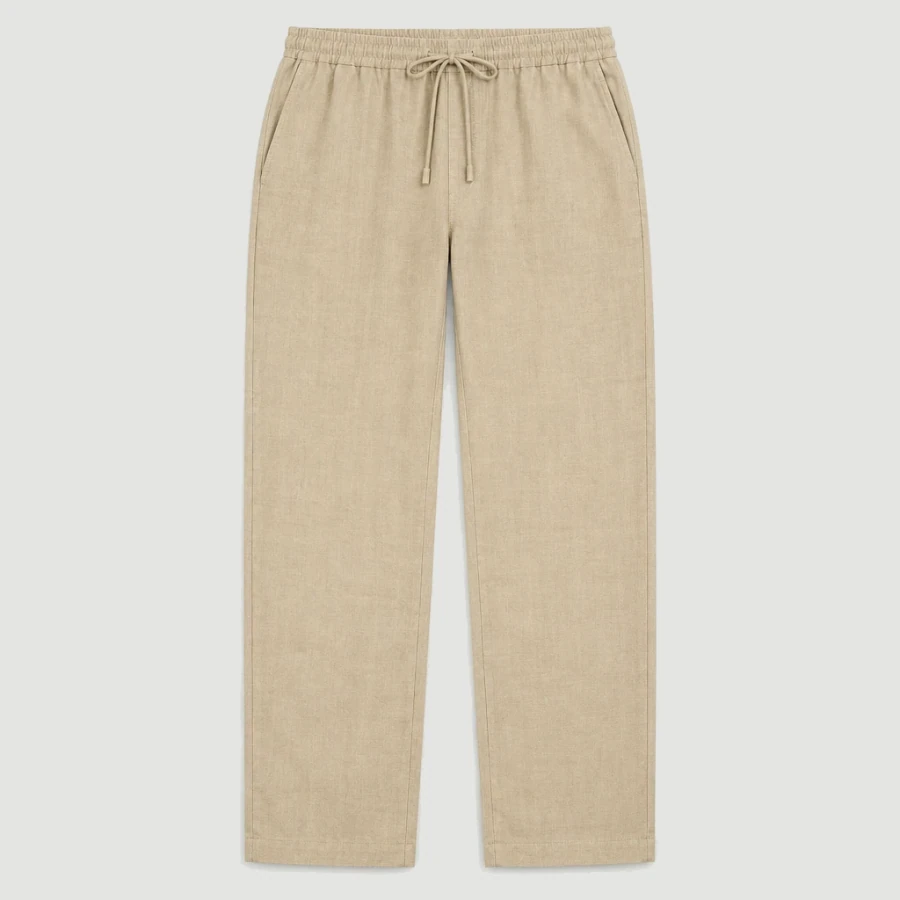
Drawstring trousers

Trousers with a drawstring in the waistband instead of belt loops, usually made of linen. They are meant for vacations and hot days and need no belt. Camp-collar shirt, T-shirt, knit polo and driving moccasin go with them.

  • Sand linen drawstring trousers

Jackets

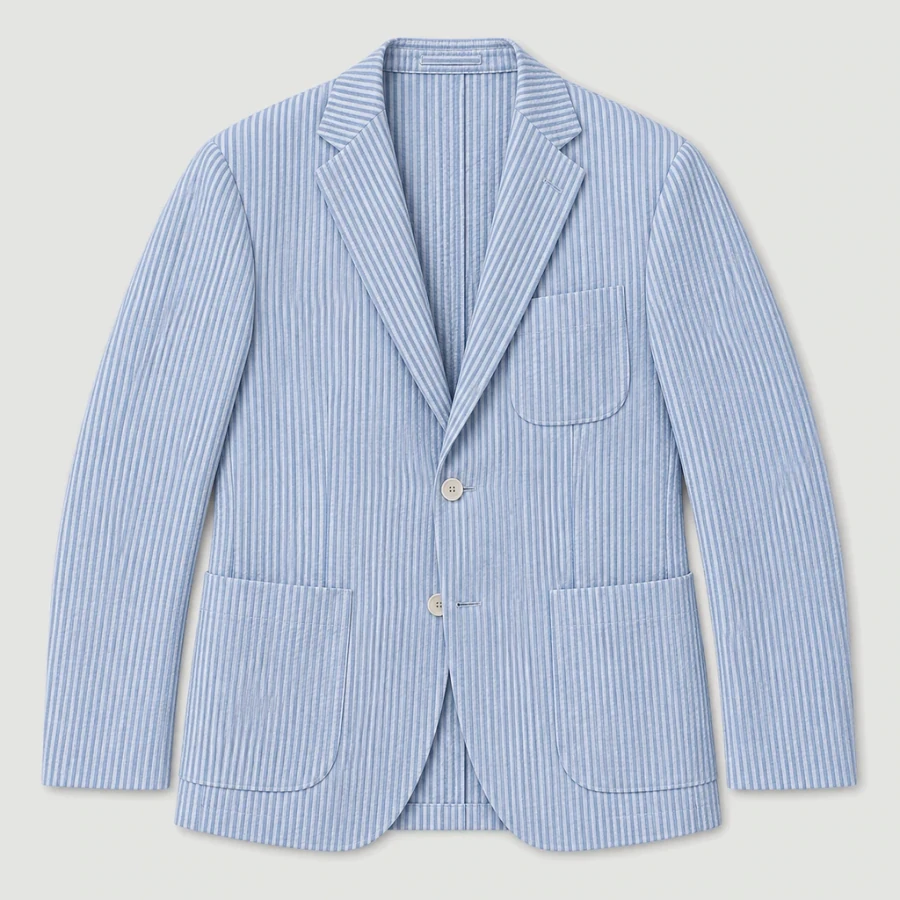
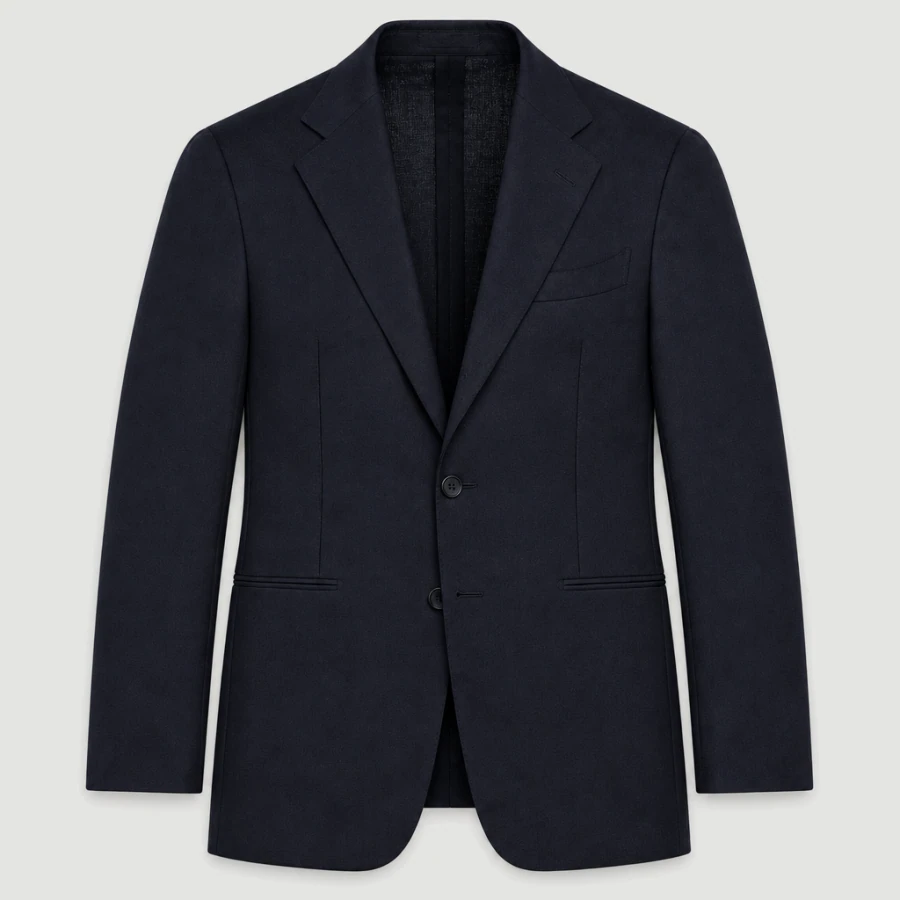
Sport coat

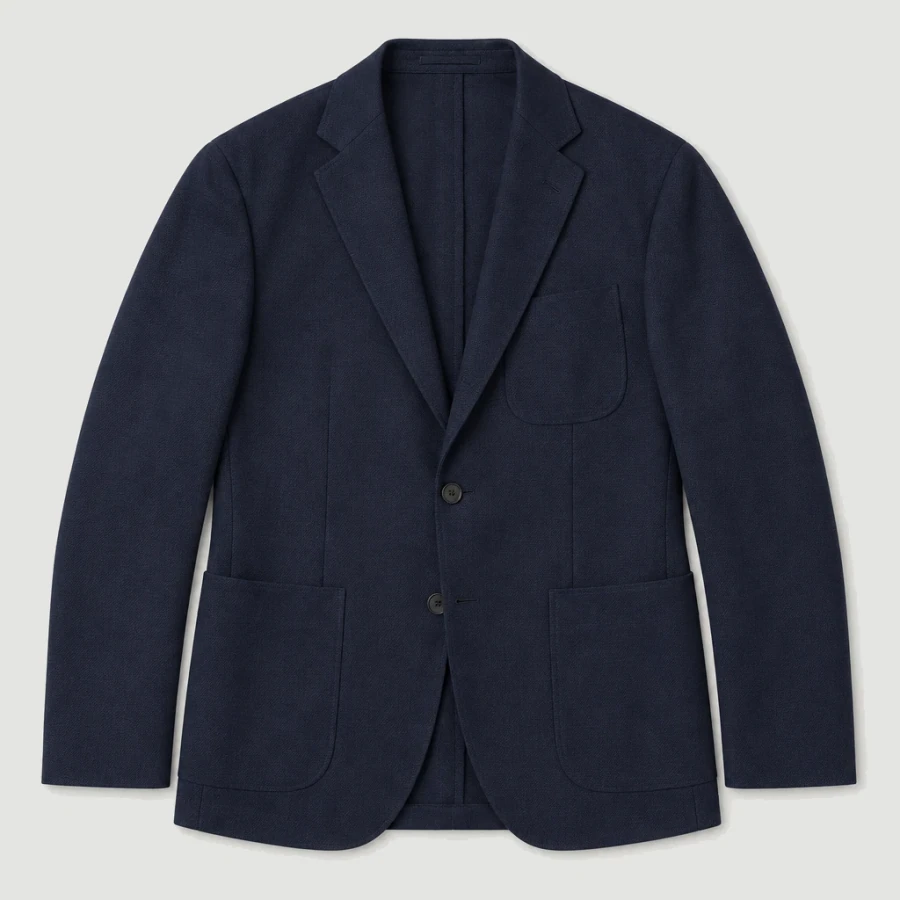
Single-breasted jacket with lapels that is worn without matching trousers. The classic version is built with shoulder pads, canvas and lining; unlined and unstructured it drapes more softly and also goes with a T-shirt and sneakers. The shoulder seam ends at the edge of the shoulder, and the sleeve lets a little shirt cuff show. A navy sport coat made of hopsack goes with gray wool trousers, chinos and jeans.

  • Blue seersucker sport coat
  • Navy Havana sport coat
  • Navy unlined sport coat

Double-breasted jacket

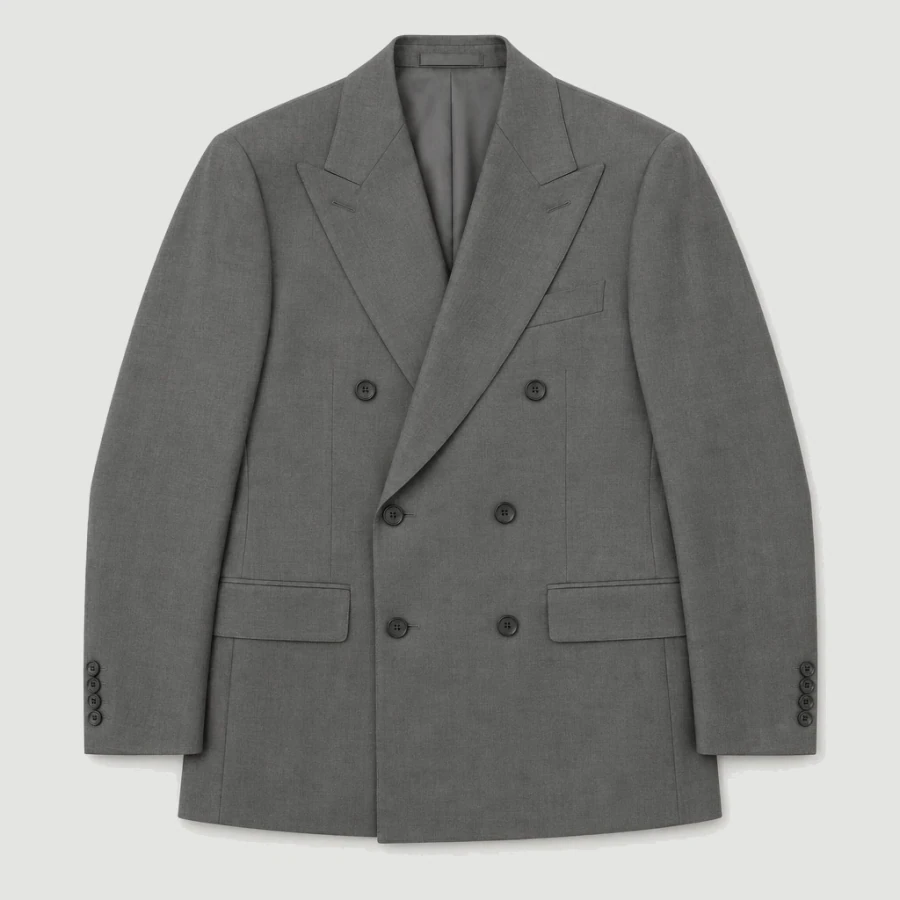
Jacket with overlapping fronts and two rows of buttons, usually with peak lapels. It is worn buttoned and looks distinctly more formal than the single-breasted. In gray worsted it goes with wool trousers, a shirt or turtleneck and black or dark brown lace-up shoes.

  • Gray double-breasted jacket

Overshirt

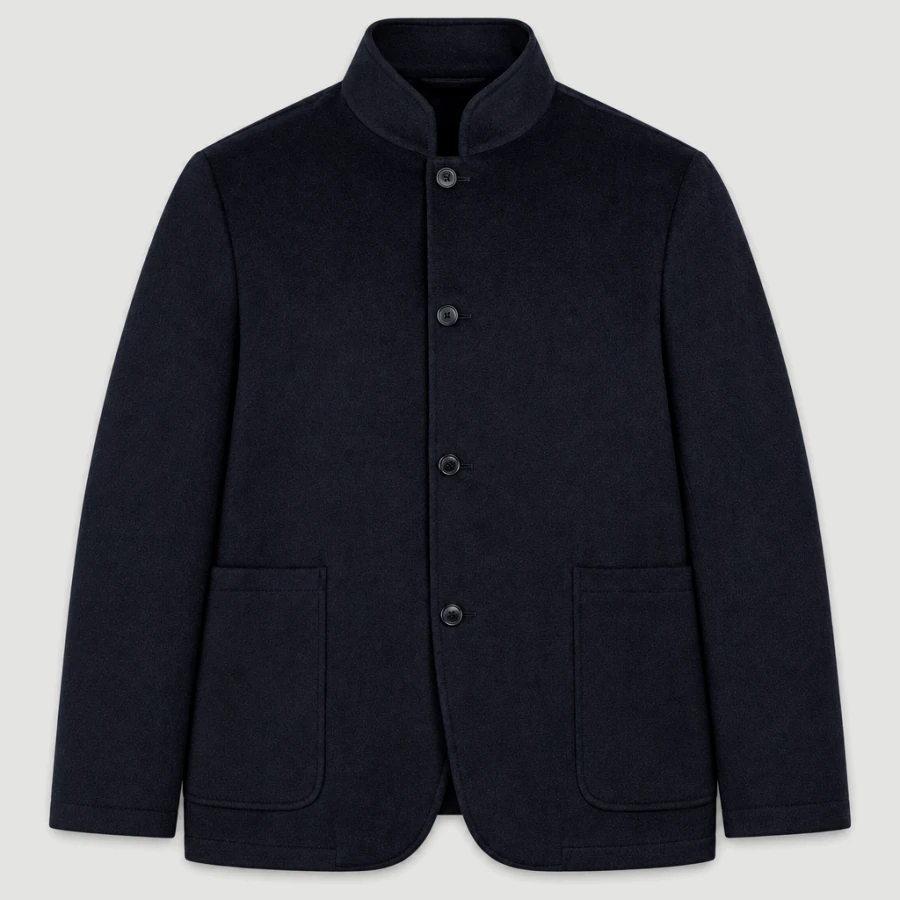
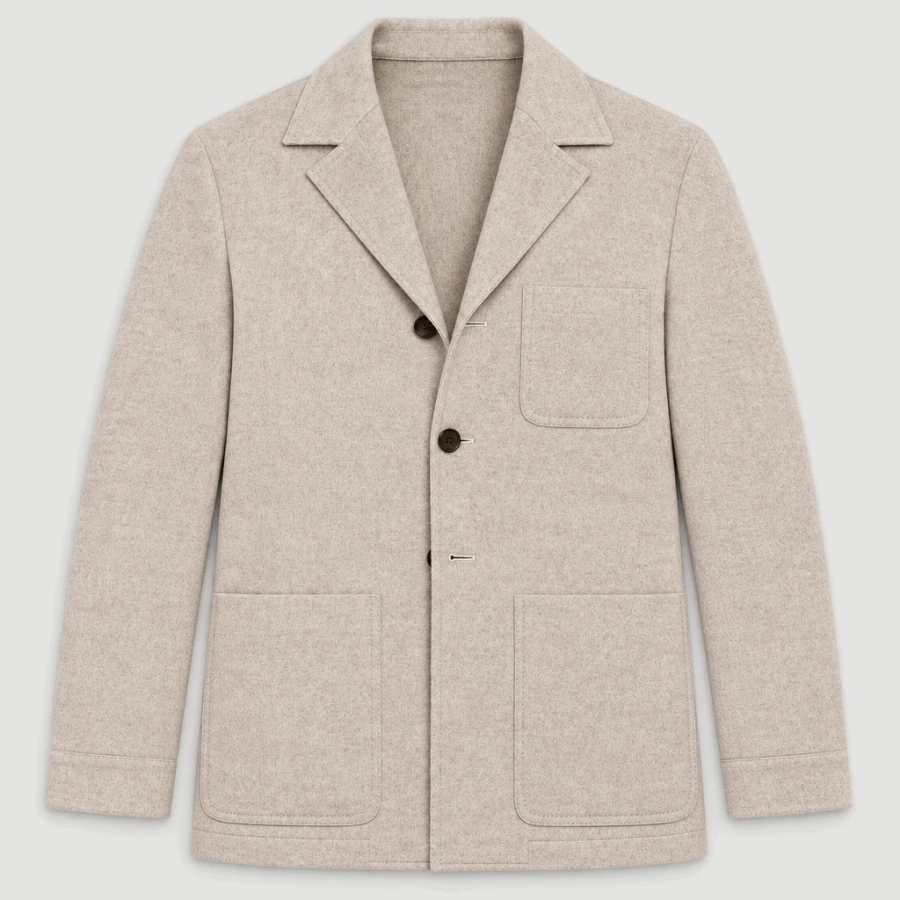
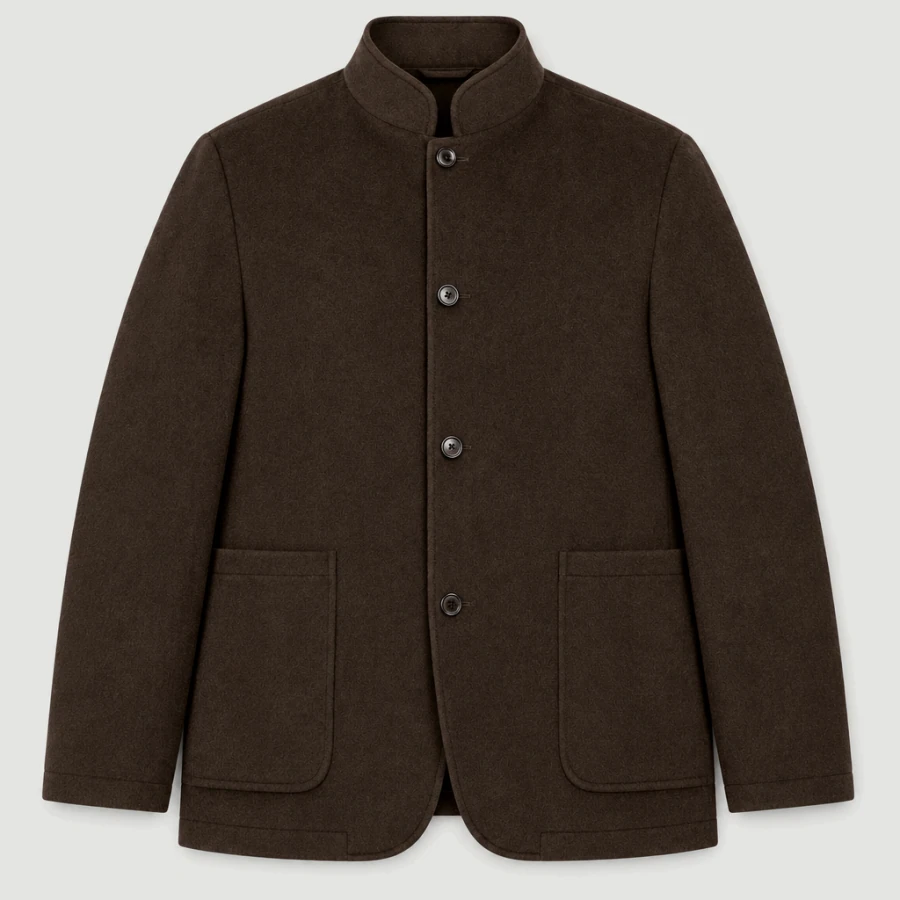
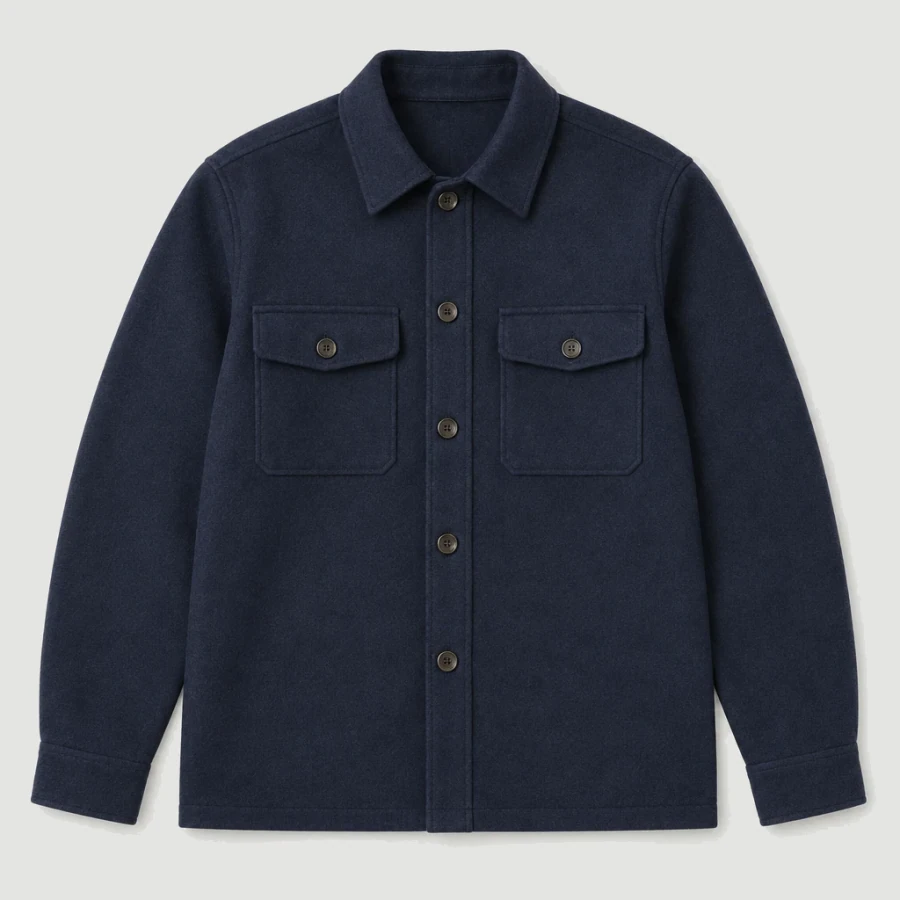
A garment between shirt and jacket: cut like a shirt, but made of a sturdier fabric such as wool or twill and meant to be worn over a T-shirt or knitwear. A more tailored version, sometimes called a shirt jacket, goes a step toward the sport coat: unstructured and often with a stand collar. Both are a soft alternative to the sport coat for chinos, flannel and jeans.

  • Navy overshirt
  • Sand overshirt
  • Dark brown wool overshirt
  • Navy wool overshirt

Chore jacket

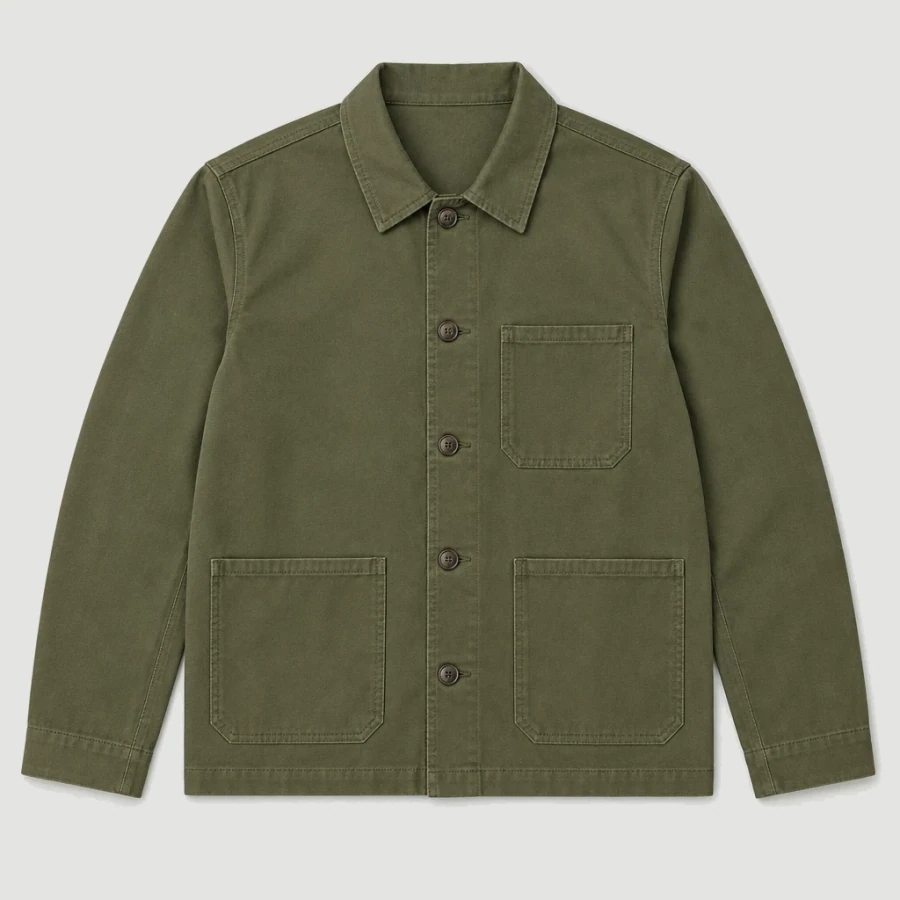
Straight-cut work jacket with three patch pockets, traditionally made of cotton canvas or moleskin. Its model is the French work jacket, classically in blue. It is robust and unfussy and goes with jeans, chinos, T-shirt and sweatshirt. For wool trousers it is usually too rough.

  • Olive chore jacket

Harrington

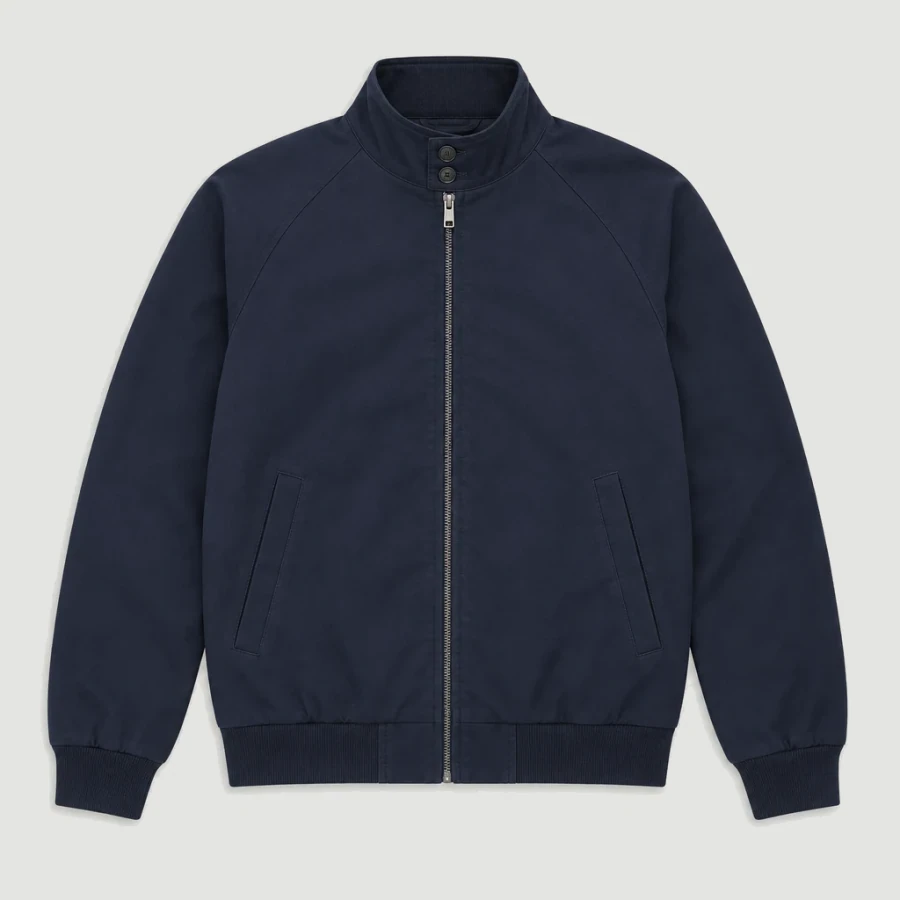
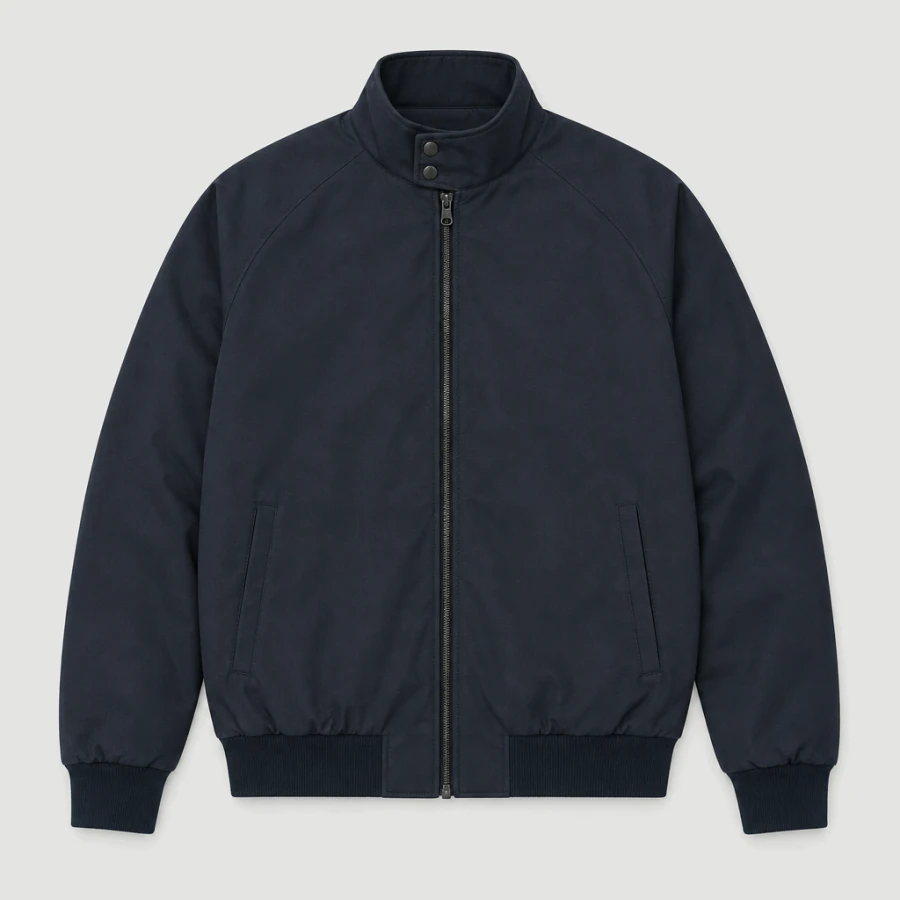
Short, light jacket with a stand collar and a buttoned tab, raglan sleeves and knit cuffs at hem and sleeves, classically with a checked lining. The model is the G9 by the British maker Baracuta. It goes with chinos, jeans, polo and Oxford shirt, in spring and fall.

  • Navy Harrington jacket

Blouson

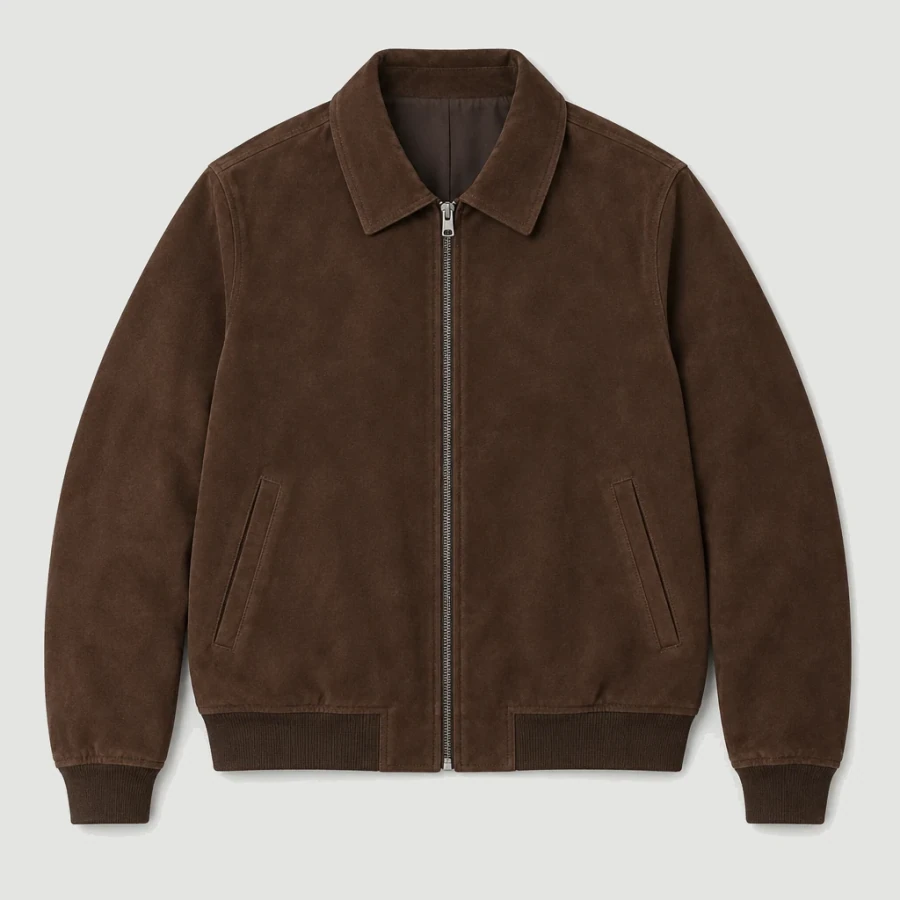
Short jacket that ends in a band at the waist, usually with a zipper. In suede it lifts a simple outfit of T-shirt and jeans; in weatherproof fabric it is a calm everyday layer. It goes with chinos, jeans and knitwear.

  • Navy blouson
  • Brown suede blouson

Mac coat

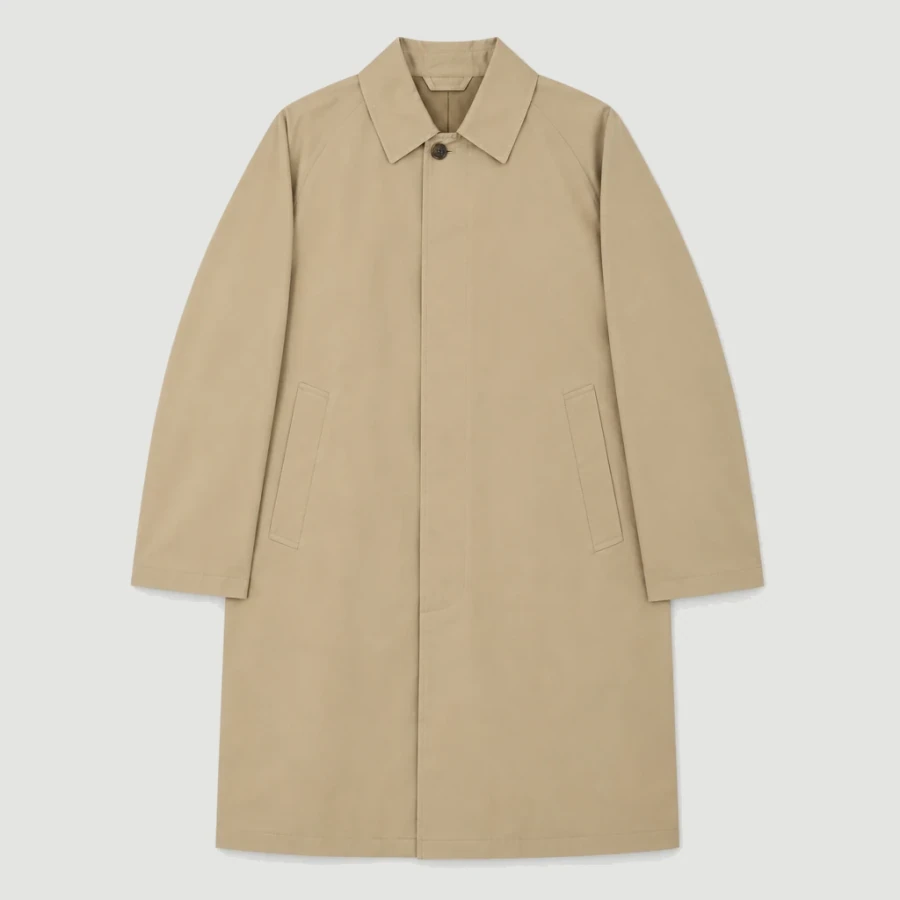
Plain, single-breasted raincoat without a belt and epaulettes, usually knee-length and made of cotton gabardine. It is more pared-down than the trench coat and can be worn over a sport coat as well as over a sweatshirt. Beige or navy goes with almost everything in the catalog. The name goes back to Charles Macintosh, who developed a waterproof, rubberized fabric.

  • Beige mac coat

Overcoat

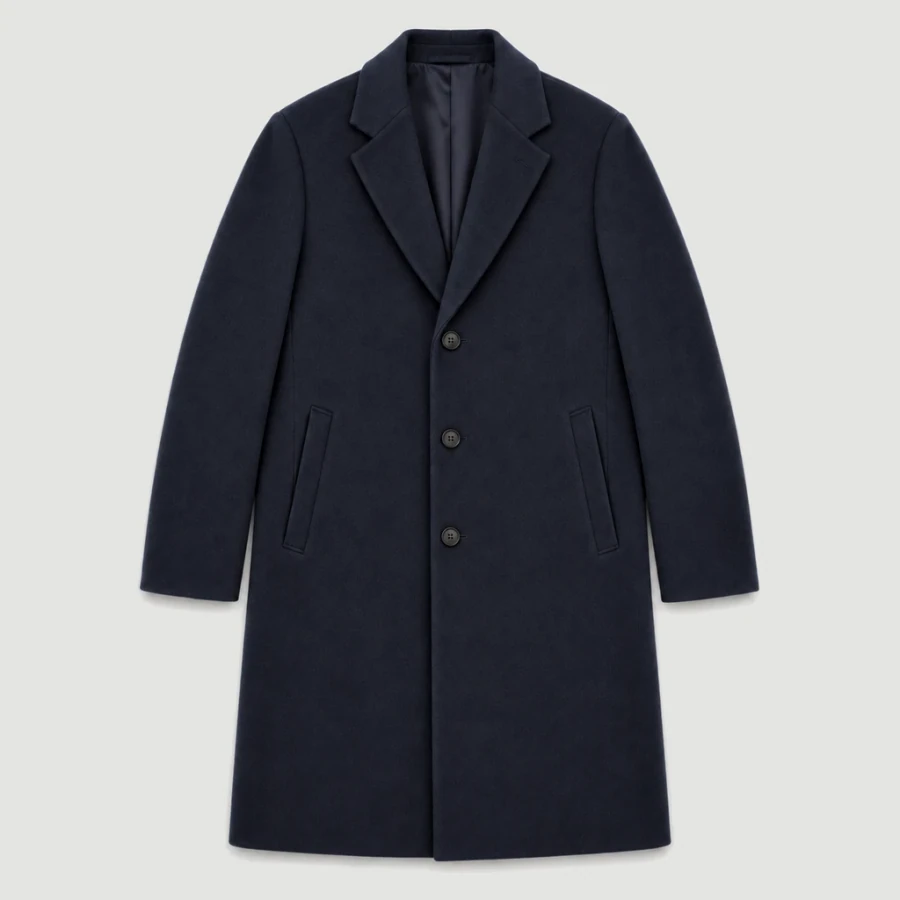
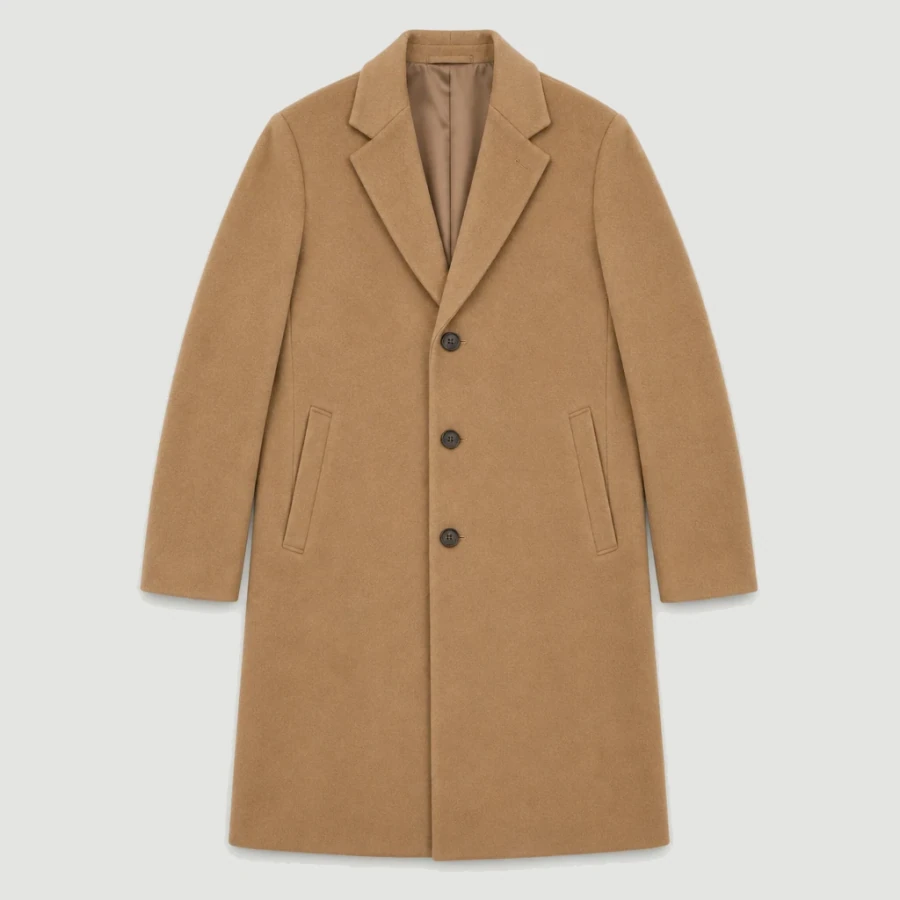
Single-breasted wool coat, about knee-length, cut wide enough to fit over a sport coat. Wool or wool-cashmere keeps you warm without being heavy. Camel, navy or gray goes with wool trousers, jeans and knitwear, with a scarf and Chelsea boots or derbys.

  • Navy wool overcoat
  • Camel wool overcoat

Quilted vest

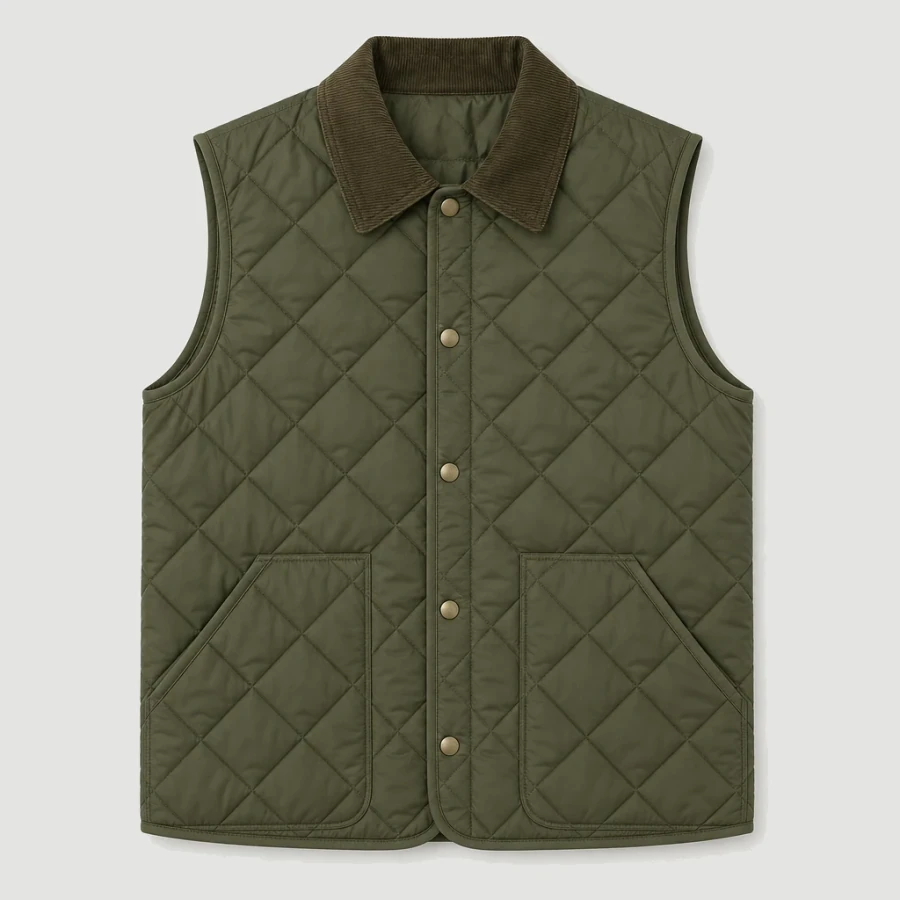
Sleeveless, lightly padded vest with quilted stitching. It is a layer between knitwear and coat, or over the shirt in the transitional seasons. Olive or navy goes with corduroy, chinos and jeans; with a sport coat and wool trousers it is too sporty.

  • Olive quilted vest

Vest

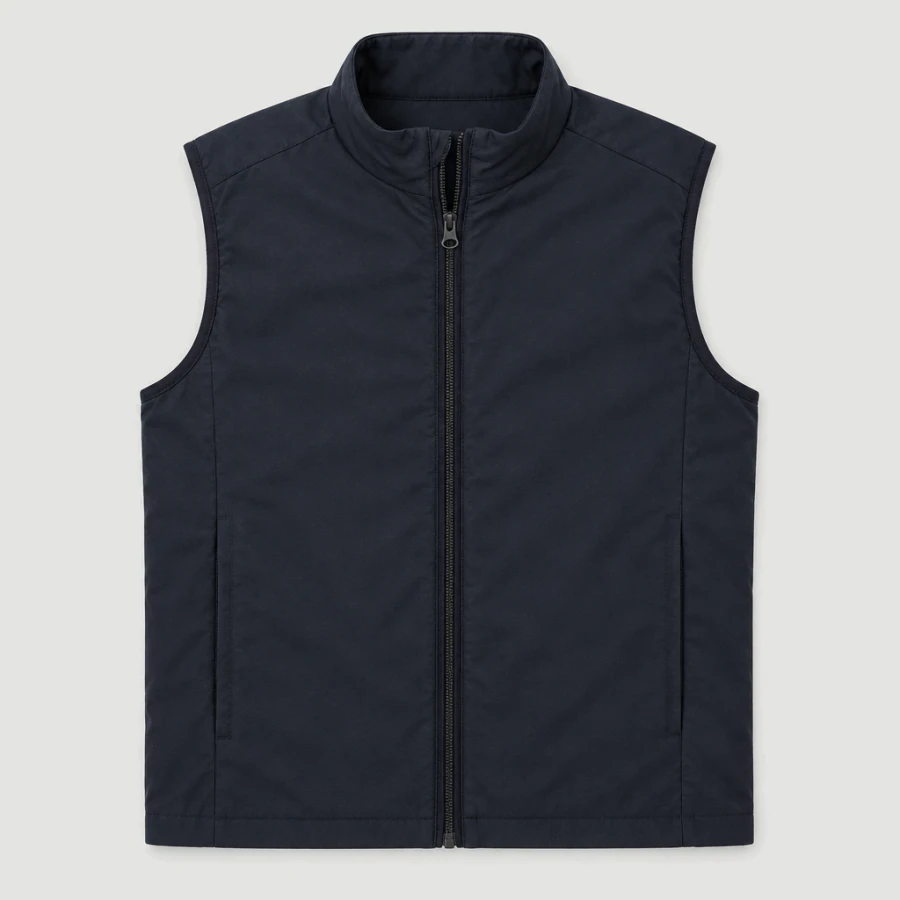
Sleeveless jacket as an additional layer over a T-shirt, shirt or fine knitwear. Here this means not the suit vest but a plain, sporty variant. It keeps the torso warm and leaves the arms free. It goes with chinos and jeans in the transitional seasons.

  • Navy vest

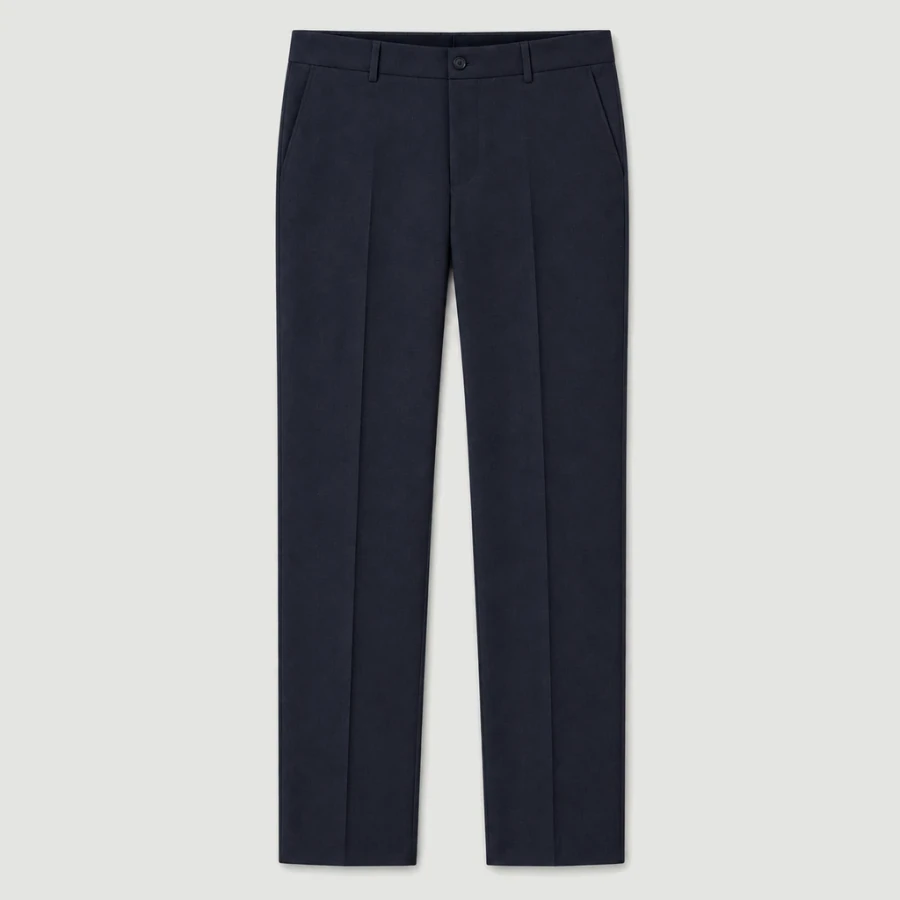
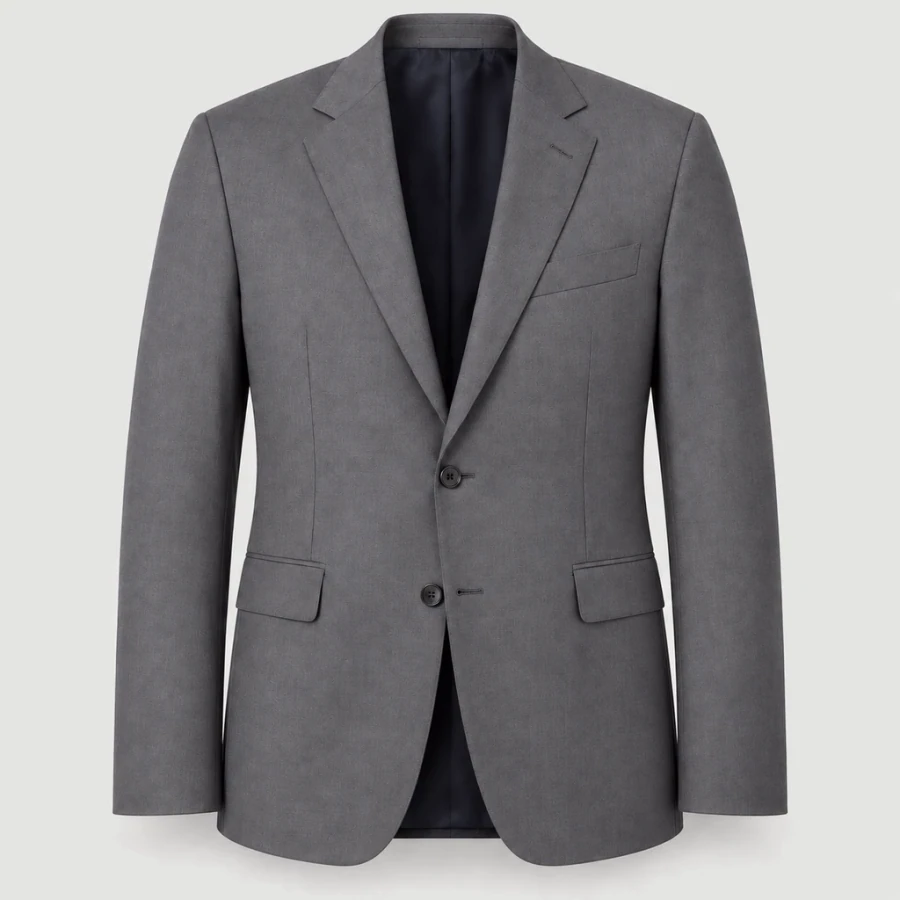
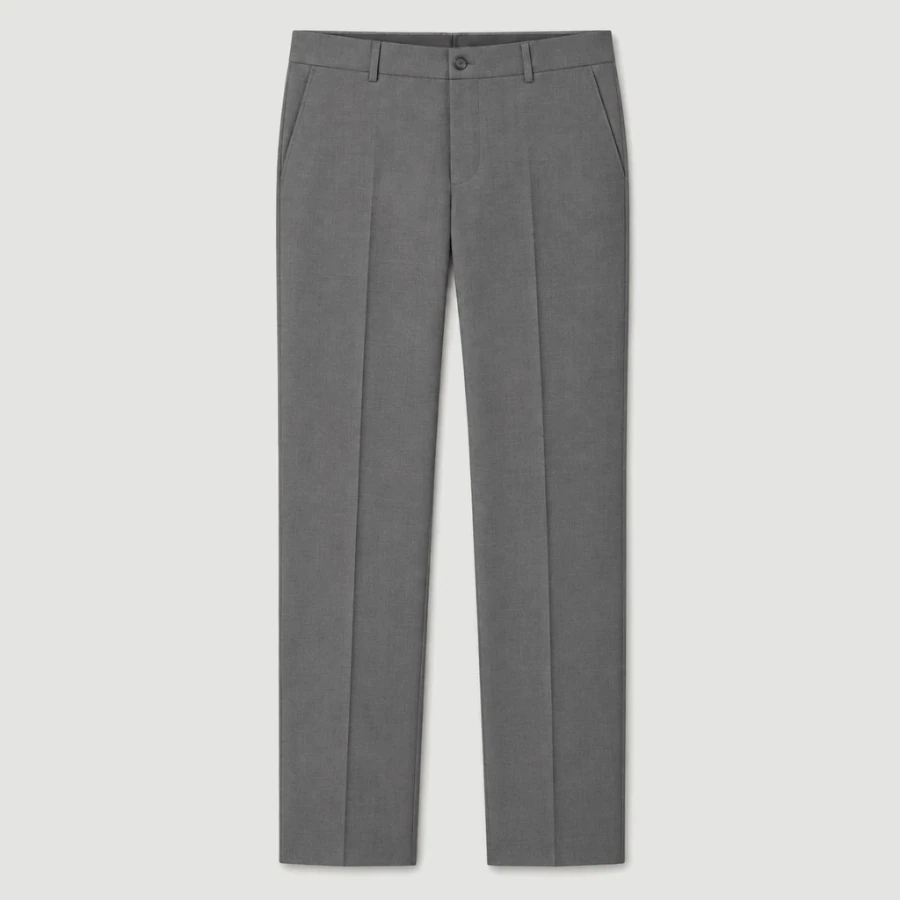
Suit

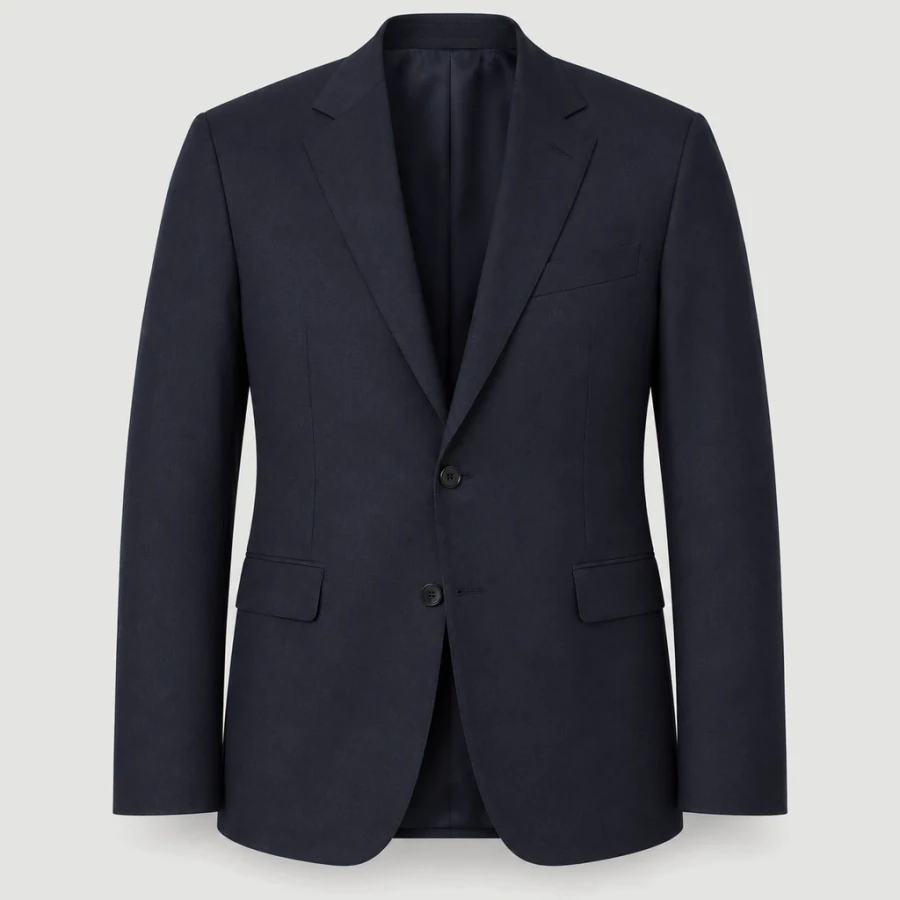
Jacket and trousers made of the same fabric, usually smooth worsted wool, cut together and worn together. Navy and medium gray are the two colors that cover almost every business occasion. To go with it: a white or light blue poplin shirt, a tie and smooth leather shoes. Worn separately, the jacket goes with jeans or flannel, the trousers with knitwear, which spares the suit.

  • Navy suit jacket
  • Navy suit trousers
  • Medium gray suit jacket
  • Medium gray suit trousers

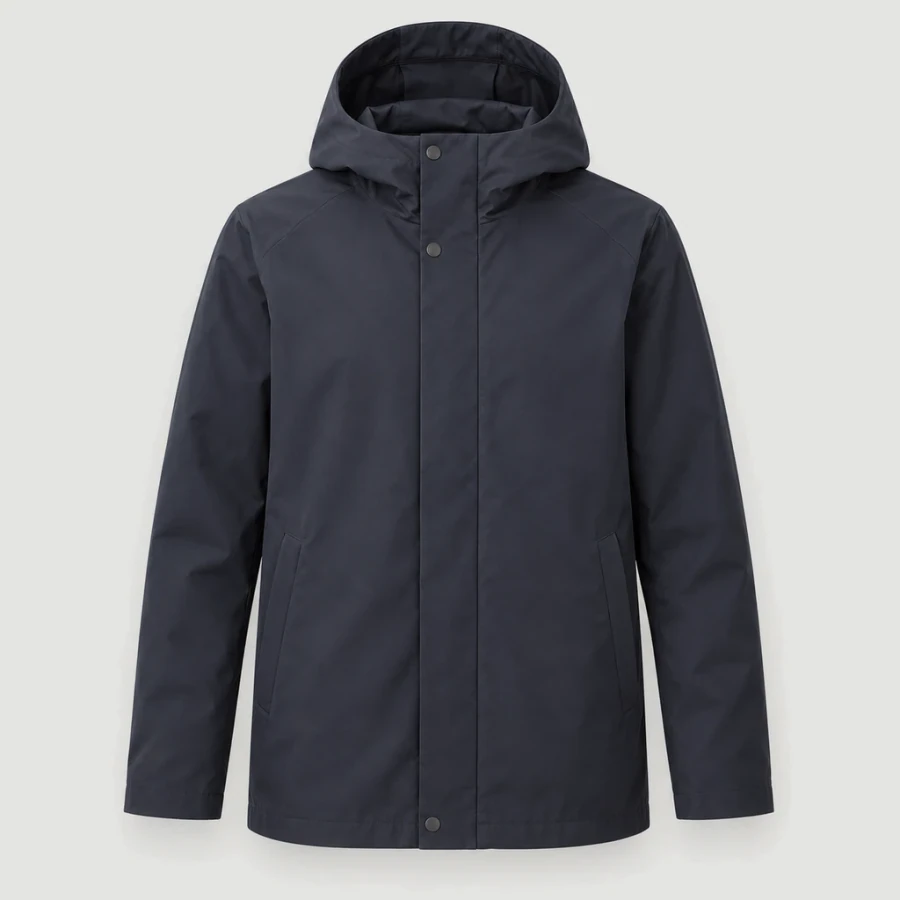
Rain jacket

Plain, waterproof jacket with a hood made of coated fabric, hip-length and without large logos. It is the piece for wet days, with jeans, chinos and sneakers or boots. Navy or olive stays calm. Over a sport coat it looks out of place; that is what the mac coat is for.

  • Navy rain jacket

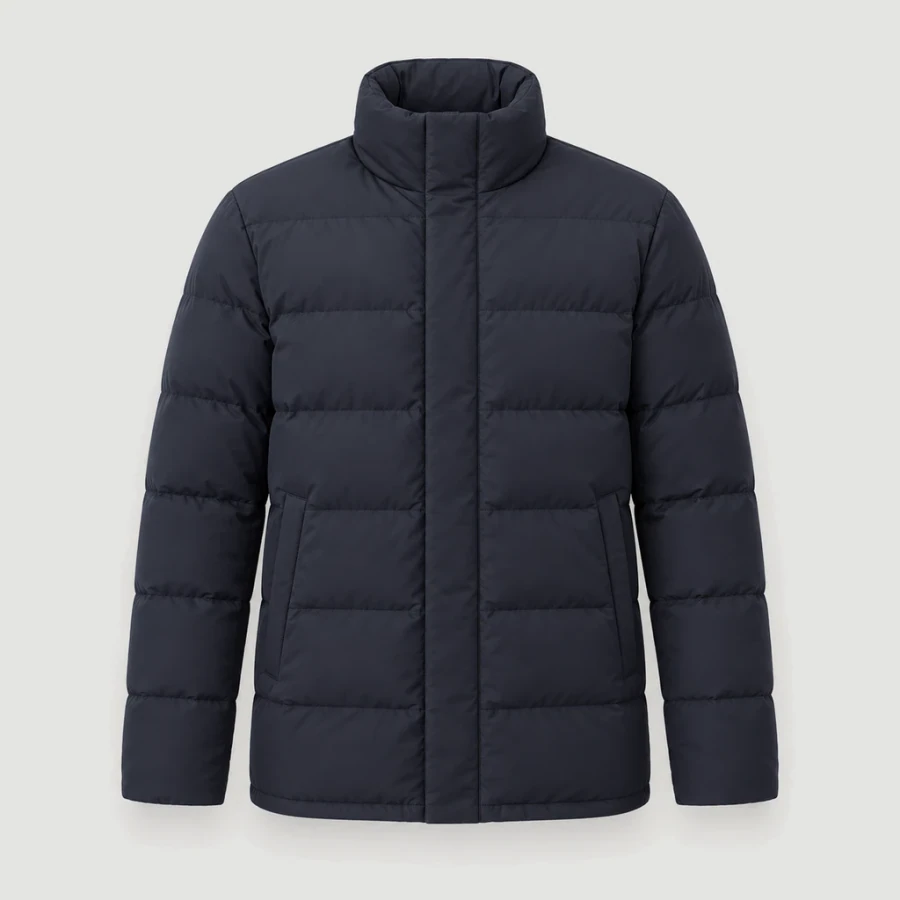
Down jacket

Quilted jacket with down fill, light and very warm, ideally matte and without large logos. Navy or black goes over a turtleneck, knitwear and shirt, with jeans, corduroy and flannel. It is the piece for the mountains and cold days in the city; over a sport coat or suit, the overcoat is the better choice.

  • Navy down jacket

Accessories

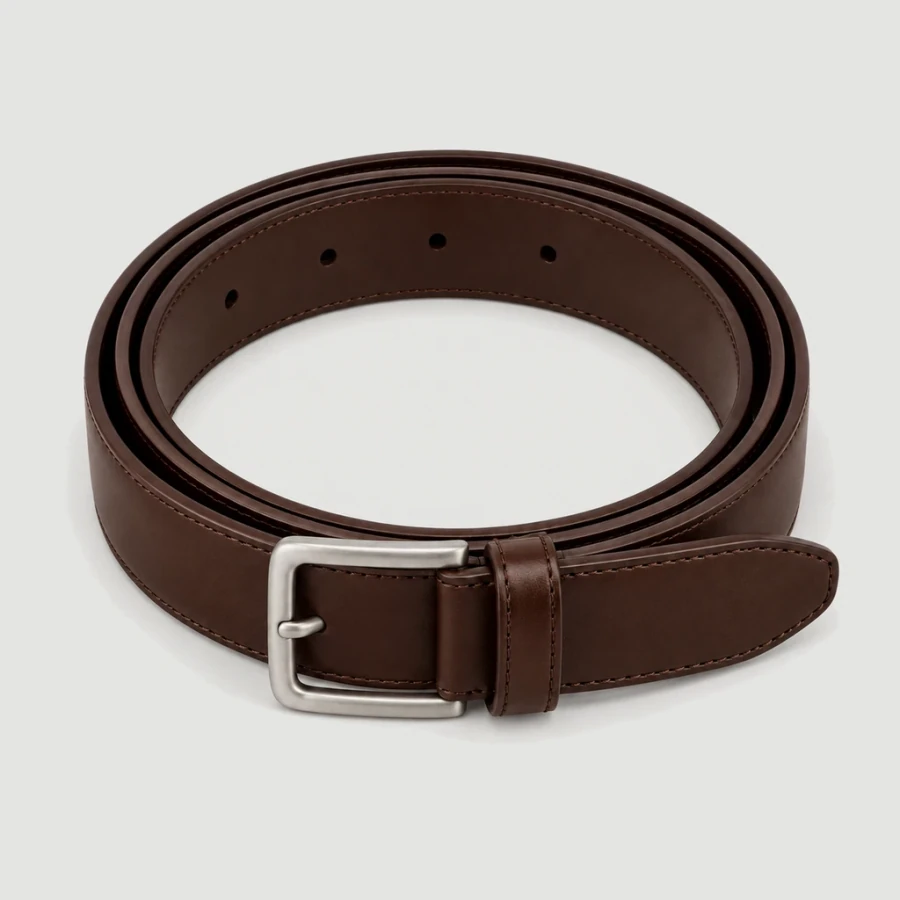
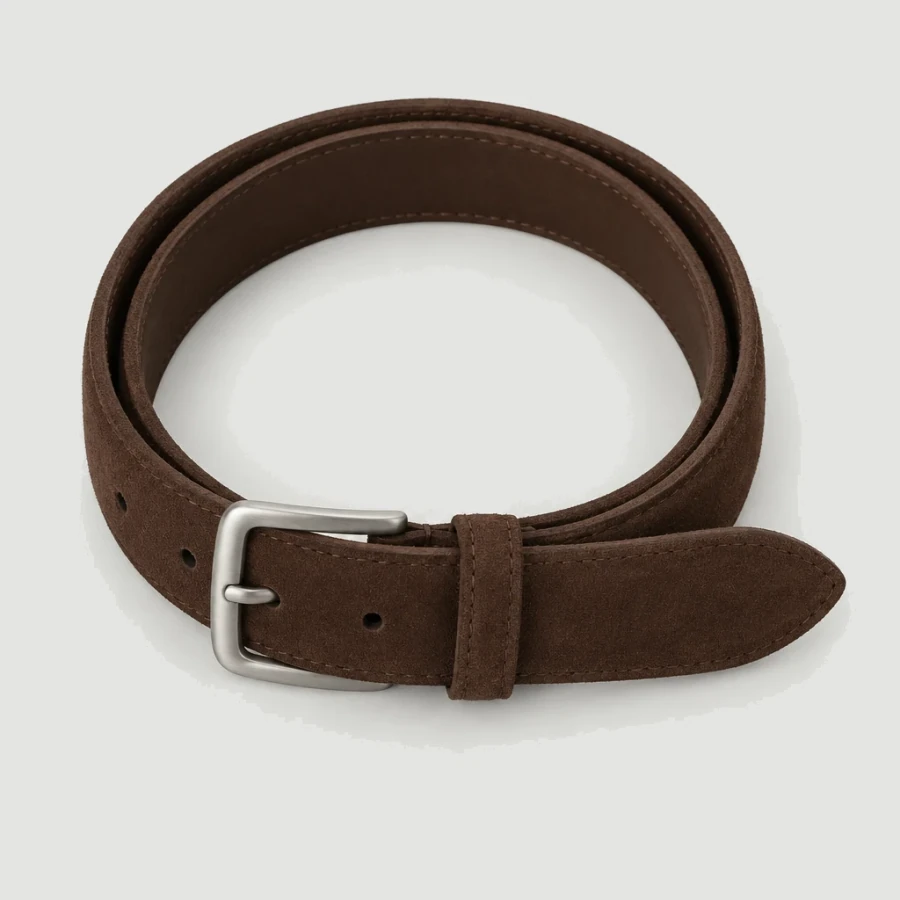
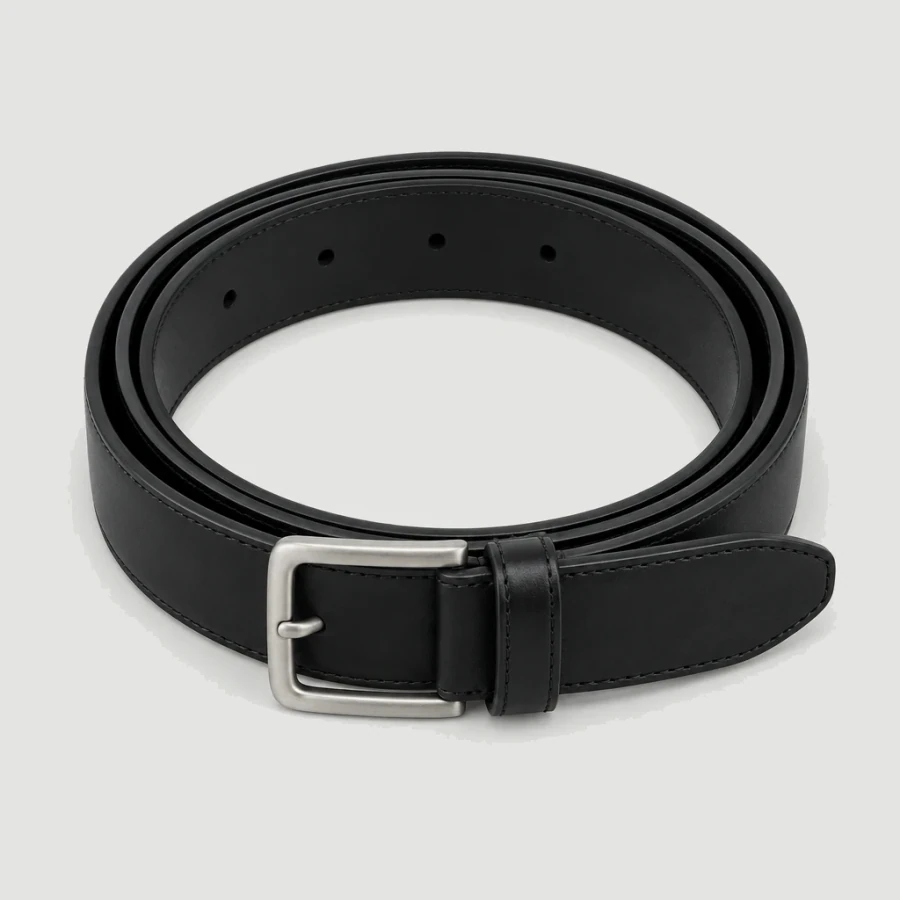
Belt

Tailored trousers and chinos call for a narrow leather belt with a plain buckle. Material and color follow the shoes: suede with suede loafers and Chelsea boots, dark brown smooth leather with brown derbys and loafers, black smooth leather with black shoes. Trousers with a drawstring or side adjusters need no belt.

  • Dark brown smooth leather belt
  • Dark brown suede belt
  • Black smooth leather belt

Knit tie

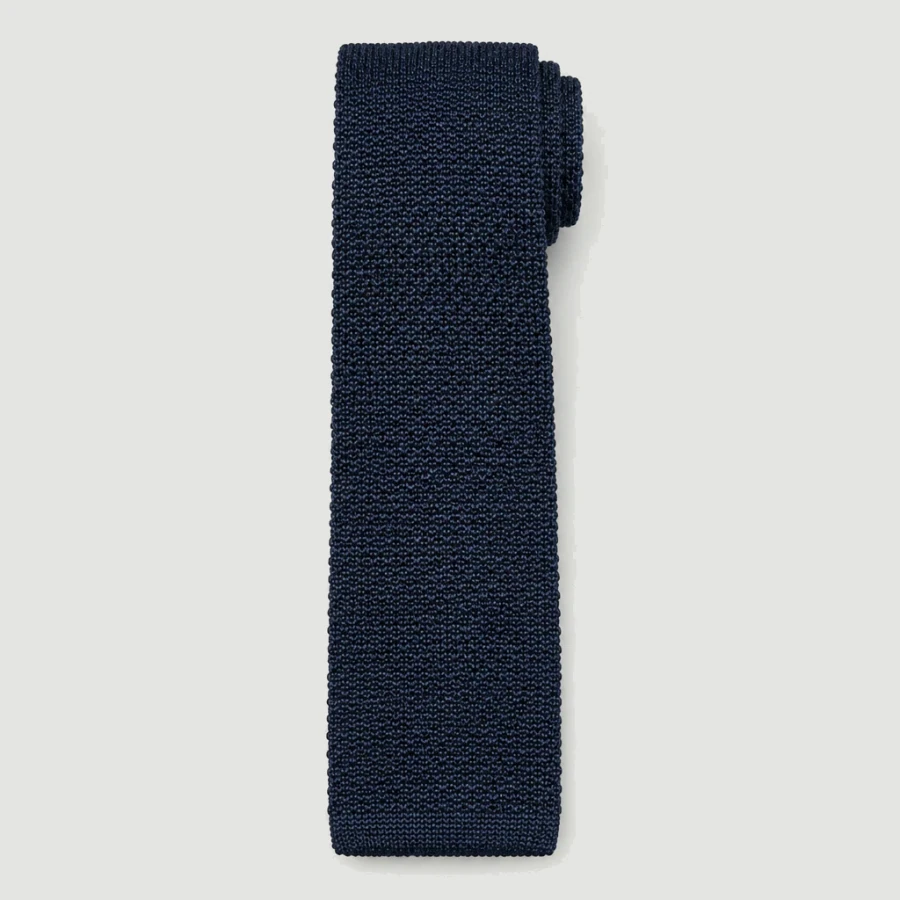
Knitted tie, usually made of silk, with a straight end and visible texture. It is more casual than a woven silk tie and goes with an Oxford shirt, sport coat and flannel. Because of the voluminous knit, a simple knot is enough. With a dark suit at formal occasions, the woven tie is the better choice.

Scarf

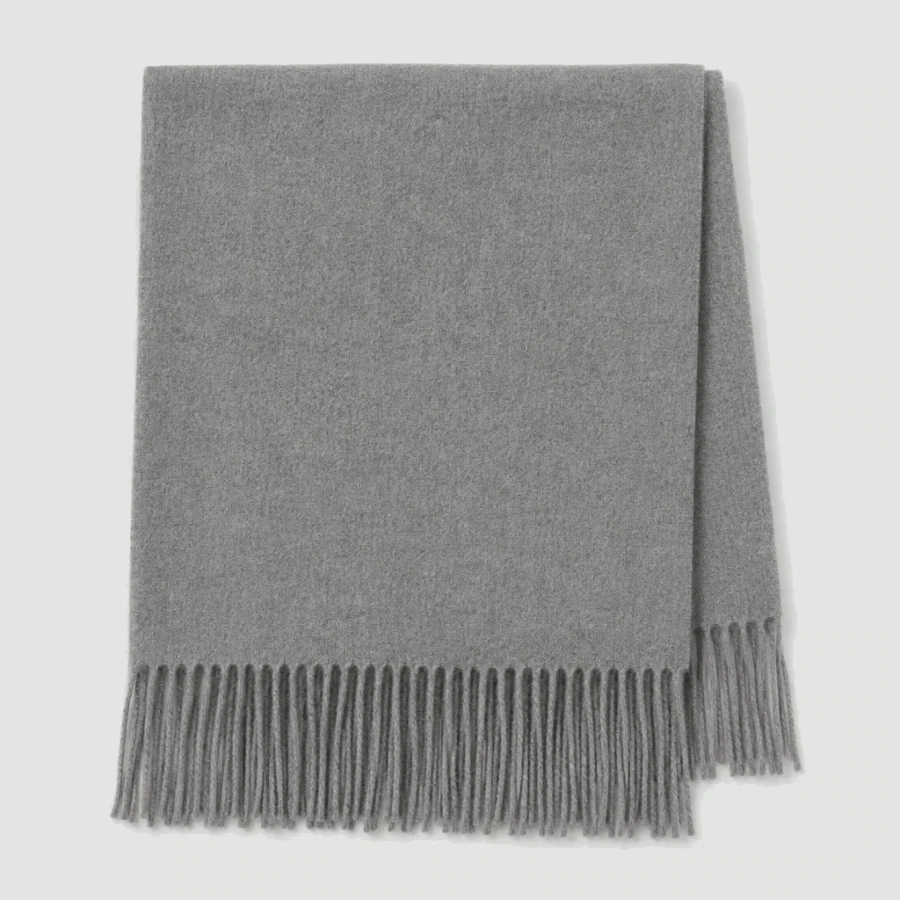
A scarf made of cashmere or fine wool connects coat and knitwear. Solid and in muted shades such as gray, navy or camel, it can be worn with everything. Simply draped or looped once, it looks calm.

  • Gray cashmere scarf

Tie

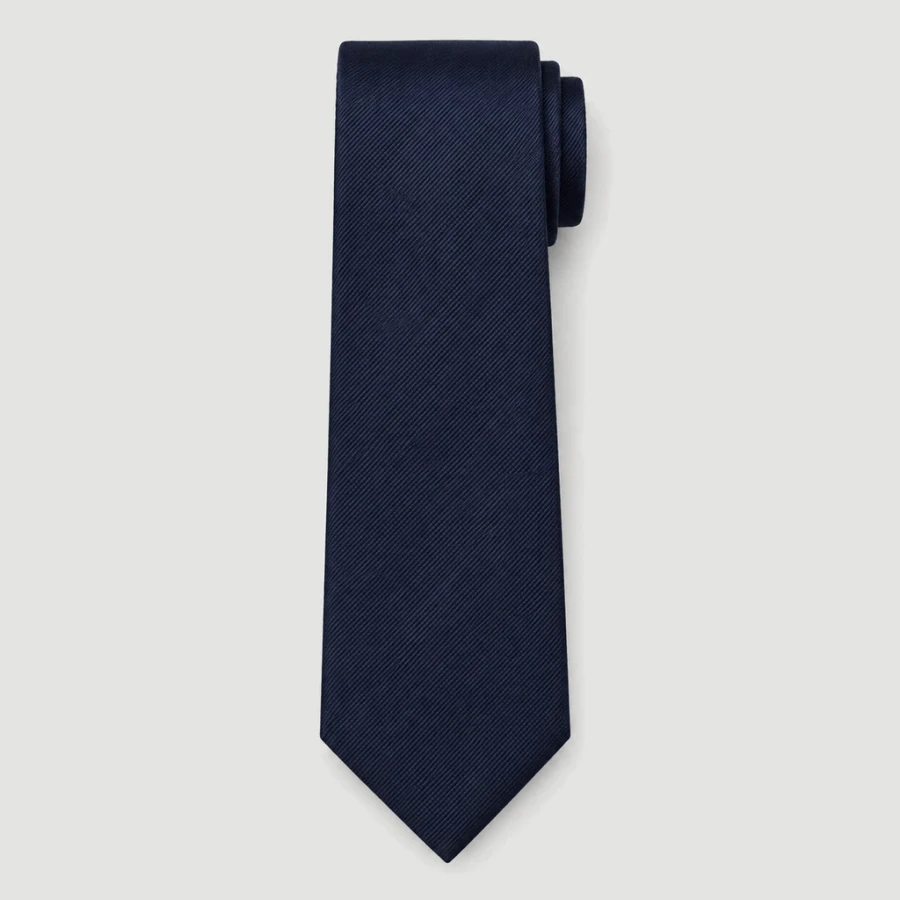
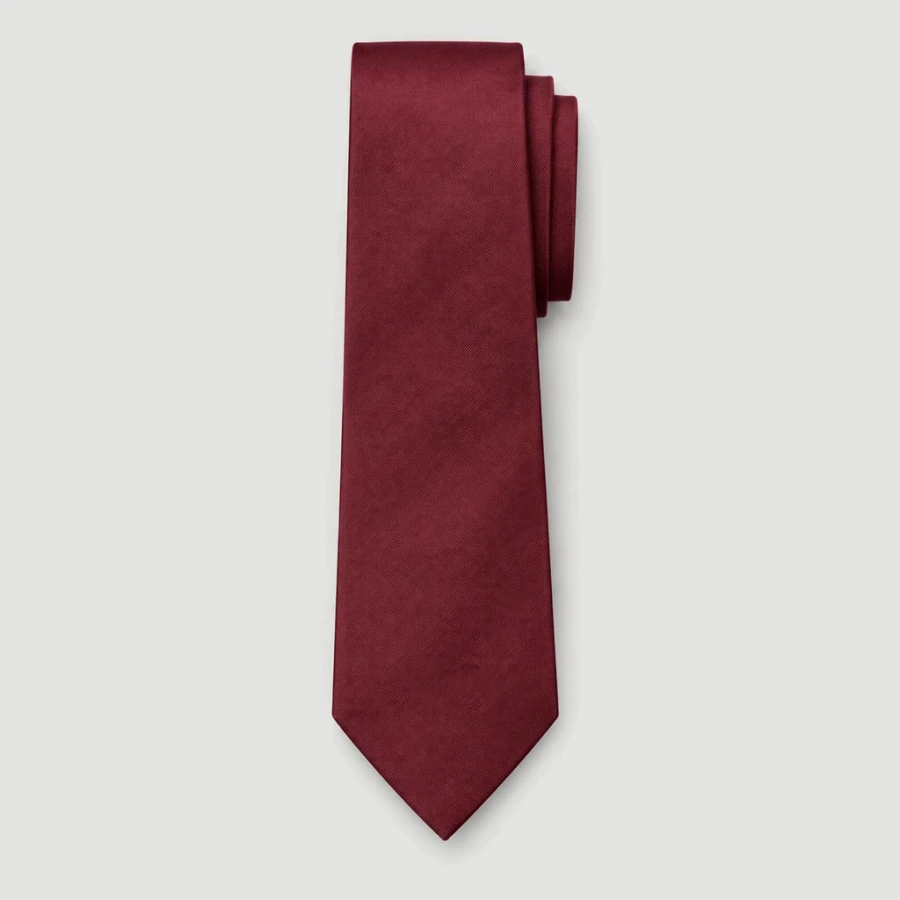
Woven silk tie with a pointed end, plain or with a fine pattern: the tie for suit and poplin shirt. Solid navy or burgundy goes with white and light blue shirts and with any calm suit. The tip ends at about the belt buckle. More casual is the knit tie with a straight end.

  • Navy silk tie
  • Burgundy silk tie
  • Navy knit tie

Beanie

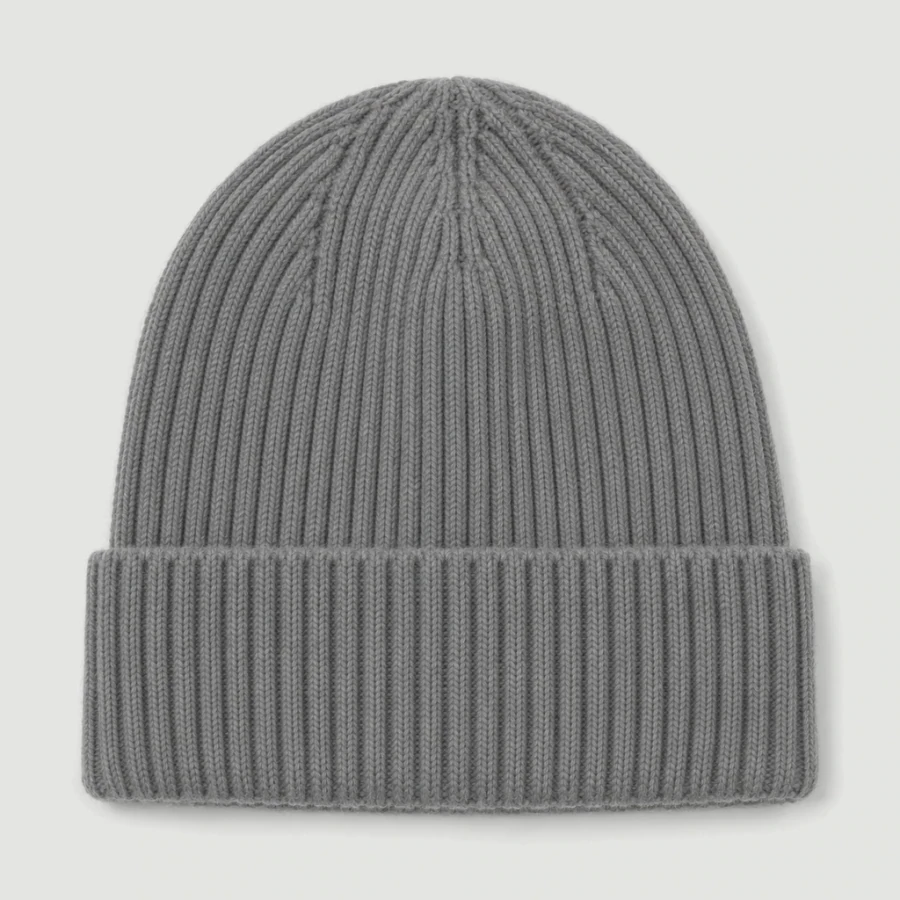
Knitted cap, best made of merino or cashmere, ribbed and with a folded cuff. In gray, navy or camel and without a logo, it goes with a down jacket, overcoat and scarf. With a suit in the evening you take it off.

  • Gray knit beanie

Gloves

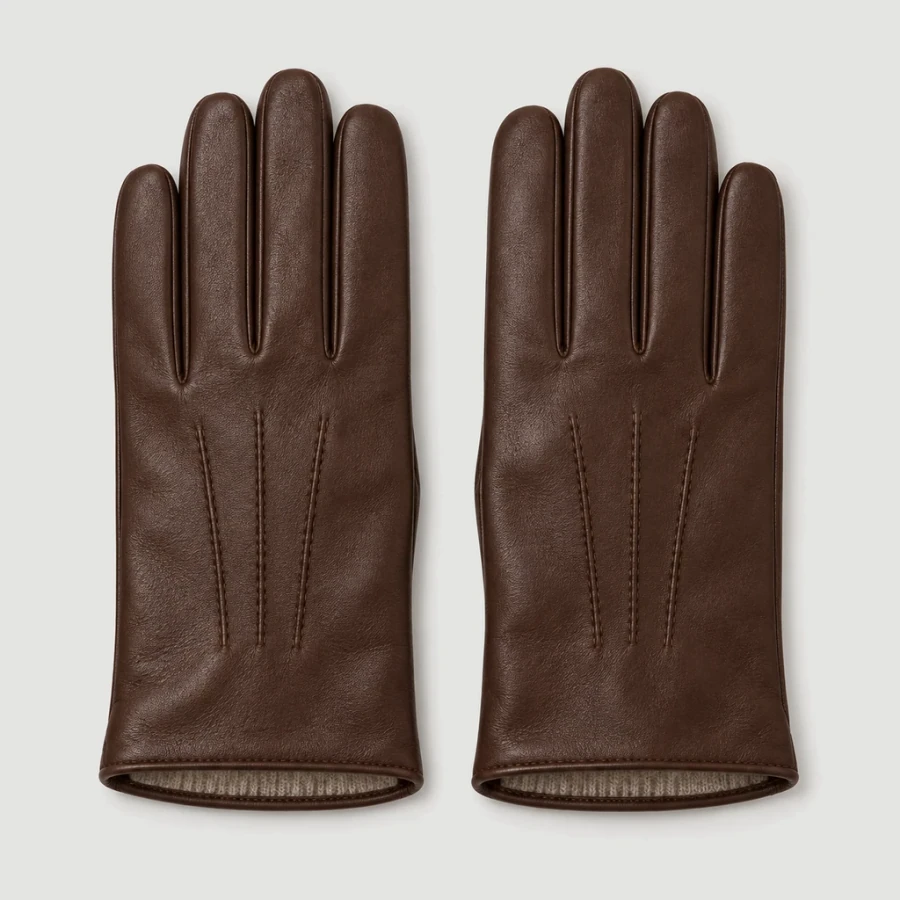
Leather gloves lined with cashmere or wool, plain with fine decorative stitching on the back of the hand. Dark brown goes with brown shoes and belts, with an overcoat as well as with a down jacket. They fit closely, but not tightly; smooth leather looks finer than suede.

  • Dark brown leather gloves

Fabrics and terms

Worsted

Wool whose fibers are combed and aligned in parallel before spinning. This produces a smooth, firm yarn and a fabric with a clean drape that holds a crease. Suits, sport coats and wool trousers are usually made of worsted; fresco and hopsack are worsted fabrics. The counterpart is woolen yarn, from which flannel, for example, is often woven.

Fresco

Worsted in an open plain weave made of highly twisted yarns. Hold the fabric up to the light and you see the loose grid. It is breathable, wrinkles little and recovers quickly, which makes it good for trousers and sport coats from spring to fall and for travel. Medium gray makes a pair of trousers that goes with almost any top.

  • Medium gray fresco trousers

Hopsack

Wool fabric in a basket weave, in which two or more threads are interlaced together. The surface is slightly textured and open, and the fabric breathes and wrinkles little. It is the classic choice for the navy sport coat: the texture takes away the look of a suit jacket.

  • Navy hopsack trousers
  • Navy unlined sport coat

Flannel

Soft wool fabric with a brushed, matte surface, often made of woolen yarn. It is warm and has a soft drape, but no sharp edge. Gray or brown flannel is the winter trouser for merino, turtleneck and Chelsea boots.

Gabardine

Dense fabric in a steep twill weave with a fine, steep diagonal rib on the face. Gabardine is smooth, hard-wearing and weather-resistant and is woven from wool or cotton. It is used for trousers and for raincoats such as the mac coat. The fabric became known through Thomas Burberry, who used it for weatherproof coats.

  • Taupe gabardine trousers
  • Olive gabardine trousers
  • Beige mac coat

Oxford cloth

Cotton fabric in a basket weave, usually with a colored warp and a white, somewhat thicker weft. This gives the surface a slightly heathered, textured look. It is sturdier and more casual than poplin and the typical fabric for button-down shirts. Pinpoint Oxford is a finer, smoother variant.

  • White Oxford button-down
  • Light blue Oxford button-down

Poplin

Cotton fabric in a plain weave with very densely set, fine threads. The surface is smooth and slightly shiny, and the fabric feels cool. Poplin is the usual fabric for business shirts worn tucked in and with a tie.

Chambray

Cotton fabric in a plain weave with a colored, usually blue warp and a white weft. It looks like lightweight denim, but does not have its diagonal twill rib and is thinner and softer. Typical are shirts for the whole year.

  • Light blue chambray shirt

Piqué

Cotton fabric with a raised, honeycomb-like structure; on the polo it is a knit piqué. The structure does not lie flat on the skin, so the fabric stays airy and holds its shape. It is the classic fabric for the polo shirt.

  • White piqué polo

Merino

Wool from the merino sheep, with very fine fibers that hardly itch. Merino balances temperature, absorbs moisture and picks up little odor. Finely knitted, it suits sweaters, knit polos and Henleys that are worn directly on the skin or under the sport coat.

  • Gray knit beanie
  • Gray merino crewneck
  • Black merino henley
  • Navy long-sleeve knit polo
  • Navy merino crewneck
  • Camel merino crewneck
  • Charcoal merino turtleneck

Cashmere

Fine undercoat of the cashmere goat. It is very soft and warm at low weight, but more delicate than sheep's wool and prone to pilling. Quality depends mainly on the length and fineness of the fibers, less on the cashmere content on the label. Blends of wool and cashmere are sturdier.

Linen

Fabric made from the fibers of the flax plant. Linen is cool, absorbs moisture well and dries quickly; it wrinkles noticeably, which is part of its character. It is the summer fabric for shirts and trousers; blends with cotton wrinkle less.

Selvedge denim

Denim woven on narrow shuttle looms, which gives it a firm, clean woven edge (selvedge, from self-edge). It becomes visible on the inside of the outer seam, for example at the cuff, often with a colored thread. The selvedge alone says nothing about quality; but it shows a more elaborate production. Unwashed denim develops individual wear marks over time.

Suede and smooth leather

Smooth leather is the grain side of the hide, smooth and polishable; it looks more formal and belongs with a suit and wool trousers. Suede has a roughened, velvety surface, looks more matte and casual and combines well with wool, corduroy and denim. Suede is cared for with a brush and should be waterproofed, smooth leather with cream and polish. Belt and shoes should match in material.

  • Brown hiking boot
  • Brown shearling winter boot
  • Dark brown leather gloves
  • Dark brown smooth leather belt
  • Brown boat shoe
  • Dark brown lace-up boot
  • White sneaker
  • Dark brown suede penny loafer

Welted

In welted construction (Goodyear), a strip of leather, the welt, is stitched to the upper and the insole, and the outsole is then stitched to this welt. The sole can therefore be replaced several times, and the shoe lasts many years. Welted shoes are stiffer and a little heavier at first, but they break in. The method is named after Charles Goodyear Jr., who developed the machine for it.

Rise

The distance from the crotch to the top edge of the waistband, which determines where trousers sit. A higher rise keeps the waistband at the waist, the shirt stays tucked in, and the leg looks longer; a low rise sits on the hip. A mid to higher rise is usual for tailored trousers and pleated trousers.

Inseam

The inner leg length from the crotch to the hem. It determines how the trousers rest on the shoe: the longer, the more break forms above the shoe. With loafers and slim trousers, no break or only a slight one suits; with lace-up shoes and wider trousers, a slight one. If the length falls between two sizes, having them shortened by a tailor is worthwhile.

Seersucker

Cotton fabric with puckered stripes, which come from warp threads tensioned unevenly during weaving. The waves keep the fabric off the skin, it stays airy in midsummer and does not need ironing. Classic is blue and white, as an unlined sport coat or shirt.

  • Blue seersucker sport coat